

User Privacy, Identity and Trust in 5G 275
be able to pay the billing/charging or subscription price well within the predefined
time. Although service providers do not have much trust that the subscribers will
maintain strong passwords for their authentication to the services and therefore, in
order to authenticate securely, it offers the subscriber an UICC. In some scenarios,
the two terms, provider and network operator are used in the same context. The network operator is known to be the central element and provides a trust relationship
with various other elements in the network. For example, Mobile Network Operators
(MNOs) or Satellite Network Operators (SNOs) perform operations such as deploying, maintaining and managing the network (Satellite). Up to now, there are no such
standardized security procedures available, which can highlight the network operators sharing certain information. In the current scenario, the trust relationship among
various network operators is strong and regulated by contract. However, there can be
untrustworthy network operators, who can misuse the personal data, and that can
be a serious threat for such networks [1].
VMNO is based on one of the special forms of network operator. It does not
contain the mobile network, but instead borrows some virtual space from the database of that network operator. Therefore, it follows almost the same trust model
and entities as assigned for the network operators. It keeps the trust between VMNO
and its infrastructure elements and can utilize the various resources as agreed in
the contract between both of them. Regarding the (UE), it was assumed that this
entity does not need to be included in trust models, because the network operator is
the one who chooses which manufacturer is trustworthy and which equipment
should be used. But there are some cases such as for USIM manufacturer, where it is
Subscriber
Service
Provider
Mobile Network
Operator
Trust Model
User
Equipment/Manufacturer
(UE)
Virtual Mobile Network
Operator
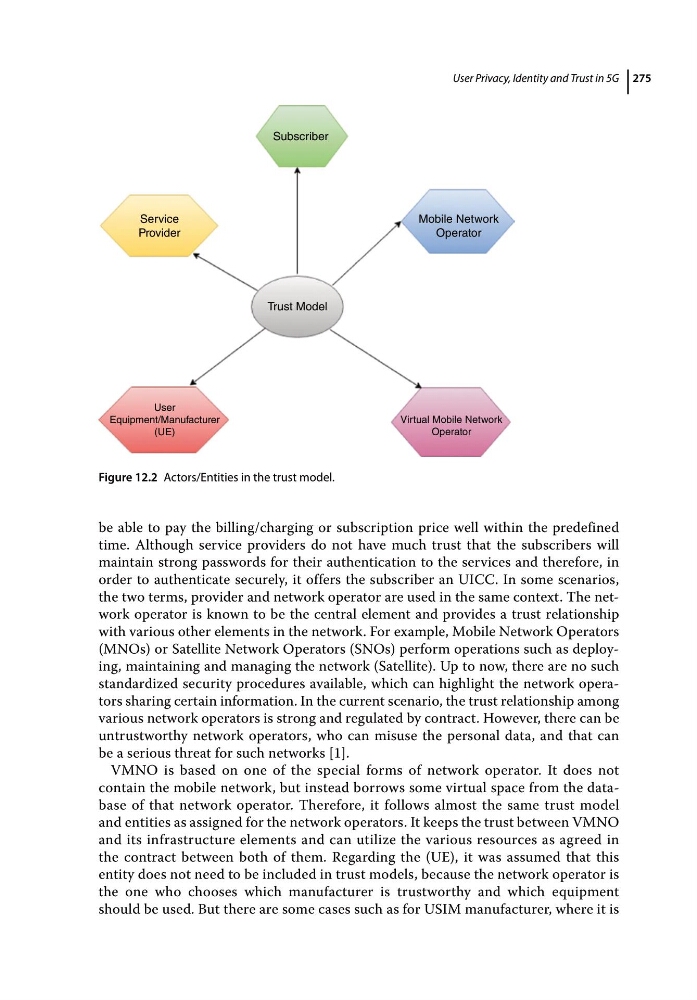
Figure 12.2 Actors/Entities in the trust model.
be able to pay the billing/charging or subscription price well within the predefined
time. Although service providers do not have much trust that the subscribers will
maintain strong passwords for their authentication to the services and therefore, in
order to authenticate securely, it offers the subscriber an UICC. In some scenarios,
the two terms, provider and network operator are used in the same context. The network operator is known to be the central element and provides a trust relationship
with various other elements in the network. For example, Mobile Network Operators
(MNOs) or Satellite Network Operators (SNOs) perform operations such as deploying, maintaining and managing the network (Satellite). Up to now, there are no such
standardized security procedures available, which can highlight the network operators sharing certain information. In the current scenario, the trust relationship among
various network operators is strong and regulated by contract. However, there can be
untrustworthy network operators, who can misuse the personal data, and that can
be a serious threat for such networks [1].
VMNO is based on one of the special forms of network operator. It does not
contain the mobile network, but instead borrows some virtual space from the database of that network operator. Therefore, it follows almost the same trust model
and entities as assigned for the network operators. It keeps the trust between VMNO
and its infrastructure elements and can utilize the various resources as agreed in
the contract between both of them. Regarding the (UE), it was assumed that this
entity does not need to be included in trust models, because the network operator is
the one who chooses which manufacturer is trustworthy and which equipment
should be used. But there are some cases such as for USIM manufacturer, where it is
Subscriber
Service
Provider
Mobile Network
Operator
Trust Model
User
Equipment/Manufacturer
(UE)
Virtual Mobile Network
Operator
Figure 12.2 Actors/Entities in the trust model.