

Wi-Fi and 5G 149
The obvious advantages offered by this technology are the
multiplication of the cells and the densification of the network.
Another very clear advantage is the drop in power of the devices
which this technology facilitates. A maximum power of 100 mW
seems to be the standard that is coming to pass; this power
corresponds to the power required for an omnidirectional Wi-Fi
transmission.
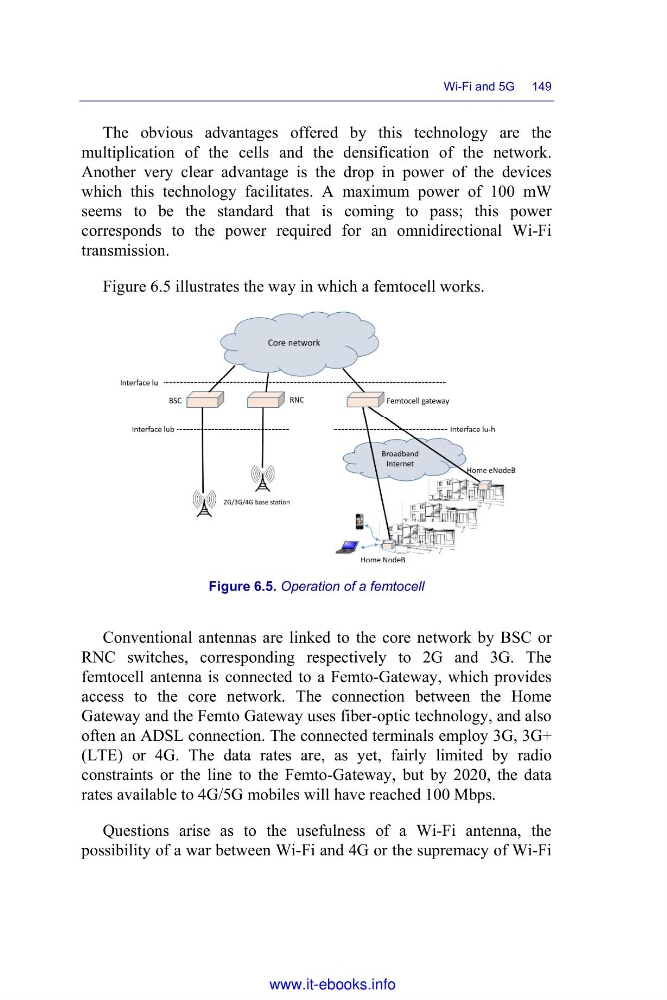
Figure 6.5 illustrates the way in which a femtocell works.
Figure 6.5. Operation of a femtocell
Conventional antennas are linked to the core network by BSC or
RNC switches, corresponding respectively to 2G and 3G. The
femtocell antenna is connected to a Femto-Gateway, which provides
access to the core network. The connection between the Home
Gateway and the Femto Gateway uses fiber-optic technology, and also
often an ADSL connection. The connected terminals employ 3G, 3G+
(LTE) or 4G. The data rates are, as yet, fairly limited by radio
constraints or the line to the Femto-Gateway, but by 2020, the data
rates available to 4G/5G mobiles will have reached 100 Mbps.
Questions arise as to the usefulness of a Wi-Fi antenna, the
possibility of a war between Wi-Fi and 4G or the supremacy of Wi-Fi
www.it-ebooks.info
The obvious advantages offered by this technology are the
multiplication of the cells and the densification of the network.
Another very clear advantage is the drop in power of the devices
which this technology facilitates. A maximum power of 100 mW
seems to be the standard that is coming to pass; this power
corresponds to the power required for an omnidirectional Wi-Fi
transmission.
Figure 6.5 illustrates the way in which a femtocell works.
Figure 6.5. Operation of a femtocell
Conventional antennas are linked to the core network by BSC or
RNC switches, corresponding respectively to 2G and 3G. The
femtocell antenna is connected to a Femto-Gateway, which provides
access to the core network. The connection between the Home
Gateway and the Femto Gateway uses fiber-optic technology, and also
often an ADSL connection. The connected terminals employ 3G, 3G+
(LTE) or 4G. The data rates are, as yet, fairly limited by radio
constraints or the line to the Femto-Gateway, but by 2020, the data
rates available to 4G/5G mobiles will have reached 100 Mbps.
Questions arise as to the usefulness of a Wi-Fi antenna, the
possibility of a war between Wi-Fi and 4G or the supremacy of Wi-Fi
www.it-ebooks.info