

26
K. KirupaSree et al.
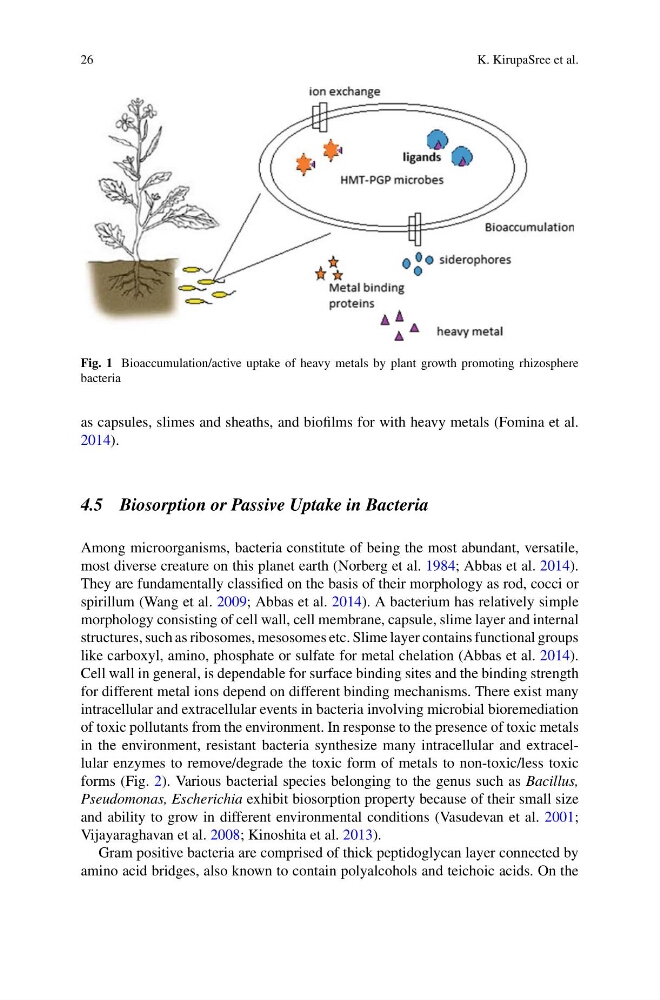
Fig. 1 Bioaccumulation/active uptake of heavy metals by plant growth promoting rhizosphere
bacteria
as capsules, slimes and sheaths, and biofilms for with heavy metals (Fomina et al.
2014).
4.5 Biosorption or Passive Uptake in Bacteria
Among microorganisms, bacteria constitute of being the most abundant, versatile,
most diverse creature on this planet earth (Norberg et al. 1984; Abbas et al. 2014).
They are fundamentally classified on the basis of their morphology as rod, cocci or
spirillum (Wang et al. 2009; Abbas et al. 2014). A bacterium has relatively simple
morphology consisting of cell wall, cell membrane, capsule, slime layer and internal
structures, such as ribosomes, mesosomes etc. Slime layer contains functional groups
like carboxyl, amino, phosphate or sulfate for metal chelation (Abbas et al. 2014).
Cell wall in general, is dependable for surface binding sites and the binding strength
for different metal ions depend on different binding mechanisms. There exist many
intracellular and extracellular events in bacteria involving microbial bioremediation
of toxic pollutants from the environment. In response to the presence of toxic metals
in the environment, resistant bacteria synthesize many intracellular and extracellular enzymes to remove/degrade the toxic form of metals to non-toxic/less toxic
forms (Fig. 2). Various bacterial species belonging to the genus such as Bacillus,
Pseudomonas, Escherichia exhibit biosorption property because of their small size
and ability to grow in different environmental conditions (Vasudevan et al. 2001;
Vijayaraghavan et al. 2008; Kinoshita et al. 2013).
Gram positive bacteria are comprised of thick peptidoglycan layer connected by
amino acid bridges, also known to contain polyalcohols and teichoic acids. On the
K. KirupaSree et al.
Fig. 1 Bioaccumulation/active uptake of heavy metals by plant growth promoting rhizosphere
bacteria
as capsules, slimes and sheaths, and biofilms for with heavy metals (Fomina et al.
2014).
4.5 Biosorption or Passive Uptake in Bacteria
Among microorganisms, bacteria constitute of being the most abundant, versatile,
most diverse creature on this planet earth (Norberg et al. 1984; Abbas et al. 2014).
They are fundamentally classified on the basis of their morphology as rod, cocci or
spirillum (Wang et al. 2009; Abbas et al. 2014). A bacterium has relatively simple
morphology consisting of cell wall, cell membrane, capsule, slime layer and internal
structures, such as ribosomes, mesosomes etc. Slime layer contains functional groups
like carboxyl, amino, phosphate or sulfate for metal chelation (Abbas et al. 2014).
Cell wall in general, is dependable for surface binding sites and the binding strength
for different metal ions depend on different binding mechanisms. There exist many
intracellular and extracellular events in bacteria involving microbial bioremediation
of toxic pollutants from the environment. In response to the presence of toxic metals
in the environment, resistant bacteria synthesize many intracellular and extracellular enzymes to remove/degrade the toxic form of metals to non-toxic/less toxic
forms (Fig. 2). Various bacterial species belonging to the genus such as Bacillus,
Pseudomonas, Escherichia exhibit biosorption property because of their small size
and ability to grow in different environmental conditions (Vasudevan et al. 2001;
Vijayaraghavan et al. 2008; Kinoshita et al. 2013).
Gram positive bacteria are comprised of thick peptidoglycan layer connected by
amino acid bridges, also known to contain polyalcohols and teichoic acids. On the