

276
A. Arivoli et al.
makes the water unfit for irrigation; if the same water is used for irrigation over a
large area, the soil becomes acidic resulting in poor crop growth and yield. Similarly,
the effluent had a very high TDS, which was in agreement with the previous report of
sugar factory effluent (Abdul and Sirajudeen 2006). The COD value of the effluent
was 1330 mg/L, while the recommended level set by BIS is 250 mg/L; the measured
COD indicates the high organic load. The remaining measured parameters are within
the permissible limits.
Seed germination and seedling growth are vital for maintenance of plant life and
they are particularly vulnerable to environmental stress. Since germination is the
first physiological process, several growth parameters such as percentage of germination (Mishra and Pandey 2002). In the present investigation, the effects of different
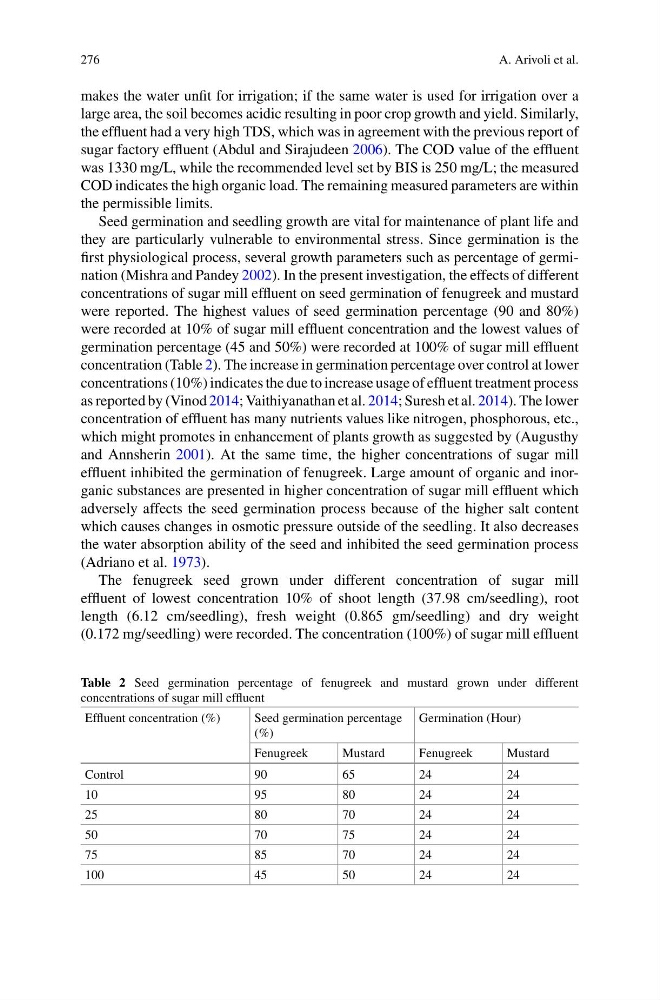
concentrations of sugar mill effluent on seed germination of fenugreek and mustard
were reported. The highest values of seed germination percentage (90 and 80%)
were recorded at 10% of sugar mill effluent concentration and the lowest values of
germination percentage (45 and 50%) were recorded at 100% of sugar mill effluent
concentration (Table 2). The increase in germination percentage over control at lower
concentrations (10%) indicates the due to increase usage of effluent treatment process
as reported by (Vinod 2014; Vaithiyanathan et al. 2014; Suresh et al. 2014). The lower
concentration of effluent has many nutrients values like nitrogen, phosphorous, etc.,
which might promotes in enhancement of plants growth as suggested by (Augusthy
and Annsherin 2001). At the same time, the higher concentrations of sugar mill
effluent inhibited the germination of fenugreek. Large amount of organic and inorganic substances are presented in higher concentration of sugar mill effluent which
adversely affects the seed germination process because of the higher salt content
which causes changes in osmotic pressure outside of the seedling. It also decreases
the water absorption ability of the seed and inhibited the seed germination process
(Adriano et al. 1973).
The fenugreek seed grown under different concentration of sugar mill
effluent of lowest concentration 10% of shoot length (37.98 cm/seedling), root
length (6.12 cm/seedling), fresh weight (0.865 gm/seedling) and dry weight
(0.172 mg/seedling) were recorded. The concentration (100%) of sugar mill effluent
Table 2 Seed germination percentage of fenugreek and mustard grown under different
concentrations of sugar mill effluent
Effluent concentration (%)
Seed germination percentage
(%)
Germination (Hour)
Fenugreek
Mustard
Fenugreek
Mustard
Control
90
65
24
24
10
95
80
24
24
25
80
70
24
24
50
70
75
24
24
75
85
70
24
24
100
45
50
24
24
A. Arivoli et al.
makes the water unfit for irrigation; if the same water is used for irrigation over a
large area, the soil becomes acidic resulting in poor crop growth and yield. Similarly,
the effluent had a very high TDS, which was in agreement with the previous report of
sugar factory effluent (Abdul and Sirajudeen 2006). The COD value of the effluent
was 1330 mg/L, while the recommended level set by BIS is 250 mg/L; the measured
COD indicates the high organic load. The remaining measured parameters are within
the permissible limits.
Seed germination and seedling growth are vital for maintenance of plant life and
they are particularly vulnerable to environmental stress. Since germination is the
first physiological process, several growth parameters such as percentage of germination (Mishra and Pandey 2002). In the present investigation, the effects of different
concentrations of sugar mill effluent on seed germination of fenugreek and mustard
were reported. The highest values of seed germination percentage (90 and 80%)
were recorded at 10% of sugar mill effluent concentration and the lowest values of
germination percentage (45 and 50%) were recorded at 100% of sugar mill effluent
concentration (Table 2). The increase in germination percentage over control at lower
concentrations (10%) indicates the due to increase usage of effluent treatment process
as reported by (Vinod 2014; Vaithiyanathan et al. 2014; Suresh et al. 2014). The lower
concentration of effluent has many nutrients values like nitrogen, phosphorous, etc.,
which might promotes in enhancement of plants growth as suggested by (Augusthy
and Annsherin 2001). At the same time, the higher concentrations of sugar mill
effluent inhibited the germination of fenugreek. Large amount of organic and inorganic substances are presented in higher concentration of sugar mill effluent which
adversely affects the seed germination process because of the higher salt content
which causes changes in osmotic pressure outside of the seedling. It also decreases
the water absorption ability of the seed and inhibited the seed germination process
(Adriano et al. 1973).
The fenugreek seed grown under different concentration of sugar mill
effluent of lowest concentration 10% of shoot length (37.98 cm/seedling), root
length (6.12 cm/seedling), fresh weight (0.865 gm/seedling) and dry weight
(0.172 mg/seedling) were recorded. The concentration (100%) of sugar mill effluent
Table 2 Seed germination percentage of fenugreek and mustard grown under different
concentrations of sugar mill effluent
Effluent concentration (%)
Seed germination percentage
(%)
Germination (Hour)
Fenugreek
Mustard
Fenugreek
Mustard
Control
90
65
24
24
10
95
80
24
24
25
80
70
24
24
50
70
75
24
24
75
85
70
24
24
100
45
50
24
24