

10
D. MadhuBala et al.
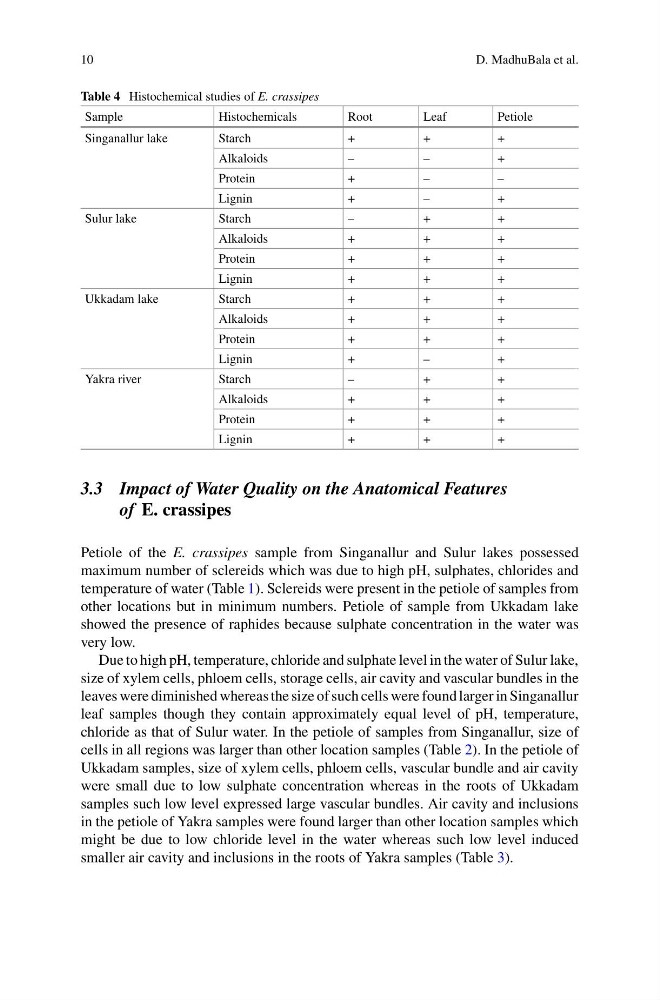
Table 4 Histochemical studies of E. crassipes
Sample
Histochemicals
Root
Leaf
Petiole
Singanallur lake
Starch
+
+
+
Alkaloids
–
–
+
Protein
+
–
–
Lignin
+
–
+
Sulur lake
Starch
–
+
+
Alkaloids
+
+
+
Protein
+
+
+
Lignin
+
+
+
Ukkadam lake
Starch
+
+
+
Alkaloids
+
+
+
Protein
+
+
+
Lignin
+
–
+
Yakra river
Starch
–
+
+
Alkaloids
+
+
+
Protein
+
+
+
Lignin
+
+
+
3.3 Impact of Water Quality on the Anatomical Features
of E. crassipes
Petiole of the E. crassipes sample from Singanallur and Sulur lakes possessed
maximum number of sclereids which was due to high pH, sulphates, chlorides and
temperature of water (Table 1). Sclereids were present in the petiole of samples from
other locations but in minimum numbers. Petiole of sample from Ukkadam lake
showed the presence of raphides because sulphate concentration in the water was
very low.
Due to high pH, temperature, chloride and sulphate level in the water of Sulur lake,
size of xylem cells, phloem cells, storage cells, air cavity and vascular bundles in the
leaves were diminished whereas the size of such cells were found larger in Singanallur
leaf samples though they contain approximately equal level of pH, temperature,
chloride as that of Sulur water. In the petiole of samples from Singanallur, size of
cells in all regions was larger than other location samples (Table 2). In the petiole of
Ukkadam samples, size of xylem cells, phloem cells, vascular bundle and air cavity
were small due to low sulphate concentration whereas in the roots of Ukkadam
samples such low level expressed large vascular bundles. Air cavity and inclusions
in the petiole of Yakra samples were found larger than other location samples which
might be due to low chloride level in the water whereas such low level induced
smaller air cavity and inclusions in the roots of Yakra samples (Table 3).
D. MadhuBala et al.
Table 4 Histochemical studies of E. crassipes
Sample
Histochemicals
Root
Leaf
Petiole
Singanallur lake
Starch
+
+
+
Alkaloids
–
–
+
Protein
+
–
–
Lignin
+
–
+
Sulur lake
Starch
–
+
+
Alkaloids
+
+
+
Protein
+
+
+
Lignin
+
+
+
Ukkadam lake
Starch
+
+
+
Alkaloids
+
+
+
Protein
+
+
+
Lignin
+
–
+
Yakra river
Starch
–
+
+
Alkaloids
+
+
+
Protein
+
+
+
Lignin
+
+
+
3.3 Impact of Water Quality on the Anatomical Features
of E. crassipes
Petiole of the E. crassipes sample from Singanallur and Sulur lakes possessed
maximum number of sclereids which was due to high pH, sulphates, chlorides and
temperature of water (Table 1). Sclereids were present in the petiole of samples from
other locations but in minimum numbers. Petiole of sample from Ukkadam lake
showed the presence of raphides because sulphate concentration in the water was
very low.
Due to high pH, temperature, chloride and sulphate level in the water of Sulur lake,
size of xylem cells, phloem cells, storage cells, air cavity and vascular bundles in the
leaves were diminished whereas the size of such cells were found larger in Singanallur
leaf samples though they contain approximately equal level of pH, temperature,
chloride as that of Sulur water. In the petiole of samples from Singanallur, size of
cells in all regions was larger than other location samples (Table 2). In the petiole of
Ukkadam samples, size of xylem cells, phloem cells, vascular bundle and air cavity
were small due to low sulphate concentration whereas in the roots of Ukkadam
samples such low level expressed large vascular bundles. Air cavity and inclusions
in the petiole of Yakra samples were found larger than other location samples which
might be due to low chloride level in the water whereas such low level induced
smaller air cavity and inclusions in the roots of Yakra samples (Table 3).