

548
D. Kattwinkel and B. Bender
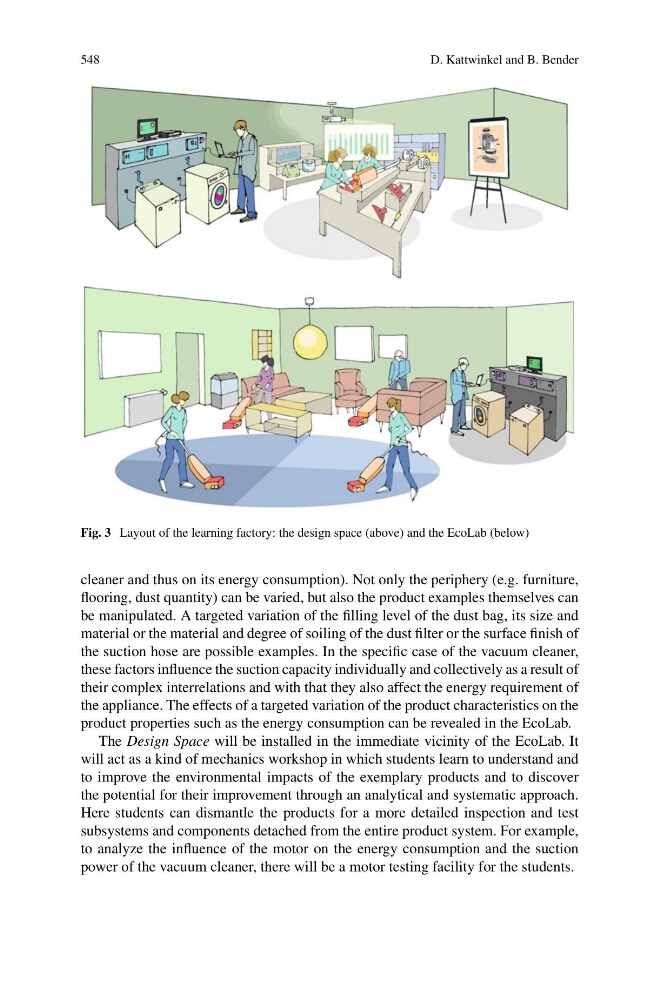
Fig. 3 Layout of the learning factory: the design space (above) and the EcoLab (below)
cleaner and thus on its energy consumption). Not only the periphery (e.g. furniture,
flooring, dust quantity) can be varied, but also the product examples themselves can
be manipulated. A targeted variation of the filling level of the dust bag, its size and
material or the material and degree of soiling of the dust filter or the surface finish of
the suction hose are possible examples. In the specific case of the vacuum cleaner,
these factors influence the suction capacity individually and collectively as a result of
their complex interrelations and with that they also affect the energy requirement of
the appliance. The effects of a targeted variation of the product characteristics on the
product properties such as the energy consumption can be revealed in the EcoLab.
The Design Space will be installed in the immediate vicinity of the EcoLab. It
will act as a kind of mechanics workshop in which students learn to understand and
to improve the environmental impacts of the exemplary products and to discover
the potential for their improvement through an analytical and systematic approach.
Here students can dismantle the products for a more detailed inspection and test
subsystems and components detached from the entire product system. For example,
to analyze the influence of the motor on the energy consumption and the suction
power of the vacuum cleaner, there will be a motor testing facility for the students.
D. Kattwinkel and B. Bender
Fig. 3 Layout of the learning factory: the design space (above) and the EcoLab (below)
cleaner and thus on its energy consumption). Not only the periphery (e.g. furniture,
flooring, dust quantity) can be varied, but also the product examples themselves can
be manipulated. A targeted variation of the filling level of the dust bag, its size and
material or the material and degree of soiling of the dust filter or the surface finish of
the suction hose are possible examples. In the specific case of the vacuum cleaner,
these factors influence the suction capacity individually and collectively as a result of
their complex interrelations and with that they also affect the energy requirement of
the appliance. The effects of a targeted variation of the product characteristics on the
product properties such as the energy consumption can be revealed in the EcoLab.
The Design Space will be installed in the immediate vicinity of the EcoLab. It
will act as a kind of mechanics workshop in which students learn to understand and
to improve the environmental impacts of the exemplary products and to discover
the potential for their improvement through an analytical and systematic approach.
Here students can dismantle the products for a more detailed inspection and test
subsystems and components detached from the entire product system. For example,
to analyze the influence of the motor on the energy consumption and the suction
power of the vacuum cleaner, there will be a motor testing facility for the students.