

Sustainable Development in Higher Education …
533
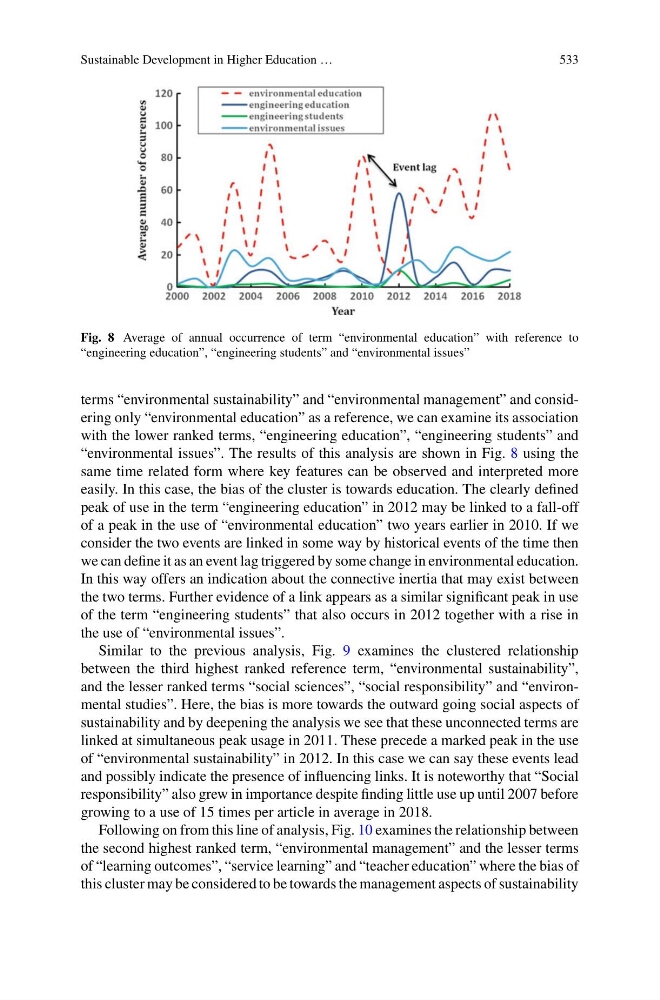
Fig. 8 Average of annual occurrence of term “environmental education” with reference to
“engineering education”, “engineering students” and “environmental issues”
terms “environmental sustainability” and “environmental management” and considering only “environmental education” as a reference, we can examine its association
with the lower ranked terms, “engineering education”, “engineering students” and
“environmental issues”. The results of this analysis are shown in Fig. 8 using the
same time related form where key features can be observed and interpreted more
easily. In this case, the bias of the cluster is towards education. The clearly defined
peak of use in the term “engineering education” in 2012 may be linked to a fall-off
of a peak in the use of “environmental education” two years earlier in 2010. If we
consider the two events are linked in some way by historical events of the time then
we can define it as an event lag triggered by some change in environmental education.
In this way offers an indication about the connective inertia that may exist between
the two terms. Further evidence of a link appears as a similar significant peak in use
of the term “engineering students” that also occurs in 2012 together with a rise in
the use of “environmental issues”.
Similar to the previous analysis, Fig. 9 examines the clustered relationship
between the third highest ranked reference term, “environmental sustainability”,
and the lesser ranked terms “social sciences”, “social responsibility” and “environmental studies”. Here, the bias is more towards the outward going social aspects of
sustainability and by deepening the analysis we see that these unconnected terms are
linked at simultaneous peak usage in 2011. These precede a marked peak in the use
of “environmental sustainability” in 2012. In this case we can say these events lead
and possibly indicate the presence of influencing links. It is noteworthy that “Social
responsibility” also grew in importance despite finding little use up until 2007 before
growing to a use of 15 times per article in average in 2018.
Following on from this line of analysis, Fig. 10 examines the relationship between
the second highest ranked term, “environmental management” and the lesser terms
of “learning outcomes”, “service learning” and “teacher education” where the bias of
this cluster may be considered to be towards the management aspects of sustainability
533
Fig. 8 Average of annual occurrence of term “environmental education” with reference to
“engineering education”, “engineering students” and “environmental issues”
terms “environmental sustainability” and “environmental management” and considering only “environmental education” as a reference, we can examine its association
with the lower ranked terms, “engineering education”, “engineering students” and
“environmental issues”. The results of this analysis are shown in Fig. 8 using the
same time related form where key features can be observed and interpreted more
easily. In this case, the bias of the cluster is towards education. The clearly defined
peak of use in the term “engineering education” in 2012 may be linked to a fall-off
of a peak in the use of “environmental education” two years earlier in 2010. If we
consider the two events are linked in some way by historical events of the time then
we can define it as an event lag triggered by some change in environmental education.
In this way offers an indication about the connective inertia that may exist between
the two terms. Further evidence of a link appears as a similar significant peak in use
of the term “engineering students” that also occurs in 2012 together with a rise in
the use of “environmental issues”.
Similar to the previous analysis, Fig. 9 examines the clustered relationship
between the third highest ranked reference term, “environmental sustainability”,
and the lesser ranked terms “social sciences”, “social responsibility” and “environmental studies”. Here, the bias is more towards the outward going social aspects of
sustainability and by deepening the analysis we see that these unconnected terms are
linked at simultaneous peak usage in 2011. These precede a marked peak in the use
of “environmental sustainability” in 2012. In this case we can say these events lead
and possibly indicate the presence of influencing links. It is noteworthy that “Social
responsibility” also grew in importance despite finding little use up until 2007 before
growing to a use of 15 times per article in average in 2018.
Following on from this line of analysis, Fig. 10 examines the relationship between
the second highest ranked term, “environmental management” and the lesser terms
of “learning outcomes”, “service learning” and “teacher education” where the bias of
this cluster may be considered to be towards the management aspects of sustainability