

512
S. Zenchanka et al.
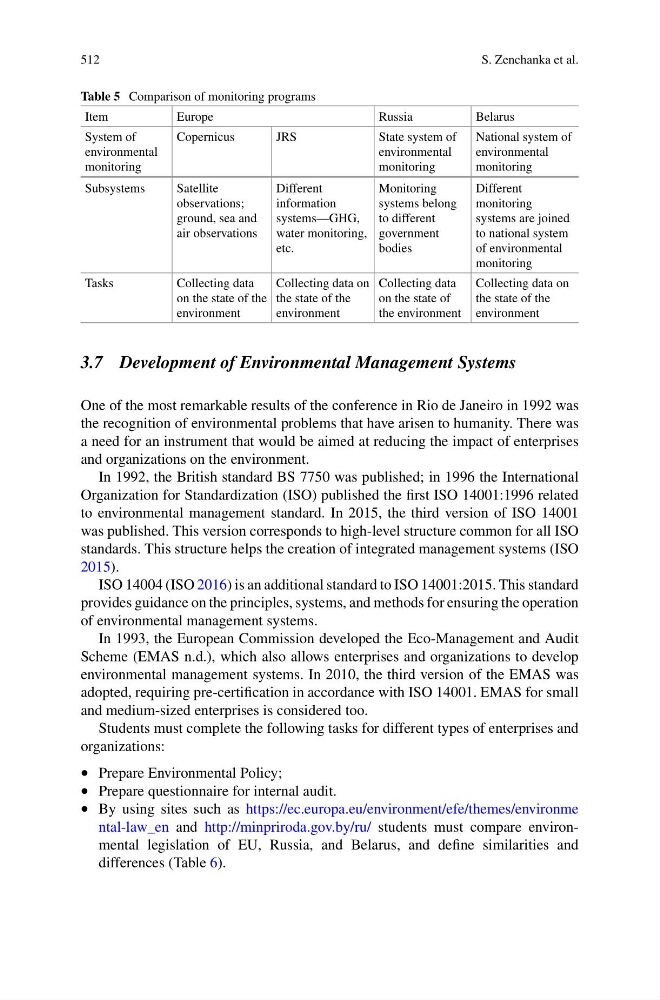
Table 5 Comparison of monitoring programs
Item
Europe
Russia
Belarus
System of
environmental
monitoring
Copernicus
JRS
State system of
environmental
monitoring
National system of
environmental
monitoring
Subsystems
Satellite
observations;
ground, sea and
air observations
Different
information
systems—GHG,
water monitoring,
etc.
Monitoring
systems belong
to different
government
bodies
Different
monitoring
systems are joined
to national system
of environmental
monitoring
Tasks
Collecting data
on the state of the
environment
Collecting data on
the state of the
environment
Collecting data
on the state of
the environment
Collecting data on
the state of the
environment
3.7 Development of Environmental Management Systems
One of the most remarkable results of the conference in Rio de Janeiro in 1992 was
the recognition of environmental problems that have arisen to humanity. There was
a need for an instrument that would be aimed at reducing the impact of enterprises
and organizations on the environment.
In 1992, the British standard BS 7750 was published; in 1996 the International
Organization for Standardization (ISO) published the first ISO 14001:1996 related
to environmental management standard. In 2015, the third version of ISO 14001
was published. This version corresponds to high-level structure common for all ISO
standards. This structure helps the creation of integrated management systems (ISO
2015).
ISO 14004 (ISO 2016) is an additional standard to ISO 14001:2015. This standard
provides guidance on the principles, systems, and methods for ensuring the operation
of environmental management systems.
In 1993, the European Commission developed the Eco-Management and Audit
Scheme (EMAS n.d.), which also allows enterprises and organizations to develop
environmental management systems. In 2010, the third version of the EMAS was
adopted, requiring pre-certification in accordance with ISO 14001. EMAS for small
and medium-sized enterprises is considered too.
Students must complete the following tasks for different types of enterprises and
organizations:
• Prepare Environmental Policy;
• Prepare questionnaire for internal audit.
• By using sites such as https://ec.europa.eu/environment/efe/themes/environme
ntal-law_en and http://minpriroda.gov.by/ru/ students must compare environmental legislation of EU, Russia, and Belarus, and define similarities and
differences (Table 6).
S. Zenchanka et al.
Table 5 Comparison of monitoring programs
Item
Europe
Russia
Belarus
System of
environmental
monitoring
Copernicus
JRS
State system of
environmental
monitoring
National system of
environmental
monitoring
Subsystems
Satellite
observations;
ground, sea and
air observations
Different
information
systems—GHG,
water monitoring,
etc.
Monitoring
systems belong
to different
government
bodies
Different
monitoring
systems are joined
to national system
of environmental
monitoring
Tasks
Collecting data
on the state of the
environment
Collecting data on
the state of the
environment
Collecting data
on the state of
the environment
Collecting data on
the state of the
environment
3.7 Development of Environmental Management Systems
One of the most remarkable results of the conference in Rio de Janeiro in 1992 was
the recognition of environmental problems that have arisen to humanity. There was
a need for an instrument that would be aimed at reducing the impact of enterprises
and organizations on the environment.
In 1992, the British standard BS 7750 was published; in 1996 the International
Organization for Standardization (ISO) published the first ISO 14001:1996 related
to environmental management standard. In 2015, the third version of ISO 14001
was published. This version corresponds to high-level structure common for all ISO
standards. This structure helps the creation of integrated management systems (ISO
2015).
ISO 14004 (ISO 2016) is an additional standard to ISO 14001:2015. This standard
provides guidance on the principles, systems, and methods for ensuring the operation
of environmental management systems.
In 1993, the European Commission developed the Eco-Management and Audit
Scheme (EMAS n.d.), which also allows enterprises and organizations to develop
environmental management systems. In 2010, the third version of the EMAS was
adopted, requiring pre-certification in accordance with ISO 14001. EMAS for small
and medium-sized enterprises is considered too.
Students must complete the following tasks for different types of enterprises and
organizations:
• Prepare Environmental Policy;
• Prepare questionnaire for internal audit.
• By using sites such as https://ec.europa.eu/environment/efe/themes/environme
ntal-law_en and http://minpriroda.gov.by/ru/ students must compare environmental legislation of EU, Russia, and Belarus, and define similarities and
differences (Table 6).