

360
N. Husenbeth and M. K. Tegeler
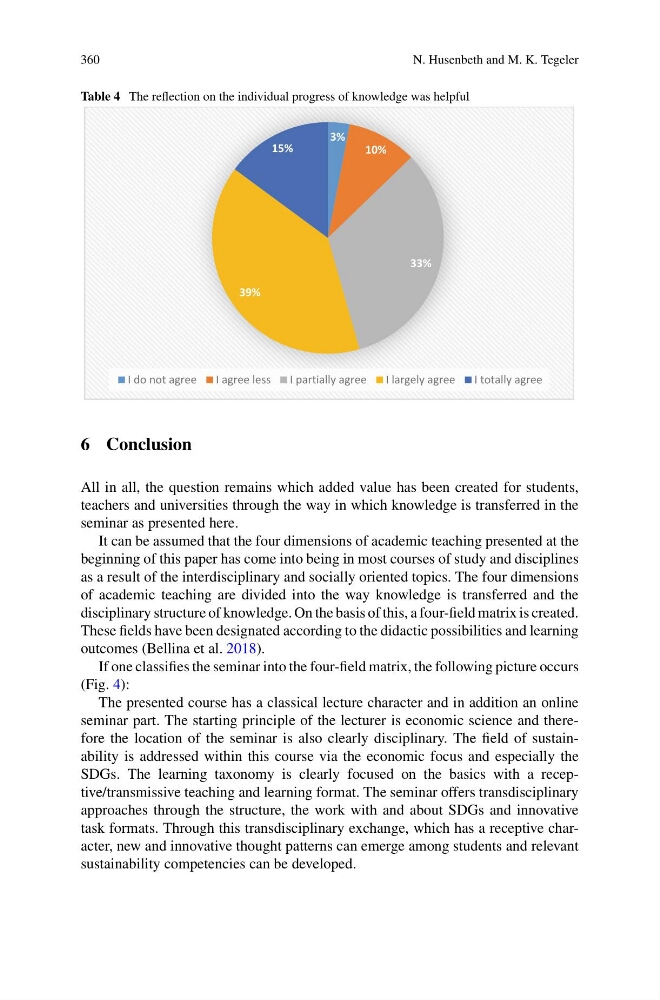
Table 4 The reflection on the individual progress of knowledge was helpful
6 Conclusion
All in all, the question remains which added value has been created for students,
teachers and universities through the way in which knowledge is transferred in the
seminar as presented here.
It can be assumed that the four dimensions of academic teaching presented at the
beginning of this paper has come into being in most courses of study and disciplines
as a result of the interdisciplinary and socially oriented topics. The four dimensions
of academic teaching are divided into the way knowledge is transferred and the
disciplinary structure of knowledge. On the basis of this, a four-field matrix is created.
These fields have been designated according to the didactic possibilities and learning
outcomes (Bellina et al. 2018).
If one classifies the seminar into the four-field matrix, the following picture occurs
(Fig. 4):
The presented course has a classical lecture character and in addition an online
seminar part. The starting principle of the lecturer is economic science and therefore the location of the seminar is also clearly disciplinary. The field of sustainability is addressed within this course via the economic focus and especially the
SDGs. The learning taxonomy is clearly focused on the basics with a receptive/transmissive teaching and learning format. The seminar offers transdisciplinary
approaches through the structure, the work with and about SDGs and innovative
task formats. Through this transdisciplinary exchange, which has a receptive character, new and innovative thought patterns can emerge among students and relevant
sustainability competencies can be developed.
N. Husenbeth and M. K. Tegeler
Table 4 The reflection on the individual progress of knowledge was helpful
6 Conclusion
All in all, the question remains which added value has been created for students,
teachers and universities through the way in which knowledge is transferred in the
seminar as presented here.
It can be assumed that the four dimensions of academic teaching presented at the
beginning of this paper has come into being in most courses of study and disciplines
as a result of the interdisciplinary and socially oriented topics. The four dimensions
of academic teaching are divided into the way knowledge is transferred and the
disciplinary structure of knowledge. On the basis of this, a four-field matrix is created.
These fields have been designated according to the didactic possibilities and learning
outcomes (Bellina et al. 2018).
If one classifies the seminar into the four-field matrix, the following picture occurs
(Fig. 4):
The presented course has a classical lecture character and in addition an online
seminar part. The starting principle of the lecturer is economic science and therefore the location of the seminar is also clearly disciplinary. The field of sustainability is addressed within this course via the economic focus and especially the
SDGs. The learning taxonomy is clearly focused on the basics with a receptive/transmissive teaching and learning format. The seminar offers transdisciplinary
approaches through the structure, the work with and about SDGs and innovative
task formats. Through this transdisciplinary exchange, which has a receptive character, new and innovative thought patterns can emerge among students and relevant
sustainability competencies can be developed.