

206
M. de Andrade Lima et al.
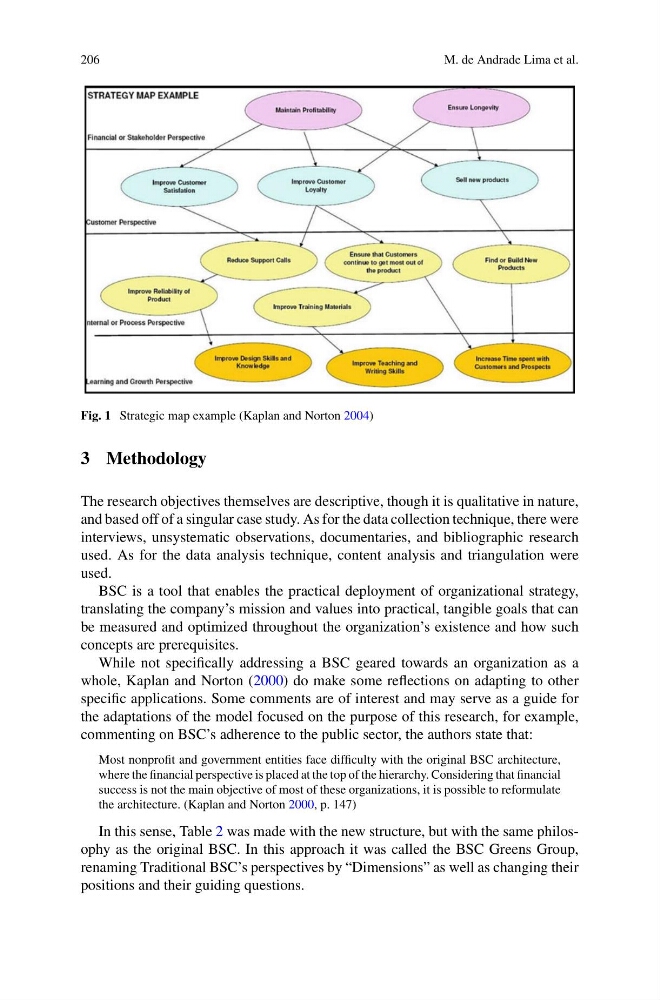
Fig. 1 Strategic map example (Kaplan and Norton 2004)
3 Methodology
The research objectives themselves are descriptive, though it is qualitative in nature,
and based off of a singular case study. As for the data collection technique, there were
interviews, unsystematic observations, documentaries, and bibliographic research
used. As for the data analysis technique, content analysis and triangulation were
used.
BSC is a tool that enables the practical deployment of organizational strategy,
translating the company’s mission and values into practical, tangible goals that can
be measured and optimized throughout the organization’s existence and how such
concepts are prerequisites.
While not specifically addressing a BSC geared towards an organization as a
whole, Kaplan and Norton (2000) do make some reflections on adapting to other
specific applications. Some comments are of interest and may serve as a guide for
the adaptations of the model focused on the purpose of this research, for example,
commenting on BSC’s adherence to the public sector, the authors state that:
Most nonprofit and government entities face difficulty with the original BSC architecture,
where the financial perspective is placed at the top of the hierarchy. Considering that financial
success is not the main objective of most of these organizations, it is possible to reformulate
the architecture. (Kaplan and Norton 2000, p. 147)
In this sense, Table 2 was made with the new structure, but with the same philosophy as the original BSC. In this approach it was called the BSC Greens Group,
renaming Traditional BSC’s perspectives by “Dimensions” as well as changing their
positions and their guiding questions.
M. de Andrade Lima et al.
Fig. 1 Strategic map example (Kaplan and Norton 2004)
3 Methodology
The research objectives themselves are descriptive, though it is qualitative in nature,
and based off of a singular case study. As for the data collection technique, there were
interviews, unsystematic observations, documentaries, and bibliographic research
used. As for the data analysis technique, content analysis and triangulation were
used.
BSC is a tool that enables the practical deployment of organizational strategy,
translating the company’s mission and values into practical, tangible goals that can
be measured and optimized throughout the organization’s existence and how such
concepts are prerequisites.
While not specifically addressing a BSC geared towards an organization as a
whole, Kaplan and Norton (2000) do make some reflections on adapting to other
specific applications. Some comments are of interest and may serve as a guide for
the adaptations of the model focused on the purpose of this research, for example,
commenting on BSC’s adherence to the public sector, the authors state that:
Most nonprofit and government entities face difficulty with the original BSC architecture,
where the financial perspective is placed at the top of the hierarchy. Considering that financial
success is not the main objective of most of these organizations, it is possible to reformulate
the architecture. (Kaplan and Norton 2000, p. 147)
In this sense, Table 2 was made with the new structure, but with the same philosophy as the original BSC. In this approach it was called the BSC Greens Group,
renaming Traditional BSC’s perspectives by “Dimensions” as well as changing their
positions and their guiding questions.