

114
I. Jaisli et al.
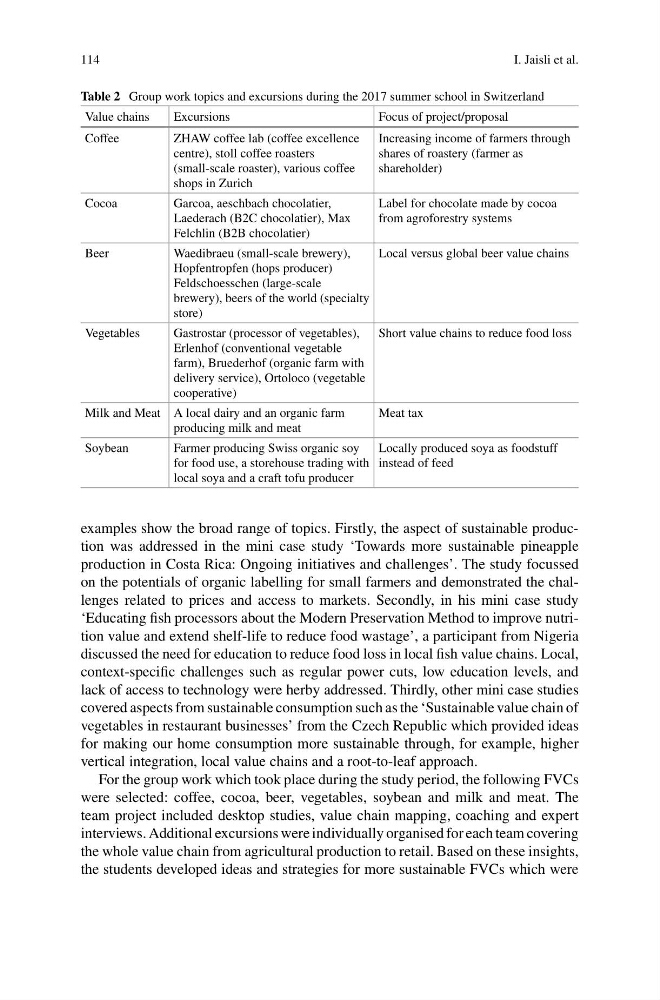
Table 2 Group work topics and excursions during the 2017 summer school in Switzerland
Value chains
Excursions
Focus of project/proposal
Coffee
ZHAW coffee lab (coffee excellence
centre), stoll coffee roasters
(small-scale roaster), various coffee
shops in Zurich
Increasing income of farmers through
shares of roastery (farmer as
shareholder)
Cocoa
Garcoa, aeschbach chocolatier,
Laederach (B2C chocolatier), Max
Felchlin (B2B chocolatier)
Label for chocolate made by cocoa
from agroforestry systems
Beer
Waedibraeu (small-scale brewery),
Hopfentropfen (hops producer)
Feldschoesschen (large-scale
brewery), beers of the world (specialty
store)
Local versus global beer value chains
Vegetables
Gastrostar (processor of vegetables),
Erlenhof (conventional vegetable
farm), Bruederhof (organic farm with
delivery service), Ortoloco (vegetable
cooperative)
Short value chains to reduce food loss
Milk and Meat A local dairy and an organic farm
producing milk and meat
Meat tax
Soybean
Farmer producing Swiss organic soy
for food use, a storehouse trading with
local soya and a craft tofu producer
Locally produced soya as foodstuff
instead of feed
examples show the broad range of topics. Firstly, the aspect of sustainable production was addressed in the mini case study ‘Towards more sustainable pineapple
production in Costa Rica: Ongoing initiatives and challenges’. The study focussed
on the potentials of organic labelling for small farmers and demonstrated the challenges related to prices and access to markets. Secondly, in his mini case study
‘Educating fish processors about the Modern Preservation Method to improve nutrition value and extend shelf-life to reduce food wastage’, a participant from Nigeria
discussed the need for education to reduce food loss in local fish value chains. Local,
context-specific challenges such as regular power cuts, low education levels, and
lack of access to technology were herby addressed. Thirdly, other mini case studies
covered aspects from sustainable consumption such as the ‘Sustainable value chain of
vegetables in restaurant businesses’ from the Czech Republic which provided ideas
for making our home consumption more sustainable through, for example, higher
vertical integration, local value chains and a root-to-leaf approach.
For the group work which took place during the study period, the following FVCs
were selected: coffee, cocoa, beer, vegetables, soybean and milk and meat. The
team project included desktop studies, value chain mapping, coaching and expert
interviews. Additional excursions were individually organised for each team covering
the whole value chain from agricultural production to retail. Based on these insights,
the students developed ideas and strategies for more sustainable FVCs which were
I. Jaisli et al.
Table 2 Group work topics and excursions during the 2017 summer school in Switzerland
Value chains
Excursions
Focus of project/proposal
Coffee
ZHAW coffee lab (coffee excellence
centre), stoll coffee roasters
(small-scale roaster), various coffee
shops in Zurich
Increasing income of farmers through
shares of roastery (farmer as
shareholder)
Cocoa
Garcoa, aeschbach chocolatier,
Laederach (B2C chocolatier), Max
Felchlin (B2B chocolatier)
Label for chocolate made by cocoa
from agroforestry systems
Beer
Waedibraeu (small-scale brewery),
Hopfentropfen (hops producer)
Feldschoesschen (large-scale
brewery), beers of the world (specialty
store)
Local versus global beer value chains
Vegetables
Gastrostar (processor of vegetables),
Erlenhof (conventional vegetable
farm), Bruederhof (organic farm with
delivery service), Ortoloco (vegetable
cooperative)
Short value chains to reduce food loss
Milk and Meat A local dairy and an organic farm
producing milk and meat
Meat tax
Soybean
Farmer producing Swiss organic soy
for food use, a storehouse trading with
local soya and a craft tofu producer
Locally produced soya as foodstuff
instead of feed
examples show the broad range of topics. Firstly, the aspect of sustainable production was addressed in the mini case study ‘Towards more sustainable pineapple
production in Costa Rica: Ongoing initiatives and challenges’. The study focussed
on the potentials of organic labelling for small farmers and demonstrated the challenges related to prices and access to markets. Secondly, in his mini case study
‘Educating fish processors about the Modern Preservation Method to improve nutrition value and extend shelf-life to reduce food wastage’, a participant from Nigeria
discussed the need for education to reduce food loss in local fish value chains. Local,
context-specific challenges such as regular power cuts, low education levels, and
lack of access to technology were herby addressed. Thirdly, other mini case studies
covered aspects from sustainable consumption such as the ‘Sustainable value chain of
vegetables in restaurant businesses’ from the Czech Republic which provided ideas
for making our home consumption more sustainable through, for example, higher
vertical integration, local value chains and a root-to-leaf approach.
For the group work which took place during the study period, the following FVCs
were selected: coffee, cocoa, beer, vegetables, soybean and milk and meat. The
team project included desktop studies, value chain mapping, coaching and expert
interviews. Additional excursions were individually organised for each team covering
the whole value chain from agricultural production to retail. Based on these insights,
the students developed ideas and strategies for more sustainable FVCs which were