

Geography of Food Summer School ...
113
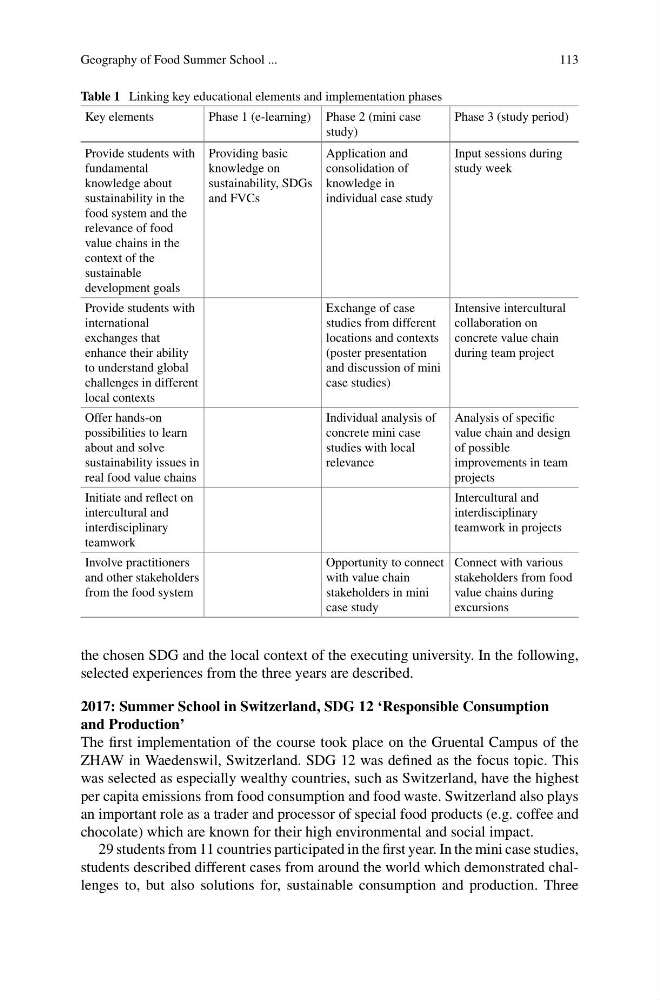
Table 1 Linking key educational elements and implementation phases
Key elements
Phase 1 (e-learning) Phase 2 (mini case
study)
Phase 3 (study period)
Provide students with
fundamental
knowledge about
sustainability in the
food system and the
relevance of food
value chains in the
context of the
sustainable
development goals
Providing basic
knowledge on
sustainability, SDGs
and FVCs
Application and
consolidation of
knowledge in
individual case study
Input sessions during
study week
Provide students with
international
exchanges that
enhance their ability
to understand global
challenges in different
local contexts
Exchange of case
studies from different
locations and contexts
(poster presentation
and discussion of mini
case studies)
Intensive intercultural
collaboration on
concrete value chain
during team project
Offer hands-on
possibilities to learn
about and solve
sustainability issues in
real food value chains
Individual analysis of
concrete mini case
studies with local
relevance
Analysis of specific
value chain and design
of possible
improvements in team
projects
Initiate and reflect on
intercultural and
interdisciplinary
teamwork
Intercultural and
interdisciplinary
teamwork in projects
Involve practitioners
and other stakeholders
from the food system
Opportunity to connect
with value chain
stakeholders in mini
case study
Connect with various
stakeholders from food
value chains during
excursions
the chosen SDG and the local context of the executing university. In the following,
selected experiences from the three years are described.
2017: Summer School in Switzerland, SDG 12 ‘Responsible Consumption
and Production’
The first implementation of the course took place on the Gruental Campus of the
ZHAW in Waedenswil, Switzerland. SDG 12 was defined as the focus topic. This
was selected as especially wealthy countries, such as Switzerland, have the highest
per capita emissions from food consumption and food waste. Switzerland also plays
an important role as a trader and processor of special food products (e.g. coffee and
chocolate) which are known for their high environmental and social impact.
29 students from 11 countries participated in the first year. In the mini case studies,
students described different cases from around the world which demonstrated challenges to, but also solutions for, sustainable consumption and production. Three
113
Table 1 Linking key educational elements and implementation phases
Key elements
Phase 1 (e-learning) Phase 2 (mini case
study)
Phase 3 (study period)
Provide students with
fundamental
knowledge about
sustainability in the
food system and the
relevance of food
value chains in the
context of the
sustainable
development goals
Providing basic
knowledge on
sustainability, SDGs
and FVCs
Application and
consolidation of
knowledge in
individual case study
Input sessions during
study week
Provide students with
international
exchanges that
enhance their ability
to understand global
challenges in different
local contexts
Exchange of case
studies from different
locations and contexts
(poster presentation
and discussion of mini
case studies)
Intensive intercultural
collaboration on
concrete value chain
during team project
Offer hands-on
possibilities to learn
about and solve
sustainability issues in
real food value chains
Individual analysis of
concrete mini case
studies with local
relevance
Analysis of specific
value chain and design
of possible
improvements in team
projects
Initiate and reflect on
intercultural and
interdisciplinary
teamwork
Intercultural and
interdisciplinary
teamwork in projects
Involve practitioners
and other stakeholders
from the food system
Opportunity to connect
with value chain
stakeholders in mini
case study
Connect with various
stakeholders from food
value chains during
excursions
the chosen SDG and the local context of the executing university. In the following,
selected experiences from the three years are described.
2017: Summer School in Switzerland, SDG 12 ‘Responsible Consumption
and Production’
The first implementation of the course took place on the Gruental Campus of the
ZHAW in Waedenswil, Switzerland. SDG 12 was defined as the focus topic. This
was selected as especially wealthy countries, such as Switzerland, have the highest
per capita emissions from food consumption and food waste. Switzerland also plays
an important role as a trader and processor of special food products (e.g. coffee and
chocolate) which are known for their high environmental and social impact.
29 students from 11 countries participated in the first year. In the mini case studies,
students described different cases from around the world which demonstrated challenges to, but also solutions for, sustainable consumption and production. Three