

325
phase-II enzymes: e.g., glutathione-S-transferases, which accelerate the inactivation of activated carcinogens. Both animal experiments and clinical studies prove
the influence of indole on estrogen metabolism, which thus exhibits a protective
effect in estrogen-dependent tumors. Isocyanates from broccoli and other cabbages
(kale, Brussels sprouts, cauliflower, cabbage) stimulate protective enzymes of the
so-called second phase in the process of carcinogenesis, thus reducing the risk of
cancer in various locations, because it is very rich in antioxidants and contains vitamin C and other flavonoids, including indoles and sulforaphane. Indoles prevent
tumor growth, especially in the breast, and sulforaphane stimulates the production
of cancer-fighting enzymes.
Alkaloids Alkaloids are present in a variety of food sources and are most commonly found in fruits, vegetables, spices, and aromatic herbs and are often used
from medicinal plants. They can be classified into three groups: protoalkaloids (biogenic amines, ephedrine), pseudoalkaloids (steroidal and diterpene alkaloids), and
true alkaloids. From the group of protoalkaloids, biogenic amines such as histamine
are often present in small amounts in beer, wine, and fish. Biogenic amines are
organic nitrogen compounds with low molecular weight who at high levels in wine
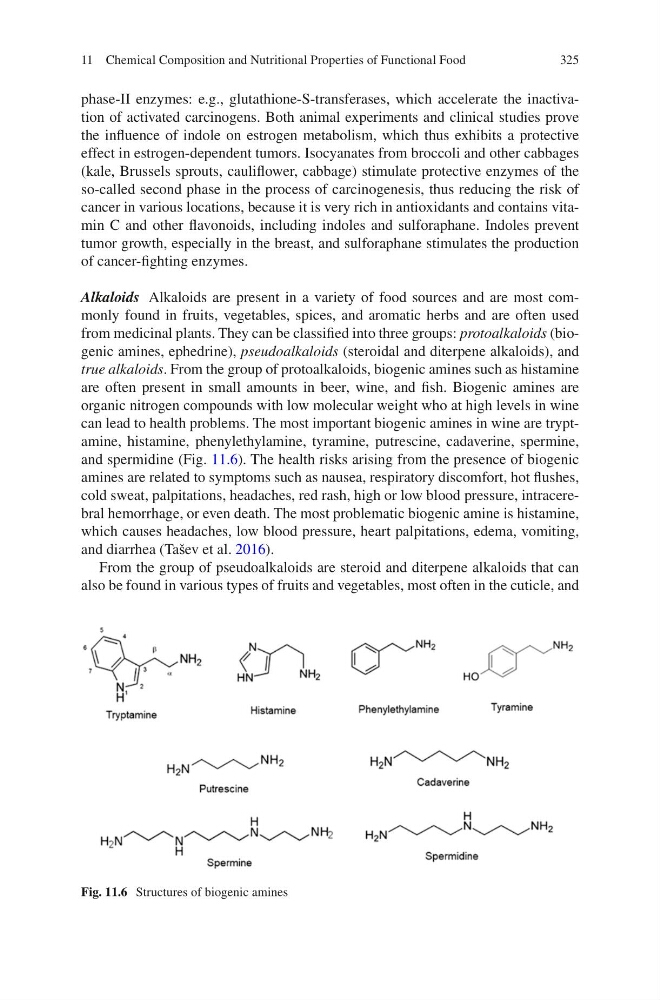
can lead to health problems. The most important biogenic amines in wine are tryptamine, histamine, phenylethylamine, tyramine, putrescine, cadaverine, spermine,
and spermidine (Fig. 11.6). The health risks arising from the presence of biogenic
amines are related to symptoms such as nausea, respiratory discomfort, hot flushes,
cold sweat, palpitations, headaches, red rash, high or low blood pressure, intracerebral hemorrhage, or even death. The most problematic biogenic amine is histamine,
which causes headaches, low blood pressure, heart palpitations, edema, vomiting,
and diarrhea (Tašev et al. 2016).
From the group of pseudoalkaloids are steroid and diterpene alkaloids that can
also be found in various types of fruits and vegetables, most often in the cuticle, and
Fig. 11.6 Structures of biogenic amines
11 Chemical Composition and Nutritional Properties of Functional Food
phase-II enzymes: e.g., glutathione-S-transferases, which accelerate the inactivation of activated carcinogens. Both animal experiments and clinical studies prove
the influence of indole on estrogen metabolism, which thus exhibits a protective
effect in estrogen-dependent tumors. Isocyanates from broccoli and other cabbages
(kale, Brussels sprouts, cauliflower, cabbage) stimulate protective enzymes of the
so-called second phase in the process of carcinogenesis, thus reducing the risk of
cancer in various locations, because it is very rich in antioxidants and contains vitamin C and other flavonoids, including indoles and sulforaphane. Indoles prevent
tumor growth, especially in the breast, and sulforaphane stimulates the production
of cancer-fighting enzymes.
Alkaloids Alkaloids are present in a variety of food sources and are most commonly found in fruits, vegetables, spices, and aromatic herbs and are often used
from medicinal plants. They can be classified into three groups: protoalkaloids (biogenic amines, ephedrine), pseudoalkaloids (steroidal and diterpene alkaloids), and
true alkaloids. From the group of protoalkaloids, biogenic amines such as histamine
are often present in small amounts in beer, wine, and fish. Biogenic amines are
organic nitrogen compounds with low molecular weight who at high levels in wine
can lead to health problems. The most important biogenic amines in wine are tryptamine, histamine, phenylethylamine, tyramine, putrescine, cadaverine, spermine,
and spermidine (Fig. 11.6). The health risks arising from the presence of biogenic
amines are related to symptoms such as nausea, respiratory discomfort, hot flushes,
cold sweat, palpitations, headaches, red rash, high or low blood pressure, intracerebral hemorrhage, or even death. The most problematic biogenic amine is histamine,
which causes headaches, low blood pressure, heart palpitations, edema, vomiting,
and diarrhea (Tašev et al. 2016).
From the group of pseudoalkaloids are steroid and diterpene alkaloids that can
also be found in various types of fruits and vegetables, most often in the cuticle, and
Fig. 11.6 Structures of biogenic amines
11 Chemical Composition and Nutritional Properties of Functional Food