

242
Eocene. The discovered thickness of the basal lithozone ranges from 20 to 50 m
(Rakicevik and Pendzerkoski 1973). The region is characterized by intensive agriculture production since the 1950s when cotton was the main cultivated crop for the
existence of the domestic population and since 1980 when cotton production was
replaced by early vegetable production which contributes to the development of the
food care industry. The wood industry is another also developed industry in the
region. The region is rich in hydrogeothermal water which according to Gorgieva
et al. (2000) belongs in the hydrogeothermal systems in the fractured granites of
Paleozoic or Mesozoic age. Hot springs and boreholes with different temperatures
are present within small distances mostly in the village of Bansko. The maximum
measured temperature is 73 °C, and the predicted maximum temperature is 120 °C
(Gorgieva 1989). The reservoir in the granites lies under thick tertiary sediments.
Abundant mine with copper and gold deposits is present in the village of Ilovica
located in a northwest-southeast striking tertiary magmatic arc that covers large
areas of Macedonia, Serbia, Central Romania, southern Bulgaria, northern Greece,
and Eastern Turkey (Carter 2008). Almost 60% of the land is represented by forest,
whereas 30% is covered with arable land. Vegetable production especially crops
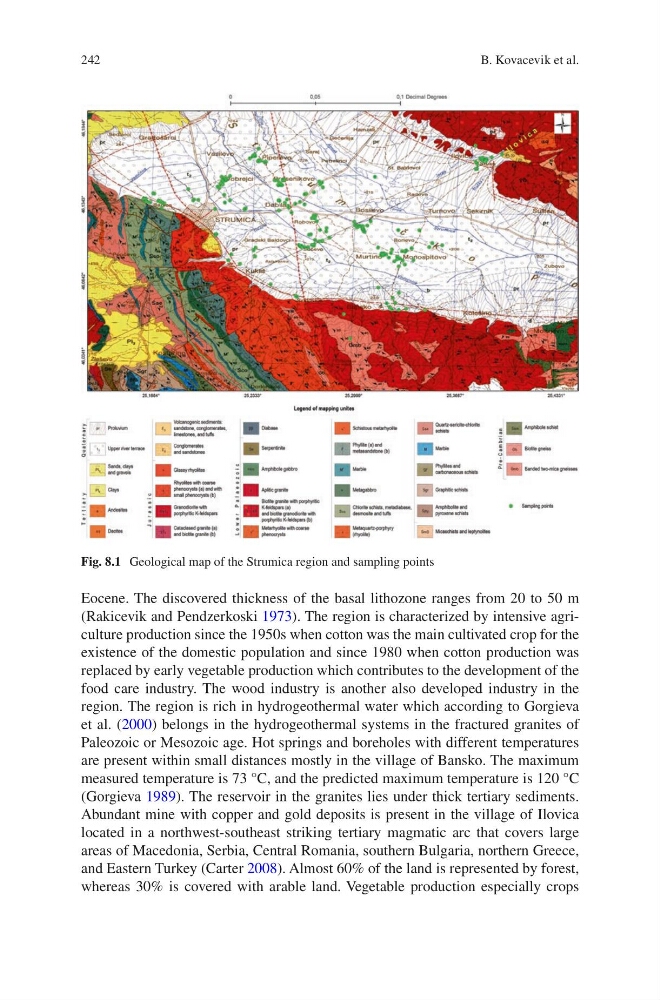
Fig. 8.1 Geological map of the Strumica region and sampling points
B. Kovacevik et al.
Eocene. The discovered thickness of the basal lithozone ranges from 20 to 50 m
(Rakicevik and Pendzerkoski 1973). The region is characterized by intensive agriculture production since the 1950s when cotton was the main cultivated crop for the
existence of the domestic population and since 1980 when cotton production was
replaced by early vegetable production which contributes to the development of the
food care industry. The wood industry is another also developed industry in the
region. The region is rich in hydrogeothermal water which according to Gorgieva
et al. (2000) belongs in the hydrogeothermal systems in the fractured granites of
Paleozoic or Mesozoic age. Hot springs and boreholes with different temperatures
are present within small distances mostly in the village of Bansko. The maximum
measured temperature is 73 °C, and the predicted maximum temperature is 120 °C
(Gorgieva 1989). The reservoir in the granites lies under thick tertiary sediments.
Abundant mine with copper and gold deposits is present in the village of Ilovica
located in a northwest-southeast striking tertiary magmatic arc that covers large
areas of Macedonia, Serbia, Central Romania, southern Bulgaria, northern Greece,
and Eastern Turkey (Carter 2008). Almost 60% of the land is represented by forest,
whereas 30% is covered with arable land. Vegetable production especially crops
Fig. 8.1 Geological map of the Strumica region and sampling points
B. Kovacevik et al.