

241
deterioration due to naturally occurring toxic elements is recognized worldwide:
Asia (Mukherjee et al. 2006; Luo et al. 2018; Chen et al. 1994; Rahman et al. 2005),
South America (Bundschuh et al. 2012), North America (Nordstrom 2002; Welch
et al. 1988; Mueller et al. 2001; Ayotte et al. 2003; Haque et al. 2008; Mumford
et al. 2012), and Europe (Gurzau and Pop 2012; Ravenscroft et al. 2009). Sources
of groundwater pollution due to anthropogenic activities like agricultural, industrial, and domestic use are also identified in many parts of the world (Naseh et al.
2018; Li and Gao 2019; Strebel et al. 1989; Luo et al. 2018; Bouwer 1987; Bouwer
et al. 1983). Groundwater situated under intensive agriculture production is vulnerable to pollution that leaches from the applied fertilizers and plant protection products. The small amount of freshwater available on the earth imposes the importance
of assessing groundwater quality in each region and identifying possible sources of
pollution. The Strumica region is one of the most intensive agriculture areas in the
Republic of North Macedonia which heavily depends on groundwater exploitation.
The uncontrolled use of chemical fertilizers and lack of sewage systems as well as
the improper drilling activities and waste disposal practices as well as the wood and
the canning industry which are developed in the investigated region are the main
contributors which may lead to deterioration of groundwater quality. Despite that,
there is still a lack of information about the groundwater quality assessment in this
region. Therefore, the main objectives of this study were to evaluate groundwater
quality in terms of identifying the major hydrogeochemical processes and sources
of natural and anthropogenic pollution in the groundwater of the Strumica region
which anticipates the potential health effects on the region’s inhabitants and the possible harmful effects arising from its exploitation.
8.2 Materials and Methods
8.2.1 Investigated Area
The region of Strumica is located in the southeastern part of the Republic of North
Macedonia, situated on the Balkan Peninsula, and occupies around 943 km
2
(Fig. 8.1). The age of the lithozone of the Strumica region belongs to the Upper
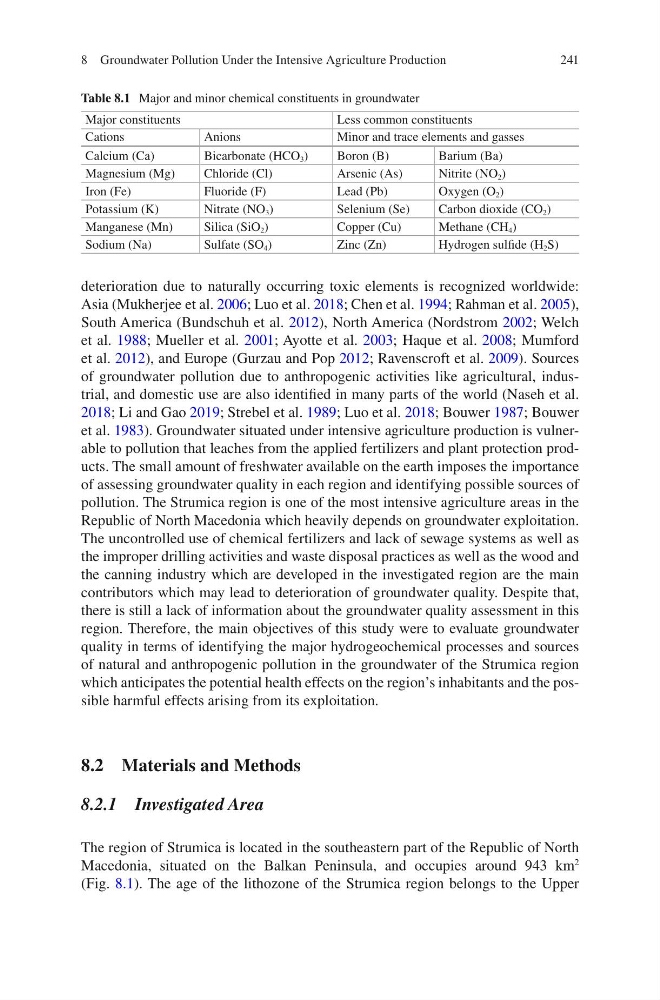
Table 8.1 Major and minor chemical constituents in groundwater
Major constituents
Less common constituents
Cations
Anions
Minor and trace elements and gasses
Calcium (Ca)
Bicarbonate (HCO 3 )
Boron (B)
Barium (Ba)
Magnesium (Mg)
Chloride (Cl)
Arsenic (As)
Nitrite (NO 2 )
Iron (Fe)
Fluoride (F)
Lead (Pb)
Oxygen (O 2 )
Potassium (K)
Nitrate (NO 3 )
Selenium (Se)
Carbon dioxide (CO 2 )
Manganese (Mn)
Silica (SiO 2 )
Copper (Cu)
Methane (CH 4 )
Sodium (Na)
Sulfate (SO 4 )
Zinc (Zn)
Hydrogen sulfide (H 2 S)
8 Groundwater Pollution Under the Intensive Agriculture Production
deterioration due to naturally occurring toxic elements is recognized worldwide:
Asia (Mukherjee et al. 2006; Luo et al. 2018; Chen et al. 1994; Rahman et al. 2005),
South America (Bundschuh et al. 2012), North America (Nordstrom 2002; Welch
et al. 1988; Mueller et al. 2001; Ayotte et al. 2003; Haque et al. 2008; Mumford
et al. 2012), and Europe (Gurzau and Pop 2012; Ravenscroft et al. 2009). Sources
of groundwater pollution due to anthropogenic activities like agricultural, industrial, and domestic use are also identified in many parts of the world (Naseh et al.
2018; Li and Gao 2019; Strebel et al. 1989; Luo et al. 2018; Bouwer 1987; Bouwer
et al. 1983). Groundwater situated under intensive agriculture production is vulnerable to pollution that leaches from the applied fertilizers and plant protection products. The small amount of freshwater available on the earth imposes the importance
of assessing groundwater quality in each region and identifying possible sources of
pollution. The Strumica region is one of the most intensive agriculture areas in the
Republic of North Macedonia which heavily depends on groundwater exploitation.
The uncontrolled use of chemical fertilizers and lack of sewage systems as well as
the improper drilling activities and waste disposal practices as well as the wood and
the canning industry which are developed in the investigated region are the main
contributors which may lead to deterioration of groundwater quality. Despite that,
there is still a lack of information about the groundwater quality assessment in this
region. Therefore, the main objectives of this study were to evaluate groundwater
quality in terms of identifying the major hydrogeochemical processes and sources
of natural and anthropogenic pollution in the groundwater of the Strumica region
which anticipates the potential health effects on the region’s inhabitants and the possible harmful effects arising from its exploitation.
8.2 Materials and Methods
8.2.1 Investigated Area
The region of Strumica is located in the southeastern part of the Republic of North
Macedonia, situated on the Balkan Peninsula, and occupies around 943 km
2
(Fig. 8.1). The age of the lithozone of the Strumica region belongs to the Upper
Table 8.1 Major and minor chemical constituents in groundwater
Major constituents
Less common constituents
Cations
Anions
Minor and trace elements and gasses
Calcium (Ca)
Bicarbonate (HCO 3 )
Boron (B)
Barium (Ba)
Magnesium (Mg)
Chloride (Cl)
Arsenic (As)
Nitrite (NO 2 )
Iron (Fe)
Fluoride (F)
Lead (Pb)
Oxygen (O 2 )
Potassium (K)
Nitrate (NO 3 )
Selenium (Se)
Carbon dioxide (CO 2 )
Manganese (Mn)
Silica (SiO 2 )
Copper (Cu)
Methane (CH 4 )
Sodium (Na)
Sulfate (SO 4 )
Zinc (Zn)
Hydrogen sulfide (H 2 S)
8 Groundwater Pollution Under the Intensive Agriculture Production