

80
T. V. Ramachandra and S. Bharath
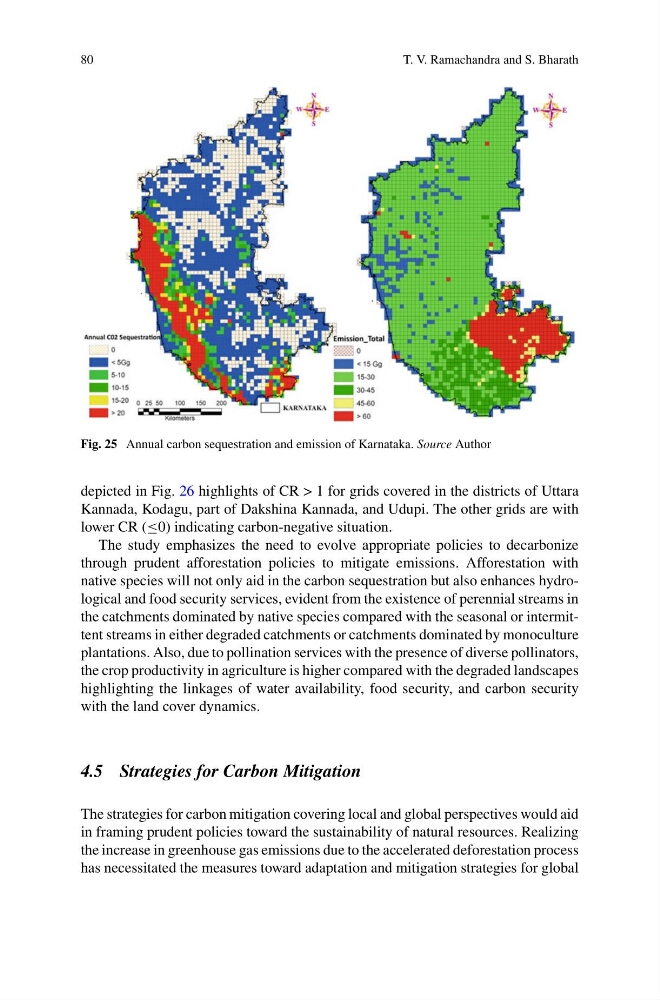
Fig. 25 Annual carbon sequestration and emission of Karnataka. Source Author
depicted in Fig. 26 highlights of CR > 1 for grids covered in the districts of Uttara
Kannada, Kodagu, part of Dakshina Kannada, and Udupi. The other grids are with
lower CR (≤0) indicating carbon-negative situation.
The study emphasizes the need to evolve appropriate policies to decarbonize
through prudent afforestation policies to mitigate emissions. Afforestation with
native species will not only aid in the carbon sequestration but also enhances hydrological and food security services, evident from the existence of perennial streams in
the catchments dominated by native species compared with the seasonal or intermittent streams in either degraded catchments or catchments dominated by monoculture
plantations. Also, due to pollination services with the presence of diverse pollinators,
the crop productivity in agriculture is higher compared with the degraded landscapes
highlighting the linkages of water availability, food security, and carbon security
with the land cover dynamics.
4.5 Strategies for Carbon Mitigation
The strategies for carbon mitigation covering local and global perspectives would aid
in framing prudent policies toward the sustainability of natural resources. Realizing
the increase in greenhouse gas emissions due to the accelerated deforestation process
has necessitated the measures toward adaptation and mitigation strategies for global
T. V. Ramachandra and S. Bharath
Fig. 25 Annual carbon sequestration and emission of Karnataka. Source Author
depicted in Fig. 26 highlights of CR > 1 for grids covered in the districts of Uttara
Kannada, Kodagu, part of Dakshina Kannada, and Udupi. The other grids are with
lower CR (≤0) indicating carbon-negative situation.
The study emphasizes the need to evolve appropriate policies to decarbonize
through prudent afforestation policies to mitigate emissions. Afforestation with
native species will not only aid in the carbon sequestration but also enhances hydrological and food security services, evident from the existence of perennial streams in
the catchments dominated by native species compared with the seasonal or intermittent streams in either degraded catchments or catchments dominated by monoculture
plantations. Also, due to pollination services with the presence of diverse pollinators,
the crop productivity in agriculture is higher compared with the degraded landscapes
highlighting the linkages of water availability, food security, and carbon security
with the land cover dynamics.
4.5 Strategies for Carbon Mitigation
The strategies for carbon mitigation covering local and global perspectives would aid
in framing prudent policies toward the sustainability of natural resources. Realizing
the increase in greenhouse gas emissions due to the accelerated deforestation process
has necessitated the measures toward adaptation and mitigation strategies for global