

62
T. V. Ramachandra and S. Bharath
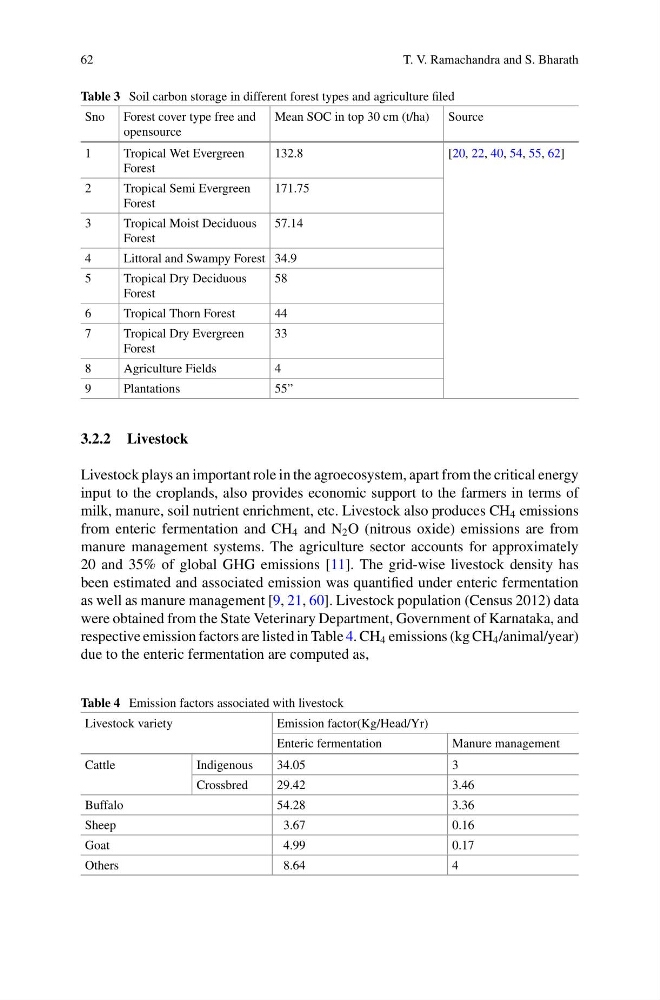
Table 3 Soil carbon storage in different forest types and agriculture filed
Sno Forest cover type free and
opensource
Mean SOC in top 30 cm (t/ha) Source
1
Tropical Wet Evergreen
Forest
132.8
[20, 22, 40, 54, 55, 62]
2
Tropical Semi Evergreen
Forest
171.75
3
Tropical Moist Deciduous
Forest
57.14
4
Littoral and Swampy Forest 34.9
5
Tropical Dry Deciduous
Forest
58
6
Tropical Thorn Forest
44
7
Tropical Dry Evergreen
Forest
33
8
Agriculture Fields
4
9
Plantations
55”
3.2.2 Livestock
Livestock plays an important role in the agroecosystem, apart from the critical energy
input to the croplands, also provides economic support to the farmers in terms of
milk, manure, soil nutrient enrichment, etc. Livestock also produces CH 4 emissions
from enteric fermentation and CH 4 and N 2 O (nitrous oxide) emissions are from
manure management systems. The agriculture sector accounts for approximately
20 and 35% of global GHG emissions [11]. The grid-wise livestock density has
been estimated and associated emission was quantified under enteric fermentation
as well as manure management [9, 21, 60]. Livestock population (Census 2012) data
were obtained from the State Veterinary Department, Government of Karnataka, and
respective emission factors are listed in Table 4. CH 4 emissions (kg CH 4 /animal/year)
due to the enteric fermentation are computed as,
Table 4 Emission factors associated with livestock
Livestock variety
Emission factor(Kg/Head/Yr)
Enteric fermentation
Manure management
Cattle
Indigenous
34.05
3
Crossbred
29.42
3.46
Buffalo
54.28
3.36
Sheep
3.67
0.16
Goat
4.99
0.17
Others
8.64
4
T. V. Ramachandra and S. Bharath
Table 3 Soil carbon storage in different forest types and agriculture filed
Sno Forest cover type free and
opensource
Mean SOC in top 30 cm (t/ha) Source
1
Tropical Wet Evergreen
Forest
132.8
[20, 22, 40, 54, 55, 62]
2
Tropical Semi Evergreen
Forest
171.75
3
Tropical Moist Deciduous
Forest
57.14
4
Littoral and Swampy Forest 34.9
5
Tropical Dry Deciduous
Forest
58
6
Tropical Thorn Forest
44
7
Tropical Dry Evergreen
Forest
33
8
Agriculture Fields
4
9
Plantations
55”
3.2.2 Livestock
Livestock plays an important role in the agroecosystem, apart from the critical energy
input to the croplands, also provides economic support to the farmers in terms of
milk, manure, soil nutrient enrichment, etc. Livestock also produces CH 4 emissions
from enteric fermentation and CH 4 and N 2 O (nitrous oxide) emissions are from
manure management systems. The agriculture sector accounts for approximately
20 and 35% of global GHG emissions [11]. The grid-wise livestock density has
been estimated and associated emission was quantified under enteric fermentation
as well as manure management [9, 21, 60]. Livestock population (Census 2012) data
were obtained from the State Veterinary Department, Government of Karnataka, and
respective emission factors are listed in Table 4. CH 4 emissions (kg CH 4 /animal/year)
due to the enteric fermentation are computed as,
Table 4 Emission factors associated with livestock
Livestock variety
Emission factor(Kg/Head/Yr)
Enteric fermentation
Manure management
Cattle
Indigenous
34.05
3
Crossbred
29.42
3.46
Buffalo
54.28
3.36
Sheep
3.67
0.16
Goat
4.99
0.17
Others
8.64
4