

Greenhouse Gas Emissions from Municipal Solid Waste Management …
125
Composition of generated MSW can be categorized into organic and inorganic.
Organic fraction of the waste mainly includes food wastes (mixed), plant materials, paper and cardboard, textile and gunny bags, animals’ wastes and decomposed
garbage, etc. (Table 1, Fig. 2) [34]. Whereas, inorganic fraction of MSW encapsulates construction wastes, plastics, glass, metals, rubber, thermacole, electronic
wastes (e-waste), multilaminates, ashes, and other processed trashes having inorganic constituents (Table 1, Fig. 2). Percentage contribution of both organic and
inorganic fractions in MSW generated from different areas of the world is illustrated
in Table 2 [44]. Composition of MSW is greatly influenced by geographical locaTables 1 Sources of organic and inorganic constituents in municipal solid waste
Type
Sources
Organic
Food material, garden trimmings, branches, grass cuttings, raw peelings,
bagasse, organic residues, animal excreta, decomposed garbage. residues
from slaughterhouses, etc.
Paper and cardboard Cardboard, newspapers, wrapping paper, paper scraps, telephone books,
magazines, bags, boxes, shredded paper, paper disposables
Plastics
Bottles, containers, packaging, bags, toys and lids, etc.
Glass
Bottles, light bulbs, broken glassware, cultured glass, etc.
Metals
Container, foil, tin, nonhazardous aerosol can, appliances, railing,
vehicle, and other utilities
Others
Leather, textiles, multilaminates, rubber, e-waste, building and
construction waste; appliances, ash, and other inert materials
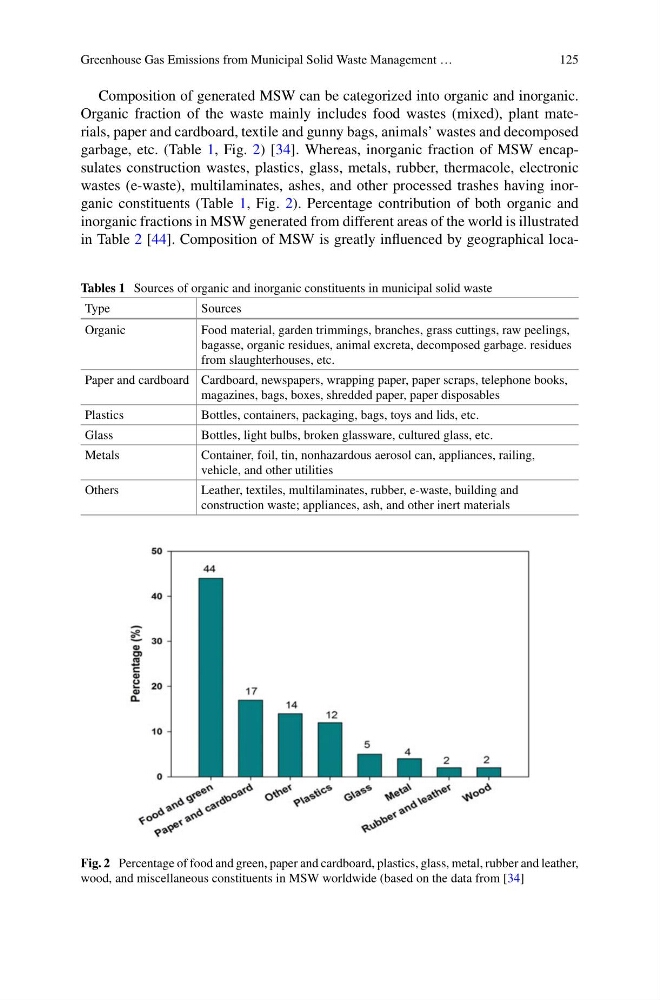
Fig. 2 Percentage of food and green, paper and cardboard, plastics, glass, metal, rubber and leather,
wood, and miscellaneous constituents in MSW worldwide (based on the data from [34]
125
Composition of generated MSW can be categorized into organic and inorganic.
Organic fraction of the waste mainly includes food wastes (mixed), plant materials, paper and cardboard, textile and gunny bags, animals’ wastes and decomposed
garbage, etc. (Table 1, Fig. 2) [34]. Whereas, inorganic fraction of MSW encapsulates construction wastes, plastics, glass, metals, rubber, thermacole, electronic
wastes (e-waste), multilaminates, ashes, and other processed trashes having inorganic constituents (Table 1, Fig. 2). Percentage contribution of both organic and
inorganic fractions in MSW generated from different areas of the world is illustrated
in Table 2 [44]. Composition of MSW is greatly influenced by geographical locaTables 1 Sources of organic and inorganic constituents in municipal solid waste
Type
Sources
Organic
Food material, garden trimmings, branches, grass cuttings, raw peelings,
bagasse, organic residues, animal excreta, decomposed garbage. residues
from slaughterhouses, etc.
Paper and cardboard Cardboard, newspapers, wrapping paper, paper scraps, telephone books,
magazines, bags, boxes, shredded paper, paper disposables
Plastics
Bottles, containers, packaging, bags, toys and lids, etc.
Glass
Bottles, light bulbs, broken glassware, cultured glass, etc.
Metals
Container, foil, tin, nonhazardous aerosol can, appliances, railing,
vehicle, and other utilities
Others
Leather, textiles, multilaminates, rubber, e-waste, building and
construction waste; appliances, ash, and other inert materials
Fig. 2 Percentage of food and green, paper and cardboard, plastics, glass, metal, rubber and leather,
wood, and miscellaneous constituents in MSW worldwide (based on the data from [34]