

108
A. S. Santos et al.
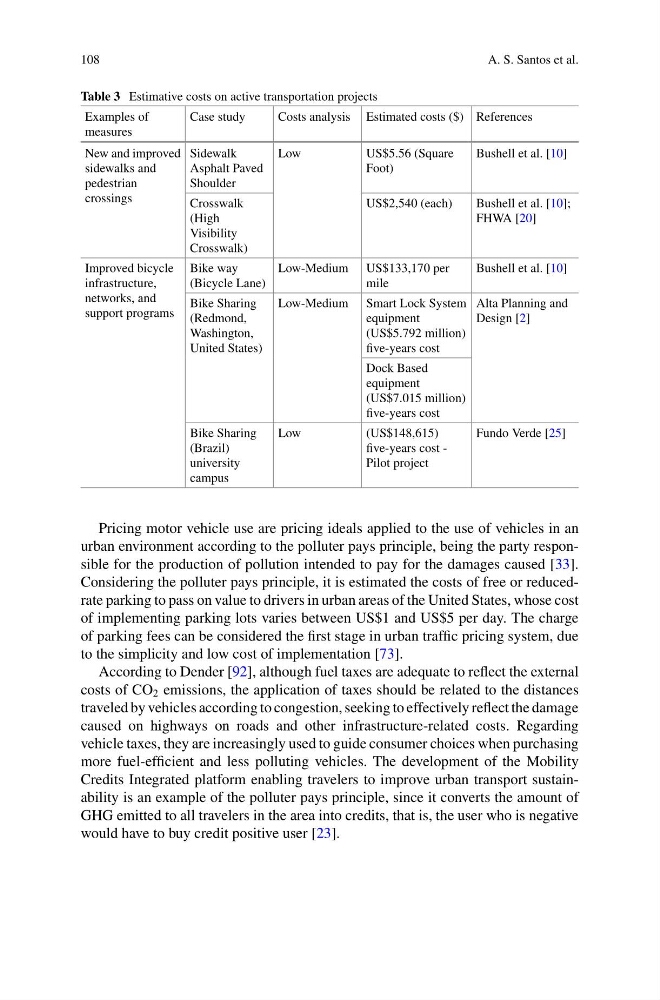
Table 3 Estimative costs on active transportation projects
Examples of
measures
Case study
Costs analysis Estimated costs ($) References
New and improved
sidewalks and
pedestrian
crossings
Sidewalk
Asphalt Paved
Shoulder
Low
US$5.56 (Square
Foot)
Bushell et al. [10]
Crosswalk
(High
Visibility
Crosswalk)
US$2,540 (each)
Bushell et al. [10];
FHWA [20]
Improved bicycle
infrastructure,
networks, and
support programs
Bike way
(Bicycle Lane)
Low-Medium US$133,170 per
mile
Bushell et al. [10]
Bike Sharing
(Redmond,
Washington,
United States)
Low-Medium Smart Lock System
equipment
(US$5.792 million)
five-years cost
Alta Planning and
Design [2]
Dock Based
equipment
(US$7.015 million)
five-years cost
Bike Sharing
(Brazil)
university
campus
Low
(US$148,615)
five-years cost -
Pilot project
Fundo Verde [25]
Pricing motor vehicle use are pricing ideals applied to the use of vehicles in an
urban environment according to the polluter pays principle, being the party responsible for the production of pollution intended to pay for the damages caused [33].
Considering the polluter pays principle, it is estimated the costs of free or reducedrate parking to pass on value to drivers in urban areas of the United States, whose cost
of implementing parking lots varies between US$1 and US$5 per day. The charge
of parking fees can be considered the first stage in urban traffic pricing system, due
to the simplicity and low cost of implementation [73].
According to Dender [92], although fuel taxes are adequate to reflect the external
costs of CO 2 emissions, the application of taxes should be related to the distances
traveled by vehicles according to congestion, seeking to effectively reflect the damage
caused on highways on roads and other infrastructure-related costs. Regarding
vehicle taxes, they are increasingly used to guide consumer choices when purchasing
more fuel-efficient and less polluting vehicles. The development of the Mobility
Credits Integrated platform enabling travelers to improve urban transport sustainability is an example of the polluter pays principle, since it converts the amount of
GHG emitted to all travelers in the area into credits, that is, the user who is negative
would have to buy credit positive user [23].
A. S. Santos et al.
Table 3 Estimative costs on active transportation projects
Examples of
measures
Case study
Costs analysis Estimated costs ($) References
New and improved
sidewalks and
pedestrian
crossings
Sidewalk
Asphalt Paved
Shoulder
Low
US$5.56 (Square
Foot)
Bushell et al. [10]
Crosswalk
(High
Visibility
Crosswalk)
US$2,540 (each)
Bushell et al. [10];
FHWA [20]
Improved bicycle
infrastructure,
networks, and
support programs
Bike way
(Bicycle Lane)
Low-Medium US$133,170 per
mile
Bushell et al. [10]
Bike Sharing
(Redmond,
Washington,
United States)
Low-Medium Smart Lock System
equipment
(US$5.792 million)
five-years cost
Alta Planning and
Design [2]
Dock Based
equipment
(US$7.015 million)
five-years cost
Bike Sharing
(Brazil)
university
campus
Low
(US$148,615)
five-years cost -
Pilot project
Fundo Verde [25]
Pricing motor vehicle use are pricing ideals applied to the use of vehicles in an
urban environment according to the polluter pays principle, being the party responsible for the production of pollution intended to pay for the damages caused [33].
Considering the polluter pays principle, it is estimated the costs of free or reducedrate parking to pass on value to drivers in urban areas of the United States, whose cost
of implementing parking lots varies between US$1 and US$5 per day. The charge
of parking fees can be considered the first stage in urban traffic pricing system, due
to the simplicity and low cost of implementation [73].
According to Dender [92], although fuel taxes are adequate to reflect the external
costs of CO 2 emissions, the application of taxes should be related to the distances
traveled by vehicles according to congestion, seeking to effectively reflect the damage
caused on highways on roads and other infrastructure-related costs. Regarding
vehicle taxes, they are increasingly used to guide consumer choices when purchasing
more fuel-efficient and less polluting vehicles. The development of the Mobility
Credits Integrated platform enabling travelers to improve urban transport sustainability is an example of the polluter pays principle, since it converts the amount of
GHG emitted to all travelers in the area into credits, that is, the user who is negative
would have to buy credit positive user [23].