

Ecological Footprint of the Life Cycle of Buildings
33
0
2
4
6
8
10
12
14
16
18
0
100
200
300
400
500
600
700
2012
2016
2020
2025
2029
2032
2035
2038
2049
2052
2055
2072
2078
2081
2084
2101
2107
ConsumpƟon costs (€/m 2
)
Works costs (€/m 2
)
Works costs
Electric consumpƟon cost
Water consumpƟon cost
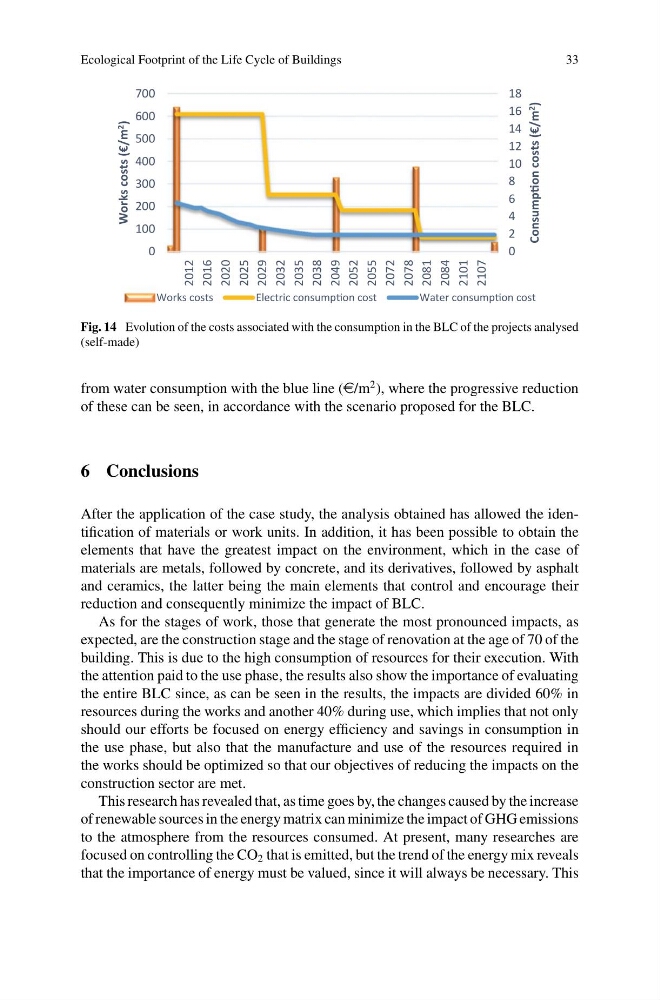
Fig. 14 Evolution of the costs associated with the consumption in the BLC of the projects analysed
(self-made)
from water consumption with the blue line (e/m
2 ), where the progressive reduction
of these can be seen, in accordance with the scenario proposed for the BLC.
6 Conclusions
After the application of the case study, the analysis obtained has allowed the identification of materials or work units. In addition, it has been possible to obtain the
elements that have the greatest impact on the environment, which in the case of
materials are metals, followed by concrete, and its derivatives, followed by asphalt
and ceramics, the latter being the main elements that control and encourage their
reduction and consequently minimize the impact of BLC.
As for the stages of work, those that generate the most pronounced impacts, as
expected, are the construction stage and the stage of renovation at the age of 70 of the
building. This is due to the high consumption of resources for their execution. With
the attention paid to the use phase, the results also show the importance of evaluating
the entire BLC since, as can be seen in the results, the impacts are divided 60% in
resources during the works and another 40% during use, which implies that not only
should our efforts be focused on energy efficiency and savings in consumption in
the use phase, but also that the manufacture and use of the resources required in
the works should be optimized so that our objectives of reducing the impacts on the
construction sector are met.
This research has revealed that, as time goes by, the changes caused by the increase
of renewable sources in the energy matrix can minimize the impact of GHG emissions
to the atmosphere from the resources consumed. At present, many researches are
focused on controlling the CO 2 that is emitted, but the trend of the energy mix reveals
that the importance of energy must be valued, since it will always be necessary. This
33
0
2
4
6
8
10
12
14
16
18
0
100
200
300
400
500
600
700
2012
2016
2020
2025
2029
2032
2035
2038
2049
2052
2055
2072
2078
2081
2084
2101
2107
ConsumpƟon costs (€/m 2
)
Works costs (€/m 2
)
Works costs
Electric consumpƟon cost
Water consumpƟon cost
Fig. 14 Evolution of the costs associated with the consumption in the BLC of the projects analysed
(self-made)
from water consumption with the blue line (e/m
2 ), where the progressive reduction
of these can be seen, in accordance with the scenario proposed for the BLC.
6 Conclusions
After the application of the case study, the analysis obtained has allowed the identification of materials or work units. In addition, it has been possible to obtain the
elements that have the greatest impact on the environment, which in the case of
materials are metals, followed by concrete, and its derivatives, followed by asphalt
and ceramics, the latter being the main elements that control and encourage their
reduction and consequently minimize the impact of BLC.
As for the stages of work, those that generate the most pronounced impacts, as
expected, are the construction stage and the stage of renovation at the age of 70 of the
building. This is due to the high consumption of resources for their execution. With
the attention paid to the use phase, the results also show the importance of evaluating
the entire BLC since, as can be seen in the results, the impacts are divided 60% in
resources during the works and another 40% during use, which implies that not only
should our efforts be focused on energy efficiency and savings in consumption in
the use phase, but also that the manufacture and use of the resources required in
the works should be optimized so that our objectives of reducing the impacts on the
construction sector are met.
This research has revealed that, as time goes by, the changes caused by the increase
of renewable sources in the energy matrix can minimize the impact of GHG emissions
to the atmosphere from the resources consumed. At present, many researches are
focused on controlling the CO 2 that is emitted, but the trend of the energy mix reveals
that the importance of energy must be valued, since it will always be necessary. This