

Archaeological Sites in Dakhla Oasis, Western Desert, Egypt
77
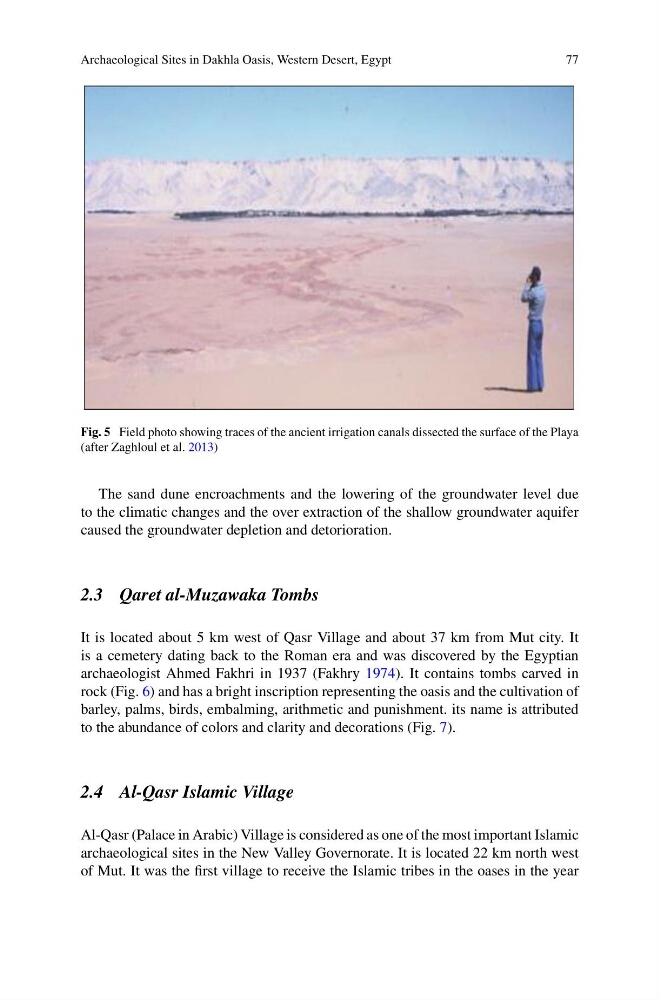
Fig. 5 Field photo showing traces of the ancient irrigation canals dissected the surface of the Playa
(after Zaghloul et al. 2013)
The sand dune encroachments and the lowering of the groundwater level due
to the climatic changes and the over extraction of the shallow groundwater aquifer
caused the groundwater depletion and detorioration.
2.3 Qaret al-Muzawaka Tombs
It is located about 5 km west of Qasr Village and about 37 km from Mut city. It
is a cemetery dating back to the Roman era and was discovered by the Egyptian
archaeologist Ahmed Fakhri in 1937 (Fakhry 1974). It contains tombs carved in
rock (Fig. 6) and has a bright inscription representing the oasis and the cultivation of
barley, palms, birds, embalming, arithmetic and punishment. its name is attributed
to the abundance of colors and clarity and decorations (Fig. 7).
2.4 Al-Qasr Islamic Village
Al-Qasr (Palace in Arabic) Village is considered as one of the most important Islamic
archaeological sites in the New Valley Governorate. It is located 22 km north west
of Mut. It was the first village to receive the Islamic tribes in the oases in the year
77
Fig. 5 Field photo showing traces of the ancient irrigation canals dissected the surface of the Playa
(after Zaghloul et al. 2013)
The sand dune encroachments and the lowering of the groundwater level due
to the climatic changes and the over extraction of the shallow groundwater aquifer
caused the groundwater depletion and detorioration.
2.3 Qaret al-Muzawaka Tombs
It is located about 5 km west of Qasr Village and about 37 km from Mut city. It
is a cemetery dating back to the Roman era and was discovered by the Egyptian
archaeologist Ahmed Fakhri in 1937 (Fakhry 1974). It contains tombs carved in
rock (Fig. 6) and has a bright inscription representing the oasis and the cultivation of
barley, palms, birds, embalming, arithmetic and punishment. its name is attributed
to the abundance of colors and clarity and decorations (Fig. 7).
2.4 Al-Qasr Islamic Village
Al-Qasr (Palace in Arabic) Village is considered as one of the most important Islamic
archaeological sites in the New Valley Governorate. It is located 22 km north west
of Mut. It was the first village to receive the Islamic tribes in the oases in the year