

Hydrologeological and Hydrological …
195
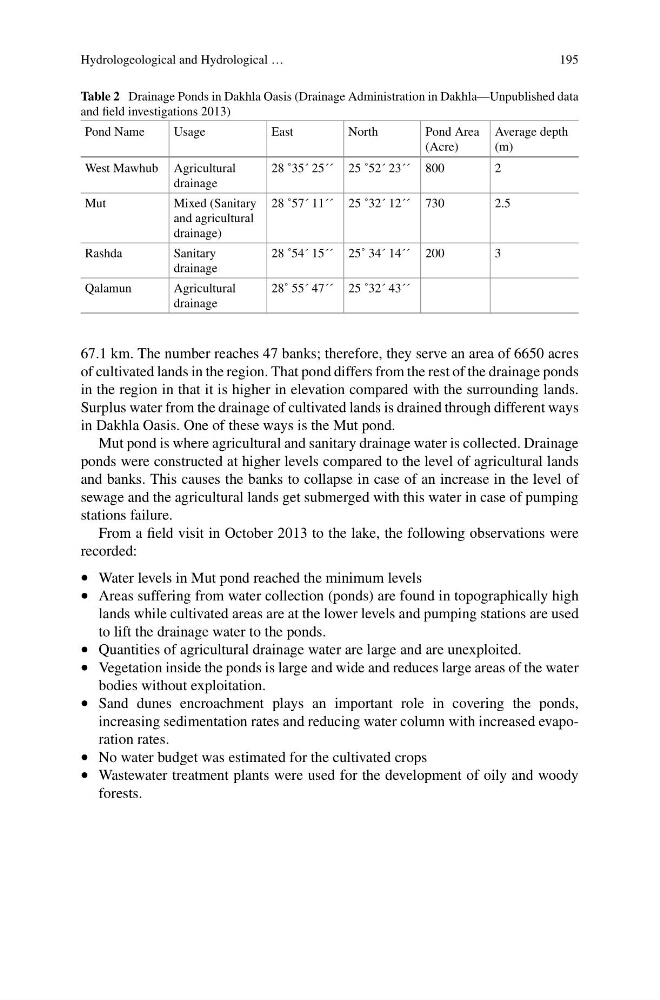
Table 2 Drainage Ponds in Dakhla Oasis (Drainage Administration in Dakhla—Unpublished data
and field investigations 2013)
Pond Name
Usage
East
North
Pond Area
(Acre)
Average depth
(m)
West Mawhub Agricultural
drainage
28 ˚35´ 25´´ 25 ˚52´ 23´´ 800
2
Mut
Mixed (Sanitary
and agricultural
drainage)
28 ˚57´ 11´´ 25 ˚32´ 12´´ 730
2.5
Rashda
Sanitary
drainage
28 ˚54´ 15´´ 25˚ 34´ 14´´ 200
3
Qalamun
Agricultural
drainage
28˚ 55´ 47´´ 25 ˚32´ 43´´
67.1 km. The number reaches 47 banks; therefore, they serve an area of 6650 acres
of cultivated lands in the region. That pond differs from the rest of the drainage ponds
in the region in that it is higher in elevation compared with the surrounding lands.
Surplus water from the drainage of cultivated lands is drained through different ways
in Dakhla Oasis. One of these ways is the Mut pond.
Mut pond is where agricultural and sanitary drainage water is collected. Drainage
ponds were constructed at higher levels compared to the level of agricultural lands
and banks. This causes the banks to collapse in case of an increase in the level of
sewage and the agricultural lands get submerged with this water in case of pumping
stations failure.
From a field visit in October 2013 to the lake, the following observations were
recorded:
• Water levels in Mut pond reached the minimum levels
• Areas suffering from water collection (ponds) are found in topographically high
lands while cultivated areas are at the lower levels and pumping stations are used
to lift the drainage water to the ponds.
• Quantities of agricultural drainage water are large and are unexploited.
• Vegetation inside the ponds is large and wide and reduces large areas of the water
bodies without exploitation.
• Sand dunes encroachment plays an important role in covering the ponds,
increasing sedimentation rates and reducing water column with increased evaporation rates.
• No water budget was estimated for the cultivated crops
• Wastewater treatment plants were used for the development of oily and woody
forests.
195
Table 2 Drainage Ponds in Dakhla Oasis (Drainage Administration in Dakhla—Unpublished data
and field investigations 2013)
Pond Name
Usage
East
North
Pond Area
(Acre)
Average depth
(m)
West Mawhub Agricultural
drainage
28 ˚35´ 25´´ 25 ˚52´ 23´´ 800
2
Mut
Mixed (Sanitary
and agricultural
drainage)
28 ˚57´ 11´´ 25 ˚32´ 12´´ 730
2.5
Rashda
Sanitary
drainage
28 ˚54´ 15´´ 25˚ 34´ 14´´ 200
3
Qalamun
Agricultural
drainage
28˚ 55´ 47´´ 25 ˚32´ 43´´
67.1 km. The number reaches 47 banks; therefore, they serve an area of 6650 acres
of cultivated lands in the region. That pond differs from the rest of the drainage ponds
in the region in that it is higher in elevation compared with the surrounding lands.
Surplus water from the drainage of cultivated lands is drained through different ways
in Dakhla Oasis. One of these ways is the Mut pond.
Mut pond is where agricultural and sanitary drainage water is collected. Drainage
ponds were constructed at higher levels compared to the level of agricultural lands
and banks. This causes the banks to collapse in case of an increase in the level of
sewage and the agricultural lands get submerged with this water in case of pumping
stations failure.
From a field visit in October 2013 to the lake, the following observations were
recorded:
• Water levels in Mut pond reached the minimum levels
• Areas suffering from water collection (ponds) are found in topographically high
lands while cultivated areas are at the lower levels and pumping stations are used
to lift the drainage water to the ponds.
• Quantities of agricultural drainage water are large and are unexploited.
• Vegetation inside the ponds is large and wide and reduces large areas of the water
bodies without exploitation.
• Sand dunes encroachment plays an important role in covering the ponds,
increasing sedimentation rates and reducing water column with increased evaporation rates.
• No water budget was estimated for the cultivated crops
• Wastewater treatment plants were used for the development of oily and woody
forests.