

164
E. Iwasaki and K. Kashiwagi
0
10
20
30
40
50
60
70
1820
1911
1925
1942
1946
1953
1955
1961
1963
1965
1967
1969
1973
1975
1977
1980
1985
1987
1990
1993
1996
1998
2001
2003
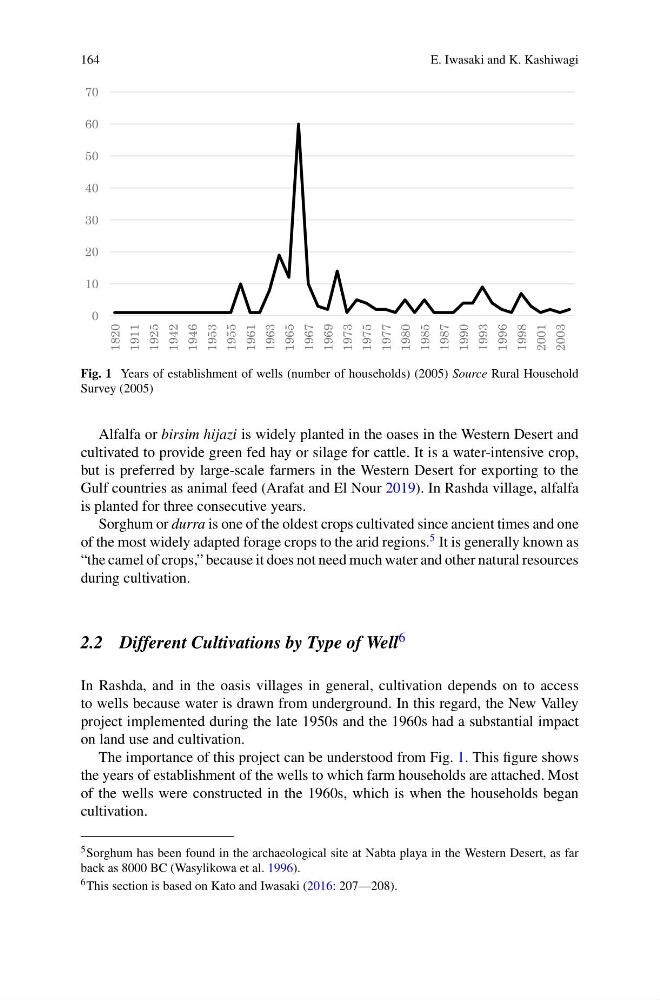
Fig. 1 Years of establishment of wells (number of households) (2005) Source Rural Household
Survey (2005)
Alfalfa or birsim hijazi is widely planted in the oases in the Western Desert and
cultivated to provide green fed hay or silage for cattle. It is a water-intensive crop,
but is preferred by large-scale farmers in the Western Desert for exporting to the
Gulf countries as animal feed (Arafat and El Nour 2019). In Rashda village, alfalfa
is planted for three consecutive years.
Sorghum or durra is one of the oldest crops cultivated since ancient times and one
of the most widely adapted forage crops to the arid regions.
5 It is generally known as
“the camel of crops,” because it does not need much water and other natural resources
during cultivation.
2.2 Different Cultivations by Type of Well 6
In Rashda, and in the oasis villages in general, cultivation depends on to access
to wells because water is drawn from underground. In this regard, the New Valley
project implemented during the late 1950s and the 1960s had a substantial impact
on land use and cultivation.
The importance of this project can be understood from Fig. 1. This figure shows
the years of establishment of the wells to which farm households are attached. Most
of the wells were constructed in the 1960s, which is when the households began
cultivation.
5 Sorghum has been found in the archaeological site at Nabta playa in the Western Desert, as far
back as 8000 BC (Wasylikowa et al. 1996).
6 This section is based on Kato and Iwasaki (2016: 207—208).
E. Iwasaki and K. Kashiwagi
0
10
20
30
40
50
60
70
1820
1911
1925
1942
1946
1953
1955
1961
1963
1965
1967
1969
1973
1975
1977
1980
1985
1987
1990
1993
1996
1998
2001
2003
Fig. 1 Years of establishment of wells (number of households) (2005) Source Rural Household
Survey (2005)
Alfalfa or birsim hijazi is widely planted in the oases in the Western Desert and
cultivated to provide green fed hay or silage for cattle. It is a water-intensive crop,
but is preferred by large-scale farmers in the Western Desert for exporting to the
Gulf countries as animal feed (Arafat and El Nour 2019). In Rashda village, alfalfa
is planted for three consecutive years.
Sorghum or durra is one of the oldest crops cultivated since ancient times and one
of the most widely adapted forage crops to the arid regions.
5 It is generally known as
“the camel of crops,” because it does not need much water and other natural resources
during cultivation.
2.2 Different Cultivations by Type of Well 6
In Rashda, and in the oasis villages in general, cultivation depends on to access
to wells because water is drawn from underground. In this regard, the New Valley
project implemented during the late 1950s and the 1960s had a substantial impact
on land use and cultivation.
The importance of this project can be understood from Fig. 1. This figure shows
the years of establishment of the wells to which farm households are attached. Most
of the wells were constructed in the 1960s, which is when the households began
cultivation.
5 Sorghum has been found in the archaeological site at Nabta playa in the Western Desert, as far
back as 8000 BC (Wasylikowa et al. 1996).
6 This section is based on Kato and Iwasaki (2016: 207—208).