

40
S. Iftekhar et al.
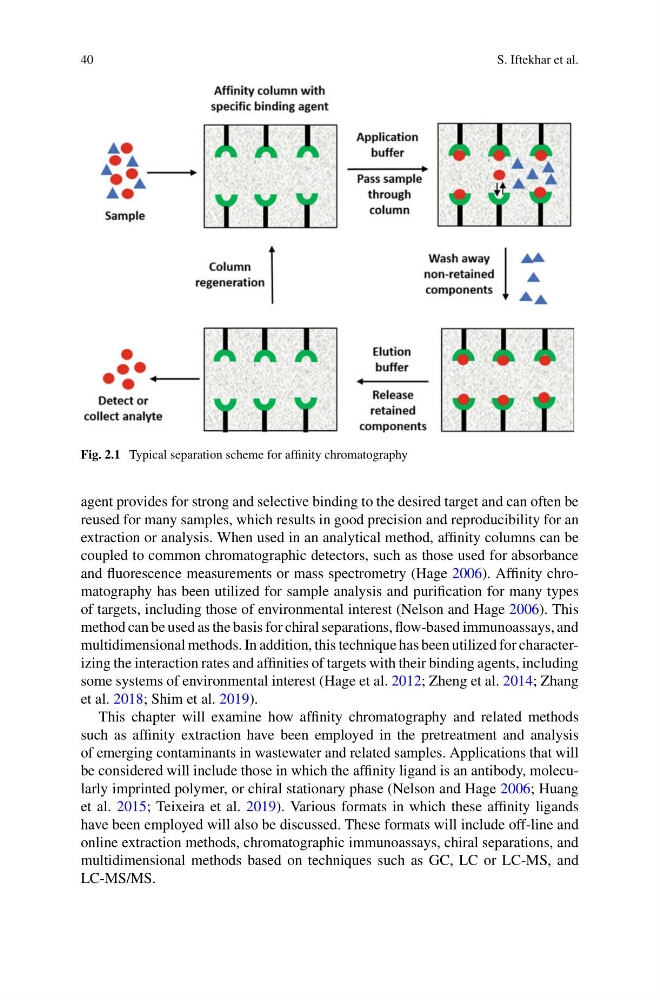
Fig. 2.1 Typical separation scheme for affinity chromatography
agent provides for strong and selective binding to the desired target and can often be
reused for many samples, which results in good precision and reproducibility for an
extraction or analysis. When used in an analytical method, affinity columns can be
coupled to common chromatographic detectors, such as those used for absorbance
and fluorescence measurements or mass spectrometry (Hage 2006). Affinity chromatography has been utilized for sample analysis and purification for many types
of targets, including those of environmental interest (Nelson and Hage 2006). This
method can be used as the basis for chiral separations, flow-based immunoassays, and
multidimensional methods. In addition, this technique has been utilized for characterizing the interaction rates and affinities of targets with their binding agents, including
some systems of environmental interest (Hage et al. 2012; Zheng et al. 2014; Zhang
et al. 2018; Shim et al. 2019).
This chapter will examine how affinity chromatography and related methods
such as affinity extraction have been employed in the pretreatment and analysis
of emerging contaminants in wastewater and related samples. Applications that will
be considered will include those in which the affinity ligand is an antibody, molecularly imprinted polymer, or chiral stationary phase (Nelson and Hage 2006; Huang
et al. 2015; Teixeira et al. 2019). Various formats in which these affinity ligands
have been employed will also be discussed. These formats will include off-line and
online extraction methods, chromatographic immunoassays, chiral separations, and
multidimensional methods based on techniques such as GC, LC or LC-MS, and
LC-MS/MS.
S. Iftekhar et al.
Fig. 2.1 Typical separation scheme for affinity chromatography
agent provides for strong and selective binding to the desired target and can often be
reused for many samples, which results in good precision and reproducibility for an
extraction or analysis. When used in an analytical method, affinity columns can be
coupled to common chromatographic detectors, such as those used for absorbance
and fluorescence measurements or mass spectrometry (Hage 2006). Affinity chromatography has been utilized for sample analysis and purification for many types
of targets, including those of environmental interest (Nelson and Hage 2006). This
method can be used as the basis for chiral separations, flow-based immunoassays, and
multidimensional methods. In addition, this technique has been utilized for characterizing the interaction rates and affinities of targets with their binding agents, including
some systems of environmental interest (Hage et al. 2012; Zheng et al. 2014; Zhang
et al. 2018; Shim et al. 2019).
This chapter will examine how affinity chromatography and related methods
such as affinity extraction have been employed in the pretreatment and analysis
of emerging contaminants in wastewater and related samples. Applications that will
be considered will include those in which the affinity ligand is an antibody, molecularly imprinted polymer, or chiral stationary phase (Nelson and Hage 2006; Huang
et al. 2015; Teixeira et al. 2019). Various formats in which these affinity ligands
have been employed will also be discussed. These formats will include off-line and
online extraction methods, chromatographic immunoassays, chiral separations, and
multidimensional methods based on techniques such as GC, LC or LC-MS, and
LC-MS/MS.