

378
P. Mazumder et al.
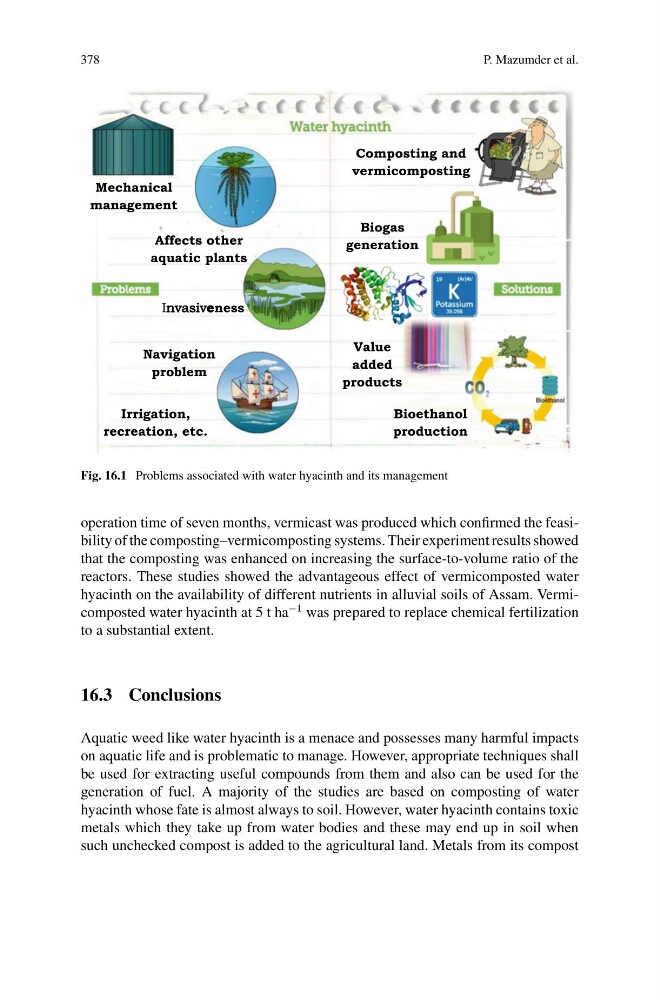
Fig. 16.1 Problems associated with water hyacinth and its management
operation time of seven months, vermicast was produced which confirmed the feasibility of the composting–vermicomposting systems. Their experiment results showed
that the composting was enhanced on increasing the surface-to-volume ratio of the
reactors. These studies showed the advantageous effect of vermicomposted water
hyacinth on the availability of different nutrients in alluvial soils of Assam. Vermicomposted water hyacinth at 5 t ha
−1 was prepared to replace chemical fertilization
to a substantial extent.
16.3 Conclusions
Aquatic weed like water hyacinth is a menace and possesses many harmful impacts
on aquatic life and is problematic to manage. However, appropriate techniques shall
be used for extracting useful compounds from them and also can be used for the
generation of fuel. A majority of the studies are based on composting of water
hyacinth whose fate is almost always to soil. However, water hyacinth contains toxic
metals which they take up from water bodies and these may end up in soil when
such unchecked compost is added to the agricultural land. Metals from its compost
P. Mazumder et al.
Fig. 16.1 Problems associated with water hyacinth and its management
operation time of seven months, vermicast was produced which confirmed the feasibility of the composting–vermicomposting systems. Their experiment results showed
that the composting was enhanced on increasing the surface-to-volume ratio of the
reactors. These studies showed the advantageous effect of vermicomposted water
hyacinth on the availability of different nutrients in alluvial soils of Assam. Vermicomposted water hyacinth at 5 t ha
−1 was prepared to replace chemical fertilization
to a substantial extent.
16.3 Conclusions
Aquatic weed like water hyacinth is a menace and possesses many harmful impacts
on aquatic life and is problematic to manage. However, appropriate techniques shall
be used for extracting useful compounds from them and also can be used for the
generation of fuel. A majority of the studies are based on composting of water
hyacinth whose fate is almost always to soil. However, water hyacinth contains toxic
metals which they take up from water bodies and these may end up in soil when
such unchecked compost is added to the agricultural land. Metals from its compost