

15 An Overview of Natural Water Contamination …
357
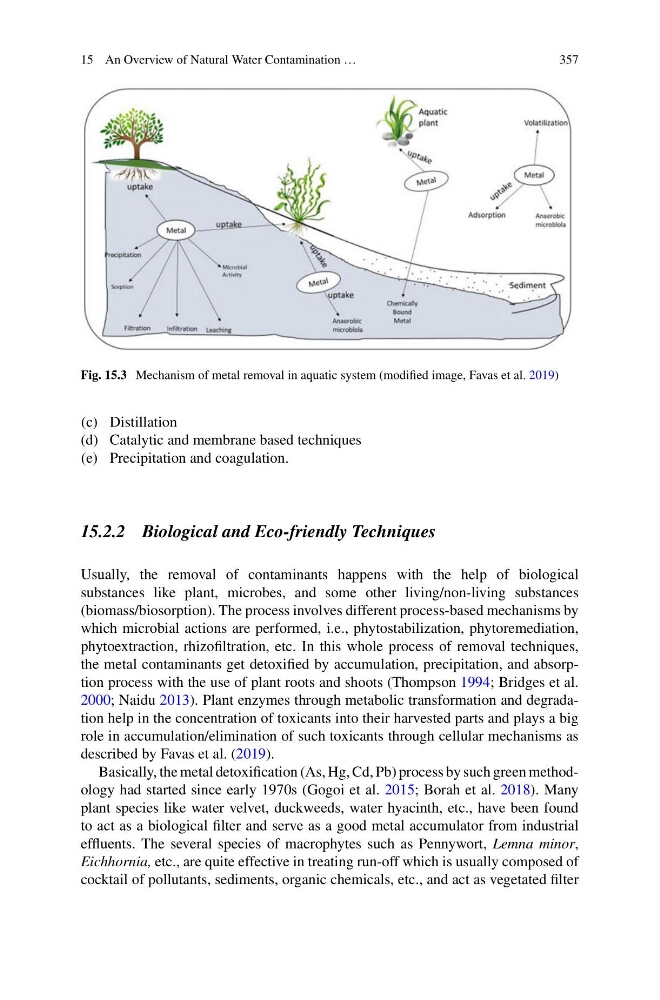
Fig. 15.3 Mechanism of metal removal in aquatic system (modified image, Favas et al. 2019)
(c) Distillation
(d) Catalytic and membrane based techniques
(e) Precipitation and coagulation.
15.2.2 Biological and Eco-friendly Techniques
Usually, the removal of contaminants happens with the help of biological
substances like plant, microbes, and some other living/non-living substances
(biomass/biosorption). The process involves different process-based mechanisms by
which microbial actions are performed, i.e., phytostabilization, phytoremediation,
phytoextraction, rhizofiltration, etc. In this whole process of removal techniques,
the metal contaminants get detoxified by accumulation, precipitation, and absorption process with the use of plant roots and shoots (Thompson 1994; Bridges et al.
2000; Naidu 2013). Plant enzymes through metabolic transformation and degradation help in the concentration of toxicants into their harvested parts and plays a big
role in accumulation/elimination of such toxicants through cellular mechanisms as
described by Favas et al. (2019).
Basically, the metal detoxification (As, Hg, Cd, Pb) process by such green methodology had started since early 1970s (Gogoi et al. 2015; Borah et al. 2018). Many
plant species like water velvet, duckweeds, water hyacinth, etc., have been found
to act as a biological filter and serve as a good metal accumulator from industrial
effluents. The several species of macrophytes such as Pennywort, Lemna minor,
Eichhornia, etc., are quite effective in treating run-off which is usually composed of
cocktail of pollutants, sediments, organic chemicals, etc., and act as vegetated filter
357
Fig. 15.3 Mechanism of metal removal in aquatic system (modified image, Favas et al. 2019)
(c) Distillation
(d) Catalytic and membrane based techniques
(e) Precipitation and coagulation.
15.2.2 Biological and Eco-friendly Techniques
Usually, the removal of contaminants happens with the help of biological
substances like plant, microbes, and some other living/non-living substances
(biomass/biosorption). The process involves different process-based mechanisms by
which microbial actions are performed, i.e., phytostabilization, phytoremediation,
phytoextraction, rhizofiltration, etc. In this whole process of removal techniques,
the metal contaminants get detoxified by accumulation, precipitation, and absorption process with the use of plant roots and shoots (Thompson 1994; Bridges et al.
2000; Naidu 2013). Plant enzymes through metabolic transformation and degradation help in the concentration of toxicants into their harvested parts and plays a big
role in accumulation/elimination of such toxicants through cellular mechanisms as
described by Favas et al. (2019).
Basically, the metal detoxification (As, Hg, Cd, Pb) process by such green methodology had started since early 1970s (Gogoi et al. 2015; Borah et al. 2018). Many
plant species like water velvet, duckweeds, water hyacinth, etc., have been found
to act as a biological filter and serve as a good metal accumulator from industrial
effluents. The several species of macrophytes such as Pennywort, Lemna minor,
Eichhornia, etc., are quite effective in treating run-off which is usually composed of
cocktail of pollutants, sediments, organic chemicals, etc., and act as vegetated filter