

15 An Overview of Natural Water Contamination …
353
Phytovolatization
Phytodegradation
Water
Rhizodegradation
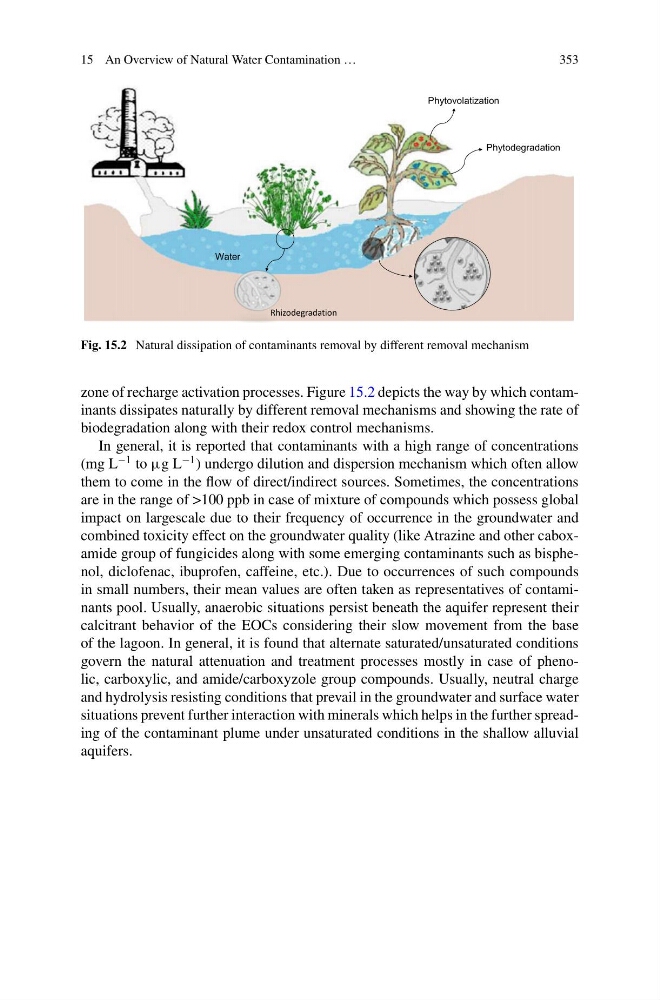
Fig. 15.2 Natural dissipation of contaminants removal by different removal mechanism
zone of recharge activation processes. Figure 15.2 depicts the way by which contaminants dissipates naturally by different removal mechanisms and showing the rate of
biodegradation along with their redox control mechanisms.
In general, it is reported that contaminants with a high range of concentrations
(mg L
−1 to µg L
−1 ) undergo dilution and dispersion mechanism which often allow
them to come in the flow of direct/indirect sources. Sometimes, the concentrations
are in the range of >100 ppb in case of mixture of compounds which possess global
impact on largescale due to their frequency of occurrence in the groundwater and
combined toxicity effect on the groundwater quality (like Atrazine and other caboxamide group of fungicides along with some emerging contaminants such as bisphenol, diclofenac, ibuprofen, caffeine, etc.). Due to occurrences of such compounds
in small numbers, their mean values are often taken as representatives of contaminants pool. Usually, anaerobic situations persist beneath the aquifer represent their
calcitrant behavior of the EOCs considering their slow movement from the base
of the lagoon. In general, it is found that alternate saturated/unsaturated conditions
govern the natural attenuation and treatment processes mostly in case of phenolic, carboxylic, and amide/carboxyzole group compounds. Usually, neutral charge
and hydrolysis resisting conditions that prevail in the groundwater and surface water
situations prevent further interaction with minerals which helps in the further spreading of the contaminant plume under unsaturated conditions in the shallow alluvial
aquifers.
353
Phytovolatization
Phytodegradation
Water
Rhizodegradation
Fig. 15.2 Natural dissipation of contaminants removal by different removal mechanism
zone of recharge activation processes. Figure 15.2 depicts the way by which contaminants dissipates naturally by different removal mechanisms and showing the rate of
biodegradation along with their redox control mechanisms.
In general, it is reported that contaminants with a high range of concentrations
(mg L
−1 to µg L
−1 ) undergo dilution and dispersion mechanism which often allow
them to come in the flow of direct/indirect sources. Sometimes, the concentrations
are in the range of >100 ppb in case of mixture of compounds which possess global
impact on largescale due to their frequency of occurrence in the groundwater and
combined toxicity effect on the groundwater quality (like Atrazine and other caboxamide group of fungicides along with some emerging contaminants such as bisphenol, diclofenac, ibuprofen, caffeine, etc.). Due to occurrences of such compounds
in small numbers, their mean values are often taken as representatives of contaminants pool. Usually, anaerobic situations persist beneath the aquifer represent their
calcitrant behavior of the EOCs considering their slow movement from the base
of the lagoon. In general, it is found that alternate saturated/unsaturated conditions
govern the natural attenuation and treatment processes mostly in case of phenolic, carboxylic, and amide/carboxyzole group compounds. Usually, neutral charge
and hydrolysis resisting conditions that prevail in the groundwater and surface water
situations prevent further interaction with minerals which helps in the further spreading of the contaminant plume under unsaturated conditions in the shallow alluvial
aquifers.