

8 Reappraisal of Permeable Reactive Barrier as a Sustainable …
189
Inlet
Outlet
PRB
Material
Sand Type1
Sand Type 2
Clay
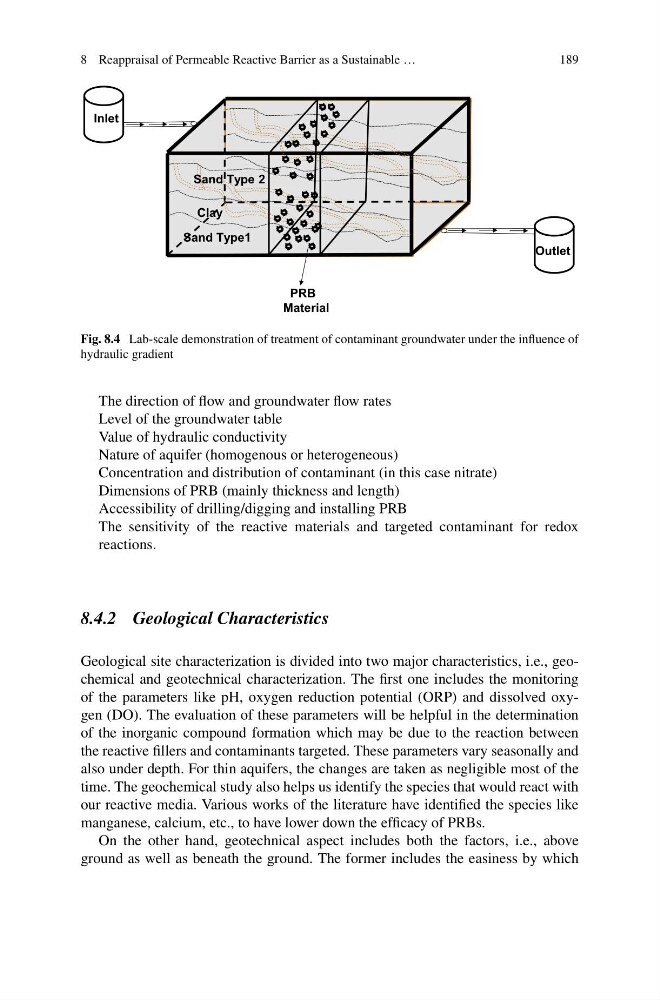
Fig. 8.4 Lab-scale demonstration of treatment of contaminant groundwater under the influence of
hydraulic gradient
The direction of flow and groundwater flow rates
Level of the groundwater table
Value of hydraulic conductivity
Nature of aquifer (homogenous or heterogeneous)
Concentration and distribution of contaminant (in this case nitrate)
Dimensions of PRB (mainly thickness and length)
Accessibility of drilling/digging and installing PRB
The sensitivity of the reactive materials and targeted contaminant for redox
reactions.
8.4.2 Geological Characteristics
Geological site characterization is divided into two major characteristics, i.e., geochemical and geotechnical characterization. The first one includes the monitoring
of the parameters like pH, oxygen reduction potential (ORP) and dissolved oxygen (DO). The evaluation of these parameters will be helpful in the determination
of the inorganic compound formation which may be due to the reaction between
the reactive fillers and contaminants targeted. These parameters vary seasonally and
also under depth. For thin aquifers, the changes are taken as negligible most of the
time. The geochemical study also helps us identify the species that would react with
our reactive media. Various works of the literature have identified the species like
manganese, calcium, etc., to have lower down the efficacy of PRBs.
On the other hand, geotechnical aspect includes both the factors, i.e., above
ground as well as beneath the ground. The former includes the easiness by which
189
Inlet
Outlet
PRB
Material
Sand Type1
Sand Type 2
Clay
Fig. 8.4 Lab-scale demonstration of treatment of contaminant groundwater under the influence of
hydraulic gradient
The direction of flow and groundwater flow rates
Level of the groundwater table
Value of hydraulic conductivity
Nature of aquifer (homogenous or heterogeneous)
Concentration and distribution of contaminant (in this case nitrate)
Dimensions of PRB (mainly thickness and length)
Accessibility of drilling/digging and installing PRB
The sensitivity of the reactive materials and targeted contaminant for redox
reactions.
8.4.2 Geological Characteristics
Geological site characterization is divided into two major characteristics, i.e., geochemical and geotechnical characterization. The first one includes the monitoring
of the parameters like pH, oxygen reduction potential (ORP) and dissolved oxygen (DO). The evaluation of these parameters will be helpful in the determination
of the inorganic compound formation which may be due to the reaction between
the reactive fillers and contaminants targeted. These parameters vary seasonally and
also under depth. For thin aquifers, the changes are taken as negligible most of the
time. The geochemical study also helps us identify the species that would react with
our reactive media. Various works of the literature have identified the species like
manganese, calcium, etc., to have lower down the efficacy of PRBs.
On the other hand, geotechnical aspect includes both the factors, i.e., above
ground as well as beneath the ground. The former includes the easiness by which