

188
A. K. Thakur and M. Kumar
Identify the Contaminant to be
removed and its source
Check the feasibility of
installation of PRB at given site.
Check the removal efficiencies of
different reactive materials
through batch or column studies
Always look out for other
remediation methods, if levels
don’t go below compliance level.
Identify the hydrological
and geological speciation
of the region
Check for the economical Viability
and if possible go for locally
available reactive materials
Look for the constructing, operating and
maintenance of PRB, Parameters controls,
Sampling and Monitoring, Analysis Methods.
Breaking down of parent aliphatic
hydrocarbon should be studied and
should be checked for compliance
rates.
Design Procedure for
Permeable Reactive Barrier
(PRB)
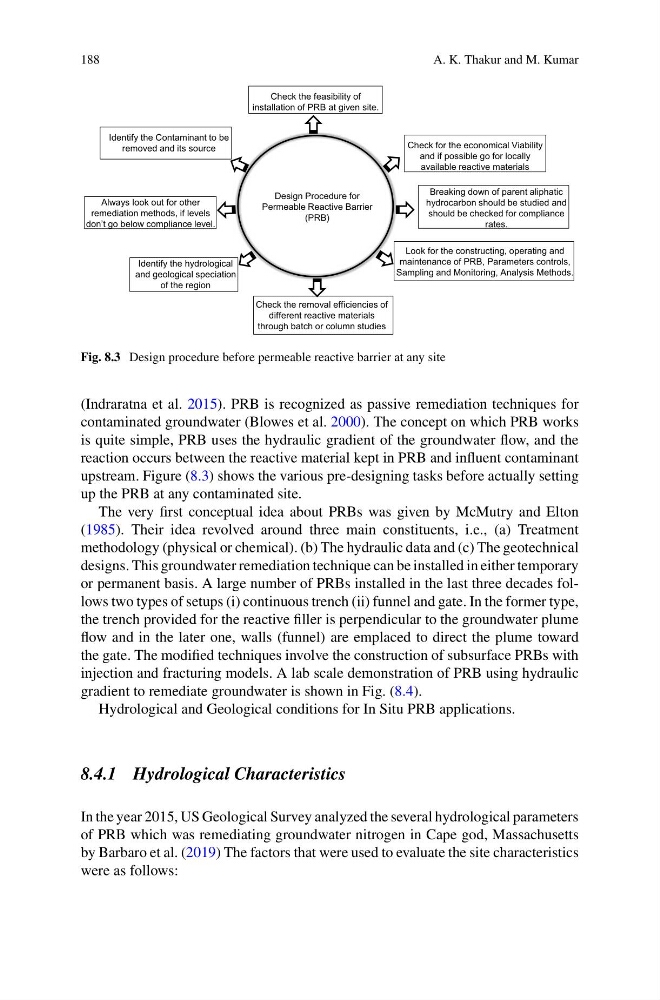
Fig. 8.3 Design procedure before permeable reactive barrier at any site
(Indraratna et al. 2015). PRB is recognized as passive remediation techniques for
contaminated groundwater (Blowes et al. 2000). The concept on which PRB works
is quite simple, PRB uses the hydraulic gradient of the groundwater flow, and the
reaction occurs between the reactive material kept in PRB and influent contaminant
upstream. Figure (8.3) shows the various pre-designing tasks before actually setting
up the PRB at any contaminated site.
The very first conceptual idea about PRBs was given by McMutry and Elton
(1985). Their idea revolved around three main constituents, i.e., (a) Treatment
methodology (physical or chemical). (b) The hydraulic data and (c) The geotechnical
designs. This groundwater remediation technique can be installed in either temporary
or permanent basis. A large number of PRBs installed in the last three decades follows two types of setups (i) continuous trench (ii) funnel and gate. In the former type,
the trench provided for the reactive filler is perpendicular to the groundwater plume
flow and in the later one, walls (funnel) are emplaced to direct the plume toward
the gate. The modified techniques involve the construction of subsurface PRBs with
injection and fracturing models. A lab scale demonstration of PRB using hydraulic
gradient to remediate groundwater is shown in Fig. (8.4).
Hydrological and Geological conditions for In Situ PRB applications.
8.4.1 Hydrological Characteristics
In the year 2015, US Geological Survey analyzed the several hydrological parameters
of PRB which was remediating groundwater nitrogen in Cape god, Massachusetts
by Barbaro et al. (2019) The factors that were used to evaluate the site characteristics
were as follows:
A. K. Thakur and M. Kumar
Identify the Contaminant to be
removed and its source
Check the feasibility of
installation of PRB at given site.
Check the removal efficiencies of
different reactive materials
through batch or column studies
Always look out for other
remediation methods, if levels
don’t go below compliance level.
Identify the hydrological
and geological speciation
of the region
Check for the economical Viability
and if possible go for locally
available reactive materials
Look for the constructing, operating and
maintenance of PRB, Parameters controls,
Sampling and Monitoring, Analysis Methods.
Breaking down of parent aliphatic
hydrocarbon should be studied and
should be checked for compliance
rates.
Design Procedure for
Permeable Reactive Barrier
(PRB)
Fig. 8.3 Design procedure before permeable reactive barrier at any site
(Indraratna et al. 2015). PRB is recognized as passive remediation techniques for
contaminated groundwater (Blowes et al. 2000). The concept on which PRB works
is quite simple, PRB uses the hydraulic gradient of the groundwater flow, and the
reaction occurs between the reactive material kept in PRB and influent contaminant
upstream. Figure (8.3) shows the various pre-designing tasks before actually setting
up the PRB at any contaminated site.
The very first conceptual idea about PRBs was given by McMutry and Elton
(1985). Their idea revolved around three main constituents, i.e., (a) Treatment
methodology (physical or chemical). (b) The hydraulic data and (c) The geotechnical
designs. This groundwater remediation technique can be installed in either temporary
or permanent basis. A large number of PRBs installed in the last three decades follows two types of setups (i) continuous trench (ii) funnel and gate. In the former type,
the trench provided for the reactive filler is perpendicular to the groundwater plume
flow and in the later one, walls (funnel) are emplaced to direct the plume toward
the gate. The modified techniques involve the construction of subsurface PRBs with
injection and fracturing models. A lab scale demonstration of PRB using hydraulic
gradient to remediate groundwater is shown in Fig. (8.4).
Hydrological and Geological conditions for In Situ PRB applications.
8.4.1 Hydrological Characteristics
In the year 2015, US Geological Survey analyzed the several hydrological parameters
of PRB which was remediating groundwater nitrogen in Cape god, Massachusetts
by Barbaro et al. (2019) The factors that were used to evaluate the site characteristics
were as follows: