

3 New Trends and Drivers for Agricultural Land Use in Germany
45
0
100
200
300
400
500
600
700
800
Germany
Saarland
Hesse
Rhineland-Palanate
Baden-Würemberg
Bavaria
North Rhine-Westphalia
Schleswig-Holstein
Lower Saxony
Brandenburg
Saxony
Thuringia
Mecklenburg-Western Pomerania
Saxony-Anhalt
€/hectare
Grassland
Arable land
East Germany
West Germany
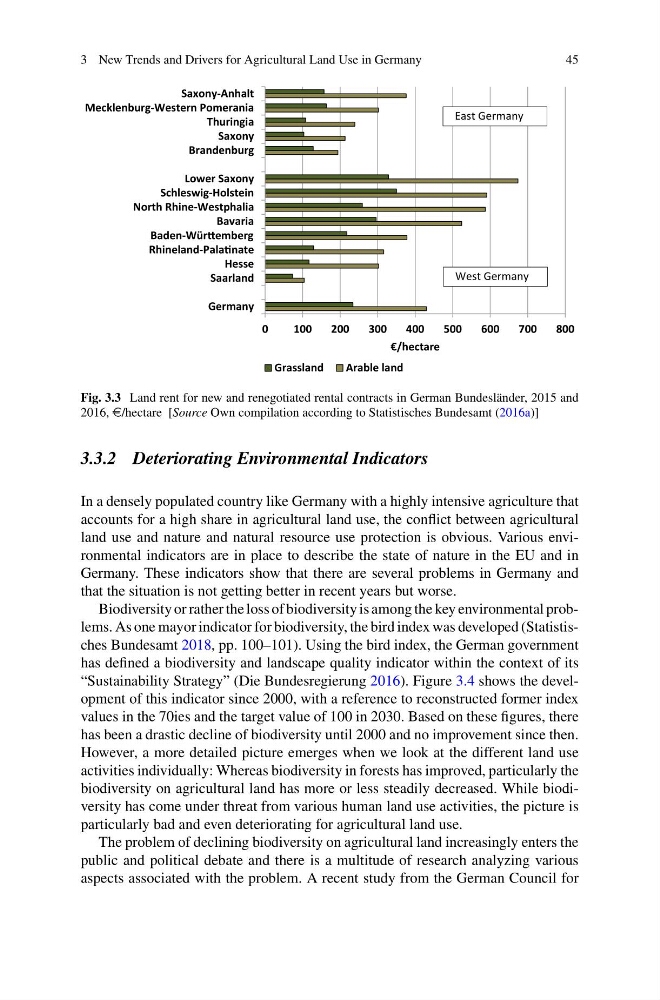
Fig. 3.3 Land rent for new and renegotiated rental contracts in German Bundesländer, 2015 and
2016, e/hectare [Source Own compilation according to Statistisches Bundesamt (2016a)]
3.3.2 Deteriorating Environmental Indicators
In a densely populated country like Germany with a highly intensive agriculture that
accounts for a high share in agricultural land use, the conflict between agricultural
land use and nature and natural resource use protection is obvious. Various environmental indicators are in place to describe the state of nature in the EU and in
Germany. These indicators show that there are several problems in Germany and
that the situation is not getting better in recent years but worse.
Biodiversity or rather the loss of biodiversity is among the key environmental problems. As one mayor indicator for biodiversity, the bird index was developed (Statistisches Bundesamt 2018, pp. 100–101). Using the bird index, the German government
has defined a biodiversity and landscape quality indicator within the context of its
“Sustainability Strategy” (Die Bundesregierung 2016). Figure 3.4 shows the development of this indicator since 2000, with a reference to reconstructed former index
values in the 70ies and the target value of 100 in 2030. Based on these figures, there
has been a drastic decline of biodiversity until 2000 and no improvement since then.
However, a more detailed picture emerges when we look at the different land use
activities individually: Whereas biodiversity in forests has improved, particularly the
biodiversity on agricultural land has more or less steadily decreased. While biodiversity has come under threat from various human land use activities, the picture is
particularly bad and even deteriorating for agricultural land use.
The problem of declining biodiversity on agricultural land increasingly enters the
public and political debate and there is a multitude of research analyzing various
aspects associated with the problem. A recent study from the German Council for
45
0
100
200
300
400
500
600
700
800
Germany
Saarland
Hesse
Rhineland-Palanate
Baden-Würemberg
Bavaria
North Rhine-Westphalia
Schleswig-Holstein
Lower Saxony
Brandenburg
Saxony
Thuringia
Mecklenburg-Western Pomerania
Saxony-Anhalt
€/hectare
Grassland
Arable land
East Germany
West Germany
Fig. 3.3 Land rent for new and renegotiated rental contracts in German Bundesländer, 2015 and
2016, e/hectare [Source Own compilation according to Statistisches Bundesamt (2016a)]
3.3.2 Deteriorating Environmental Indicators
In a densely populated country like Germany with a highly intensive agriculture that
accounts for a high share in agricultural land use, the conflict between agricultural
land use and nature and natural resource use protection is obvious. Various environmental indicators are in place to describe the state of nature in the EU and in
Germany. These indicators show that there are several problems in Germany and
that the situation is not getting better in recent years but worse.
Biodiversity or rather the loss of biodiversity is among the key environmental problems. As one mayor indicator for biodiversity, the bird index was developed (Statistisches Bundesamt 2018, pp. 100–101). Using the bird index, the German government
has defined a biodiversity and landscape quality indicator within the context of its
“Sustainability Strategy” (Die Bundesregierung 2016). Figure 3.4 shows the development of this indicator since 2000, with a reference to reconstructed former index
values in the 70ies and the target value of 100 in 2030. Based on these figures, there
has been a drastic decline of biodiversity until 2000 and no improvement since then.
However, a more detailed picture emerges when we look at the different land use
activities individually: Whereas biodiversity in forests has improved, particularly the
biodiversity on agricultural land has more or less steadily decreased. While biodiversity has come under threat from various human land use activities, the picture is
particularly bad and even deteriorating for agricultural land use.
The problem of declining biodiversity on agricultural land increasingly enters the
public and political debate and there is a multitude of research analyzing various
aspects associated with the problem. A recent study from the German Council for