

308
D. Haase
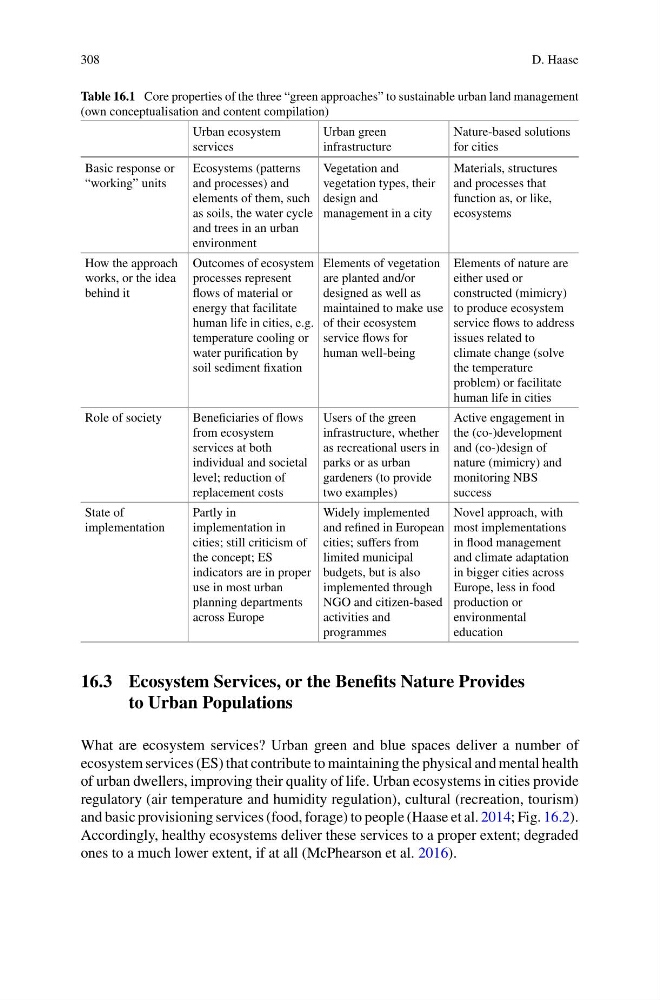
Table 16.1 Core properties of the three “green approaches” to sustainable urban land management
(own conceptualisation and content compilation)
Urban ecosystem
services
Urban green
infrastructure
Nature-based solutions
for cities
Basic response or
“working” units
Ecosystems (patterns
and processes) and
elements of them, such
as soils, the water cycle
and trees in an urban
environment
Vegetation and
vegetation types, their
design and
management in a city
Materials, structures
and processes that
function as, or like,
ecosystems
How the approach
works, or the idea
behind it
Outcomes of ecosystem
processes represent
flows of material or
energy that facilitate
human life in cities, e.g.
temperature cooling or
water purification by
soil sediment fixation
Elements of vegetation
are planted and/or
designed as well as
maintained to make use
of their ecosystem
service flows for
human well-being
Elements of nature are
either used or
constructed (mimicry)
to produce ecosystem
service flows to address
issues related to
climate change (solve
the temperature
problem) or facilitate
human life in cities
Role of society
Beneficiaries of flows
from ecosystem
services at both
individual and societal
level; reduction of
replacement costs
Users of the green
infrastructure, whether
as recreational users in
parks or as urban
gardeners (to provide
two examples)
Active engagement in
the (co-)development
and (co-)design of
nature (mimicry) and
monitoring NBS
success
State of
implementation
Partly in
implementation in
cities; still criticism of
the concept; ES
indicators are in proper
use in most urban
planning departments
across Europe
Widely implemented
and refined in European
cities; suffers from
limited municipal
budgets, but is also
implemented through
NGO and citizen-based
activities and
programmes
Novel approach, with
most implementations
in flood management
and climate adaptation
in bigger cities across
Europe, less in food
production or
environmental
education
16.3 Ecosystem Services, or the Benefits Nature Provides
to Urban Populations
What are ecosystem services? Urban green and blue spaces deliver a number of
ecosystem services (ES) that contribute to maintaining the physical and mental health
of urban dwellers, improving their quality of life. Urban ecosystems in cities provide
regulatory (air temperature and humidity regulation), cultural (recreation, tourism)
and basic provisioning services (food, forage) to people (Haase et al. 2014; Fig. 16.2).
Accordingly, healthy ecosystems deliver these services to a proper extent; degraded
ones to a much lower extent, if at all (McPhearson et al. 2016).
D. Haase
Table 16.1 Core properties of the three “green approaches” to sustainable urban land management
(own conceptualisation and content compilation)
Urban ecosystem
services
Urban green
infrastructure
Nature-based solutions
for cities
Basic response or
“working” units
Ecosystems (patterns
and processes) and
elements of them, such
as soils, the water cycle
and trees in an urban
environment
Vegetation and
vegetation types, their
design and
management in a city
Materials, structures
and processes that
function as, or like,
ecosystems
How the approach
works, or the idea
behind it
Outcomes of ecosystem
processes represent
flows of material or
energy that facilitate
human life in cities, e.g.
temperature cooling or
water purification by
soil sediment fixation
Elements of vegetation
are planted and/or
designed as well as
maintained to make use
of their ecosystem
service flows for
human well-being
Elements of nature are
either used or
constructed (mimicry)
to produce ecosystem
service flows to address
issues related to
climate change (solve
the temperature
problem) or facilitate
human life in cities
Role of society
Beneficiaries of flows
from ecosystem
services at both
individual and societal
level; reduction of
replacement costs
Users of the green
infrastructure, whether
as recreational users in
parks or as urban
gardeners (to provide
two examples)
Active engagement in
the (co-)development
and (co-)design of
nature (mimicry) and
monitoring NBS
success
State of
implementation
Partly in
implementation in
cities; still criticism of
the concept; ES
indicators are in proper
use in most urban
planning departments
across Europe
Widely implemented
and refined in European
cities; suffers from
limited municipal
budgets, but is also
implemented through
NGO and citizen-based
activities and
programmes
Novel approach, with
most implementations
in flood management
and climate adaptation
in bigger cities across
Europe, less in food
production or
environmental
education
16.3 Ecosystem Services, or the Benefits Nature Provides
to Urban Populations
What are ecosystem services? Urban green and blue spaces deliver a number of
ecosystem services (ES) that contribute to maintaining the physical and mental health
of urban dwellers, improving their quality of life. Urban ecosystems in cities provide
regulatory (air temperature and humidity regulation), cultural (recreation, tourism)
and basic provisioning services (food, forage) to people (Haase et al. 2014; Fig. 16.2).
Accordingly, healthy ecosystems deliver these services to a proper extent; degraded
ones to a much lower extent, if at all (McPhearson et al. 2016).