

various contaminants using cerium-based nanomaterials like Carbon nanotubes
(CeO 2 -CNT) (Peng et al. 2005) or on aligned carbon nanotubes (CeO 2 -ACNTs)
supported by cerium oxide nanomaterials are effective in removing As(V) (Di et al.
2006).
3.4 Mechanism of Metal/Metal Oxide-Based Nanomaterials
Used in Waste Water Decontamination
Various methods such as coagulation, oxidation, adsorption electrochemical
methods, and bioremediation etc. have been used for the effective removal of
pollutants from water. Adsorption among them is one of the important and widely
used method for water/waste water treatment (Dutta et al. 2001; Moghaddam et al.
2010; Gao et al. 2012; Wang et al. 2006a, b; Gandhi et al. 2016; Upadhyay et al.
2014; Perreault et al. 2015). There are various nano sized metal and metal oxide
adsorbents for the effective removal of different contaminants from water (Yang
et al. 2019). Silver nanoparticles when added with ceramic filters have emerged as
the effective removal of Escherichia coli with high porosity (Kallman et al. 2011).
Gold nanomaterial is one of the important adsorbents for the decontamination of
mercury due to easy formation of AuHg, AuHg 3 , and Au 3 Hg (Zhang et al. 2016).
The basic mechanism of photocatalysis using metal and metal oxide nanoparticles
is shown in Fig. 3.2. The photocatalysis may involve the light absorption, electronhole pair generation, and the separation and free charge carrier-induced redox
reactions. Previous reports suggest that the nano-based photocatalysts can increase
the oxidation ability by producing oxidizing agents at material surface which helps
in degradation of pollutants in water (Yang et al. 2019; Shinde et al. 2017; Khan
et al. 2016; Moon et al. 2014; O’Carroll et al. 2013).
Zero-valent iron is one of the most extensively studied metal-based nanomaterials
for water treatment processes and discussed briefly with possible mechanism in this
part. Nanoscale zero valent iron (free nanoscale zero valent iron size less than
100 nm diameter) is a composite formed by Fe (0) and ferric oxide coating
(Fig. 3.3) (O’Carroll et al. 2013). Nanoscale zero valent iron particles reacted with
water and oxygen giving an iron (hydroxide layer which may lead to the formation
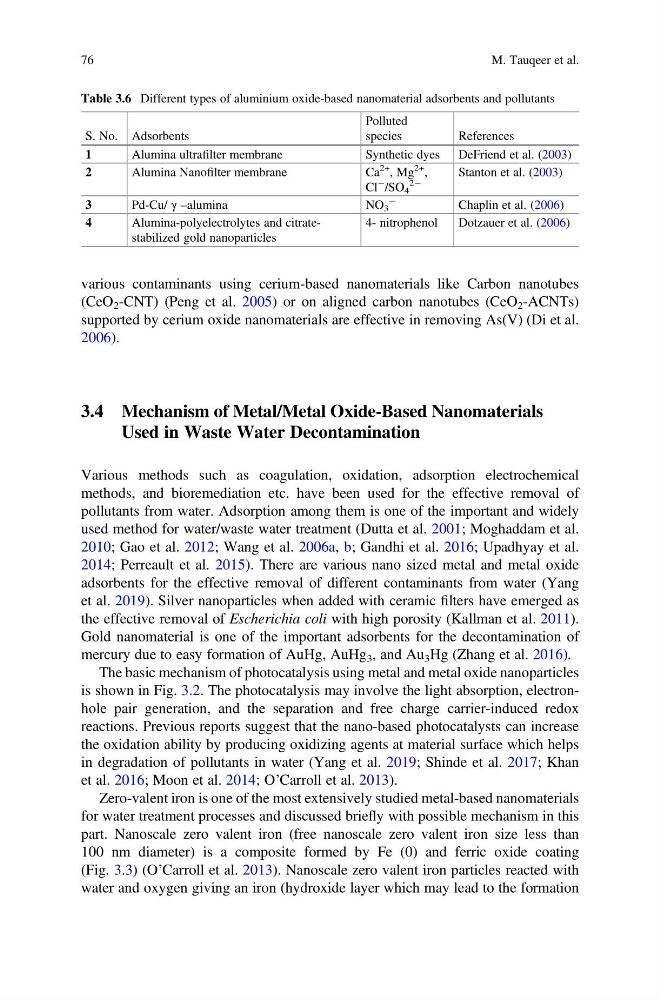
Table 3.6 Different types of aluminium oxide-based nanomaterial adsorbents and pollutants
S. No. Adsorbents
Polluted
species
References
1
Alumina ultrafilter membrane
Synthetic dyes DeFriend et al. (2003)
2
Alumina Nanofilter membrane
Ca
2+ , Mg
2+ ,
Cl
À
/SO 4
2À
Stanton et al. (2003)
3
Pd-Cu/ γ –alumina
NO 3
À
Chaplin et al. (2006)
4
Alumina-polyelectrolytes and citratestabilized gold nanoparticles
4- nitrophenol
Dotzauer et al. (2006)
76
M. Tauqeer et al.
(CeO 2 -CNT) (Peng et al. 2005) or on aligned carbon nanotubes (CeO 2 -ACNTs)
supported by cerium oxide nanomaterials are effective in removing As(V) (Di et al.
2006).
3.4 Mechanism of Metal/Metal Oxide-Based Nanomaterials
Used in Waste Water Decontamination
Various methods such as coagulation, oxidation, adsorption electrochemical
methods, and bioremediation etc. have been used for the effective removal of
pollutants from water. Adsorption among them is one of the important and widely
used method for water/waste water treatment (Dutta et al. 2001; Moghaddam et al.
2010; Gao et al. 2012; Wang et al. 2006a, b; Gandhi et al. 2016; Upadhyay et al.
2014; Perreault et al. 2015). There are various nano sized metal and metal oxide
adsorbents for the effective removal of different contaminants from water (Yang
et al. 2019). Silver nanoparticles when added with ceramic filters have emerged as
the effective removal of Escherichia coli with high porosity (Kallman et al. 2011).
Gold nanomaterial is one of the important adsorbents for the decontamination of
mercury due to easy formation of AuHg, AuHg 3 , and Au 3 Hg (Zhang et al. 2016).
The basic mechanism of photocatalysis using metal and metal oxide nanoparticles
is shown in Fig. 3.2. The photocatalysis may involve the light absorption, electronhole pair generation, and the separation and free charge carrier-induced redox
reactions. Previous reports suggest that the nano-based photocatalysts can increase
the oxidation ability by producing oxidizing agents at material surface which helps
in degradation of pollutants in water (Yang et al. 2019; Shinde et al. 2017; Khan
et al. 2016; Moon et al. 2014; O’Carroll et al. 2013).
Zero-valent iron is one of the most extensively studied metal-based nanomaterials
for water treatment processes and discussed briefly with possible mechanism in this
part. Nanoscale zero valent iron (free nanoscale zero valent iron size less than
100 nm diameter) is a composite formed by Fe (0) and ferric oxide coating
(Fig. 3.3) (O’Carroll et al. 2013). Nanoscale zero valent iron particles reacted with
water and oxygen giving an iron (hydroxide layer which may lead to the formation
Table 3.6 Different types of aluminium oxide-based nanomaterial adsorbents and pollutants
S. No. Adsorbents
Polluted
species
References
1
Alumina ultrafilter membrane
Synthetic dyes DeFriend et al. (2003)
2
Alumina Nanofilter membrane
Ca
2+ , Mg
2+ ,
Cl
À
/SO 4
2À
Stanton et al. (2003)
3
Pd-Cu/ γ –alumina
NO 3
À
Chaplin et al. (2006)
4
Alumina-polyelectrolytes and citratestabilized gold nanoparticles
4- nitrophenol
Dotzauer et al. (2006)
76
M. Tauqeer et al.