

Cr(VI) using α-Fe 2 O 3 nanostructures which is thought to start with electrostatic
attraction of α-Fe 2 O 3 and As(V),/Cr(VI) ions for surface bonding.
Decontamination of organic pollutants have also been used by iron oxide
nanomaterials because of efficient and easy isolation by external magnetic field,
cheap, high removal capacity, insensitive to toxic contaminants (Xu et al. 2012;
Nizamuddin et al. 2019) and is thought to proceed by the interaction with surface
followed by diffusion of pollutant species on active sites of the functional group
(Hu et al. 2011; Zhao et al. 2010). Previously, use of iron oxide based nanomaterials
for the decontamination of organic pollutants like carbon tetrachloride (CCl 4 ),
trichlorobenzene (C 6 H 3 Cl 3 ), 1,1-dichloro ethane (C 2 H 2 Cl 2 ), hexachlorobenzene
(C 6 Cl 6 ), lindane (C 6 H 6 Cl 6 ), DDT (C 14 H 9 Cl 5 ), orange II (C 16 H 11 N 2 NaO 4 S),
tropaeolin O (C 12 H 9 N 2 NaO 5 S), n-nitro sodium ethylamine (C 4 H 10 N 2 O), chrysoidin
(C 12 H 13 C l N 4 ), TNT (C 7 H 5 N 3 O 6 ) etc. has been observed (Li et al. 2006a, b; Zhang
2003). Microbial decontamination of pathogenic bacteria by the use of iron oxide
nanomaterial have been demonstrated by a magnetic nanoparticle comprises of iron
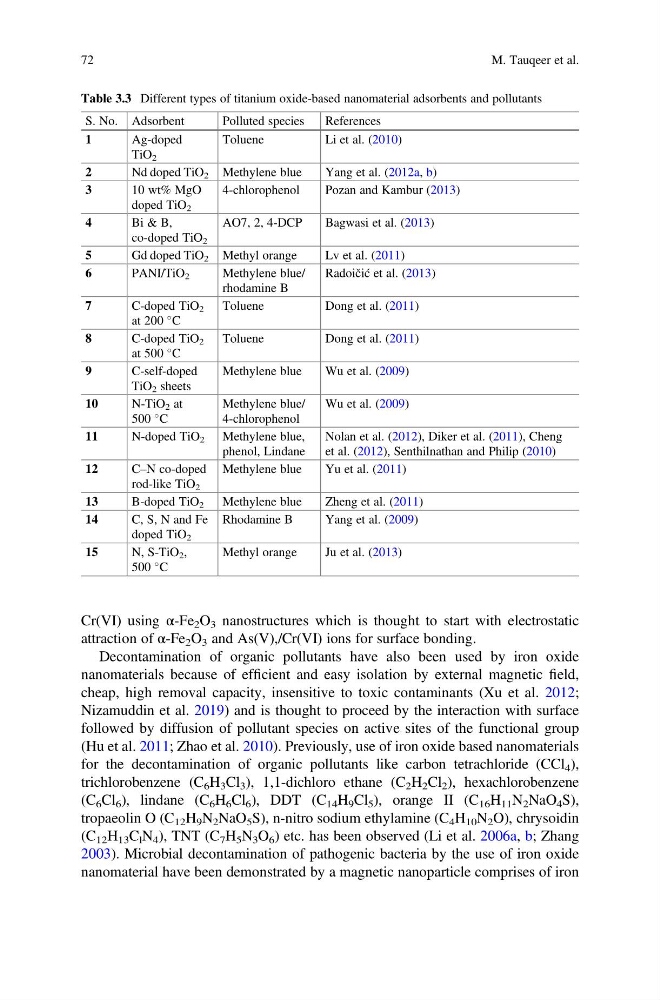
Table 3.3 Different types of titanium oxide-based nanomaterial adsorbents and pollutants
S. No. Adsorbent
Polluted species
References
1
Ag-doped
TiO 2
Toluene
Li et al. (2010)
2
Nd doped TiO 2 Methylene blue
Yang et al. (2012a, b)
3
10 wt% MgO
doped TiO 2
4-chlorophenol
Pozan and Kambur (2013)
4
Bi & B,
co-doped TiO 2
AO7, 2, 4-DCP
Bagwasi et al. (2013)
5
Gd doped TiO 2 Methyl orange
Lv et al. (2011)
6
PANI/TiO 2
Methylene blue/
rhodamine B
Radoičić et al. (2013)
7
C-doped TiO 2
at 200
C
Toluene
Dong et al. (2011)
8
C-doped TiO 2
at 500
C
Toluene
Dong et al. (2011)
9
C-self-doped
TiO 2 sheets
Methylene blue
Wu et al. (2009)
10
N-TiO 2 at
500
C
Methylene blue/
4-chlorophenol
Wu et al. (2009)
11
N-doped TiO 2 Methylene blue,
phenol, Lindane
Nolan et al. (2012), Diker et al. (2011), Cheng
et al. (2012), Senthilnathan and Philip (2010)
12
C–N co-doped
rod-like TiO 2
Methylene blue
Yu et al. (2011)
13
B-doped TiO 2 Methylene blue
Zheng et al. (2011)
14
C, S, N and Fe
doped TiO 2
Rhodamine B
Yang et al. (2009)
15
N, S-TiO 2 ,
500
C
Methyl orange
Ju et al. (2013)
72
M. Tauqeer et al.
attraction of α-Fe 2 O 3 and As(V),/Cr(VI) ions for surface bonding.
Decontamination of organic pollutants have also been used by iron oxide
nanomaterials because of efficient and easy isolation by external magnetic field,
cheap, high removal capacity, insensitive to toxic contaminants (Xu et al. 2012;
Nizamuddin et al. 2019) and is thought to proceed by the interaction with surface
followed by diffusion of pollutant species on active sites of the functional group
(Hu et al. 2011; Zhao et al. 2010). Previously, use of iron oxide based nanomaterials
for the decontamination of organic pollutants like carbon tetrachloride (CCl 4 ),
trichlorobenzene (C 6 H 3 Cl 3 ), 1,1-dichloro ethane (C 2 H 2 Cl 2 ), hexachlorobenzene
(C 6 Cl 6 ), lindane (C 6 H 6 Cl 6 ), DDT (C 14 H 9 Cl 5 ), orange II (C 16 H 11 N 2 NaO 4 S),
tropaeolin O (C 12 H 9 N 2 NaO 5 S), n-nitro sodium ethylamine (C 4 H 10 N 2 O), chrysoidin
(C 12 H 13 C l N 4 ), TNT (C 7 H 5 N 3 O 6 ) etc. has been observed (Li et al. 2006a, b; Zhang
2003). Microbial decontamination of pathogenic bacteria by the use of iron oxide
nanomaterial have been demonstrated by a magnetic nanoparticle comprises of iron
Table 3.3 Different types of titanium oxide-based nanomaterial adsorbents and pollutants
S. No. Adsorbent
Polluted species
References
1
Ag-doped
TiO 2
Toluene
Li et al. (2010)
2
Nd doped TiO 2 Methylene blue
Yang et al. (2012a, b)
3
10 wt% MgO
doped TiO 2
4-chlorophenol
Pozan and Kambur (2013)
4
Bi & B,
co-doped TiO 2
AO7, 2, 4-DCP
Bagwasi et al. (2013)
5
Gd doped TiO 2 Methyl orange
Lv et al. (2011)
6
PANI/TiO 2
Methylene blue/
rhodamine B
Radoičić et al. (2013)
7
C-doped TiO 2
at 200
C
Toluene
Dong et al. (2011)
8
C-doped TiO 2
at 500
C
Toluene
Dong et al. (2011)
9
C-self-doped
TiO 2 sheets
Methylene blue
Wu et al. (2009)
10
N-TiO 2 at
500
C
Methylene blue/
4-chlorophenol
Wu et al. (2009)
11
N-doped TiO 2 Methylene blue,
phenol, Lindane
Nolan et al. (2012), Diker et al. (2011), Cheng
et al. (2012), Senthilnathan and Philip (2010)
12
C–N co-doped
rod-like TiO 2
Methylene blue
Yu et al. (2011)
13
B-doped TiO 2 Methylene blue
Zheng et al. (2011)
14
C, S, N and Fe
doped TiO 2
Rhodamine B
Yang et al. (2009)
15
N, S-TiO 2 ,
500
C
Methyl orange
Ju et al. (2013)
72
M. Tauqeer et al.