

100% removal of phosphate contaminant from water, with a 4.5 mgg
À1 maximum
adsorption capacity, upon use of a number of metal oxides adsorbents, namely
zirconium oxide, iron oxide, aluminum oxide and titanium dioxide, doped with
mesoporous silica, having surface areas in the range of 600 m
2 g
À1 to 700 m
2 g
À1
.
In order to achieve higher adsorption pf phosphate with better rate, binary and
ternary metal oxides have been fabricated and used. Li et al. (2014) and Zhang et al.
(2009a) used binary oxides, having iron as one component. While, the Fe-Mn binary
oxide showed a maximum phosphate adsorption capacity of 36 mgg
À1 at a pH value
of 5.6, following a pseudo-second-order kinetics and fitting in the Freundlich isotherm model; the Fe-Cu binary oxide exhibited a maximum adsorption capacity of
35.2 mgg
À1 at a pH value of 7, following a pseudo-second-order kinetic model and
fitting in the Langmuir isotherm model. Lǚ et al. (2013) tried to analyze the adsorption
efficacy of a ternary metal oxide composed of iron oxide, aluminum oxide and
manganese oxide, present at a 3:3:1 molar ration of metals Fe, Al and Mn. With a
maximum phosphate adsorption capacity of 48.3 mgg
À1 at 25
C (fitted best to the
Freundlich isotherm model), this ternary oxide adsorbent showed an inverse dependency on pH (between 4 and 10.5) while executing its adsorption function.
1.8 Phenol
Phenol is an organic pollutant that can serious health consequences. It produced
chlorophenols, a carcinogen, upon reacting with chlorine during normal treatment of
water. Industries like pharmaceuticals, pulp, plastics, paper, dyes, textiles,
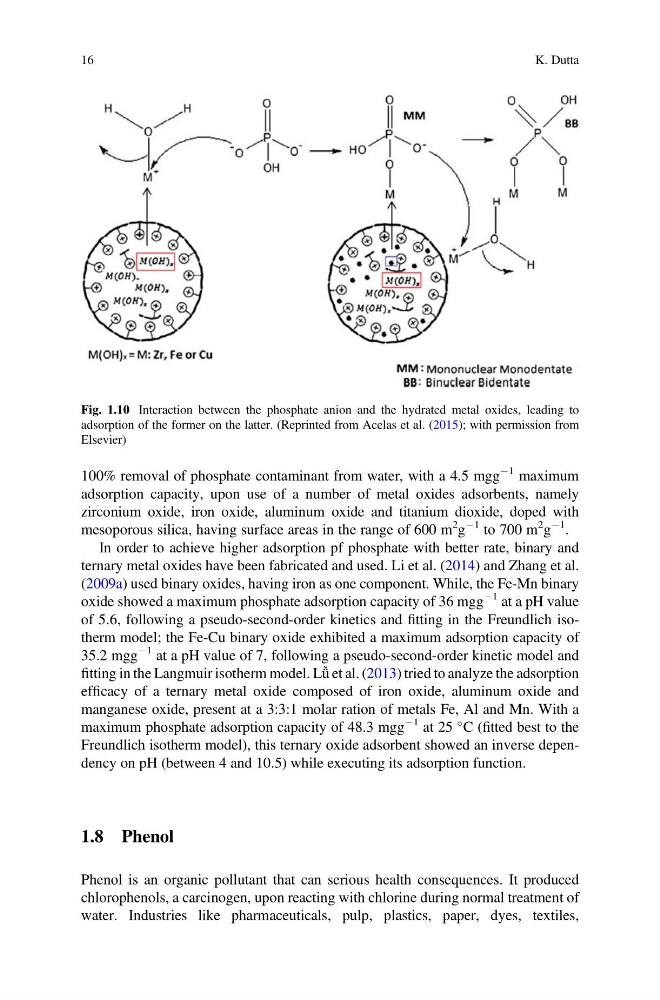
Fig. 1.10 Interaction between the phosphate anion and the hydrated metal oxides, leading to
adsorption of the former on the latter. (Reprinted from Acelas et al. (2015); with permission from
Elsevier)
16
K. Dutta
À1 maximum
adsorption capacity, upon use of a number of metal oxides adsorbents, namely
zirconium oxide, iron oxide, aluminum oxide and titanium dioxide, doped with
mesoporous silica, having surface areas in the range of 600 m
2 g
À1 to 700 m
2 g
À1
.
In order to achieve higher adsorption pf phosphate with better rate, binary and
ternary metal oxides have been fabricated and used. Li et al. (2014) and Zhang et al.
(2009a) used binary oxides, having iron as one component. While, the Fe-Mn binary
oxide showed a maximum phosphate adsorption capacity of 36 mgg
À1 at a pH value
of 5.6, following a pseudo-second-order kinetics and fitting in the Freundlich isotherm model; the Fe-Cu binary oxide exhibited a maximum adsorption capacity of
35.2 mgg
À1 at a pH value of 7, following a pseudo-second-order kinetic model and
fitting in the Langmuir isotherm model. Lǚ et al. (2013) tried to analyze the adsorption
efficacy of a ternary metal oxide composed of iron oxide, aluminum oxide and
manganese oxide, present at a 3:3:1 molar ration of metals Fe, Al and Mn. With a
maximum phosphate adsorption capacity of 48.3 mgg
À1 at 25
C (fitted best to the
Freundlich isotherm model), this ternary oxide adsorbent showed an inverse dependency on pH (between 4 and 10.5) while executing its adsorption function.
1.8 Phenol
Phenol is an organic pollutant that can serious health consequences. It produced
chlorophenols, a carcinogen, upon reacting with chlorine during normal treatment of
water. Industries like pharmaceuticals, pulp, plastics, paper, dyes, textiles,
Fig. 1.10 Interaction between the phosphate anion and the hydrated metal oxides, leading to
adsorption of the former on the latter. (Reprinted from Acelas et al. (2015); with permission from
Elsevier)
16
K. Dutta