

reusing potential of the nanoadsorbent (Wang et al. 2009a). Thakre et al. (2010)
reported the use of chitosan-templated mesoporous beads of a binary metal oxide of
Ti and Al and reported a maximum fluoride adsorption capacity of 2.22 mgg
À1 and a
working pH range of less than or equal to 9. Maliyekkal et al. (2006) showed that a
manganese oxide-coated Al 2 O 3 adsorbent can potentially adsorb fluoride, following
a pseudo-second-order kinetics, with a maximum capacity of 2.85 mgg
À1 between
pH 4 to pH 7; while, activated Al 2 O 3 could only produce a value of 1.08 mgg
À1
. In
another study, nano-MgO has also been shown to produce good fluoride adsorption
and adsorbent reusing capability (Devi et al. 2014).
1.7 Phosphate
High concentration of phosphate in water bodies lead to excessive and localized
increase of nutrients, causing high density growth of plants within that localized
area. This phenomenon, called eutrophication, leads to deterioration of the quality of
affected water. In addition, keeping in mind that phosphates are essential constituents of fertilizer, this eutrophication leads to wastage of this important class of
compound. Therefore, we must ensure their removal and recovery in order to use
them in desired applications. For this decontamination purpose, metal oxides have
been utilized to a certain extent. The various reports on the use of metal oxides for
removal of phosphates from water and wastewater have been discussed below.
Amorphous nanoparticles of ZrO 2 was able to adsorb phosphate at a maximum
capacity of 99.01 mgg
À1 at a pH value of 6.2, following the Langmuir isotherm
model; however, the process was found to be pH independent between pH values of
2 and 6 (Su et al. 2013). Acelas et al. (2015) carried out comparative analysis of three
hydrated metal oxides, namely hydrated copper oxide, hydrated zirconium oxide and
hydrated ferric oxide, towards their adsorption potential of phosphates. They
reported that the hydrated ferric oxide produced the best result with a maximum
adsorption capacity of 111.1 mgg
À1 , followed by hydrated zirconium oxide (with
91.74 mgg
À1 ) and hydrated copper oxide (with 74.07 mgg
À1 ). The interaction
between the phosphate anion and the hydrated metal oxides, leading to adsorption
of the former on the latter, has been depicted in Fig. 1.10. Hydrated ferric oxide
nanomaterials have also been utilized with exhibition of promising results by Pan
et al. (2009). In another comparative study, Delaney et al. (2011) could achieve
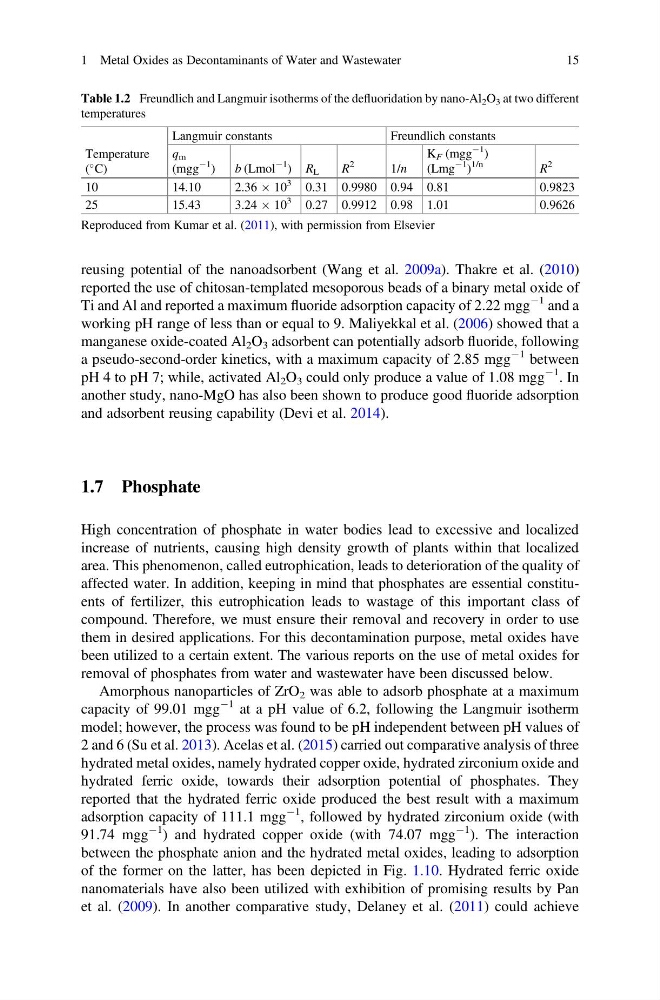
Table 1.2 Freundlich and Langmuir isotherms of the defluoridation by nano-Al 2 O 3 at two different
temperatures
Temperature
(
C)
Langmuir constants
Freundlich constants
q m
(mgg
À1
)
b (Lmol
À1
) R L
R
2
1/n
K F (mgg
À1
)
(Lmg
À1
)
1/n
R
2
10
14.10
2.36 Â 10
3
0.31 0.9980 0.94 0.81
0.9823
25
15.43
3.24 Â 10
3
0.27 0.9912 0.98 1.01
0.9626
Reproduced from Kumar et al. (2011), with permission from Elsevier
1 Metal Oxides as Decontaminants of Water and Wastewater
15
reported the use of chitosan-templated mesoporous beads of a binary metal oxide of
Ti and Al and reported a maximum fluoride adsorption capacity of 2.22 mgg
À1 and a
working pH range of less than or equal to 9. Maliyekkal et al. (2006) showed that a
manganese oxide-coated Al 2 O 3 adsorbent can potentially adsorb fluoride, following
a pseudo-second-order kinetics, with a maximum capacity of 2.85 mgg
À1 between
pH 4 to pH 7; while, activated Al 2 O 3 could only produce a value of 1.08 mgg
À1
. In
another study, nano-MgO has also been shown to produce good fluoride adsorption
and adsorbent reusing capability (Devi et al. 2014).
1.7 Phosphate
High concentration of phosphate in water bodies lead to excessive and localized
increase of nutrients, causing high density growth of plants within that localized
area. This phenomenon, called eutrophication, leads to deterioration of the quality of
affected water. In addition, keeping in mind that phosphates are essential constituents of fertilizer, this eutrophication leads to wastage of this important class of
compound. Therefore, we must ensure their removal and recovery in order to use
them in desired applications. For this decontamination purpose, metal oxides have
been utilized to a certain extent. The various reports on the use of metal oxides for
removal of phosphates from water and wastewater have been discussed below.
Amorphous nanoparticles of ZrO 2 was able to adsorb phosphate at a maximum
capacity of 99.01 mgg
À1 at a pH value of 6.2, following the Langmuir isotherm
model; however, the process was found to be pH independent between pH values of
2 and 6 (Su et al. 2013). Acelas et al. (2015) carried out comparative analysis of three
hydrated metal oxides, namely hydrated copper oxide, hydrated zirconium oxide and
hydrated ferric oxide, towards their adsorption potential of phosphates. They
reported that the hydrated ferric oxide produced the best result with a maximum
adsorption capacity of 111.1 mgg
À1 , followed by hydrated zirconium oxide (with
91.74 mgg
À1 ) and hydrated copper oxide (with 74.07 mgg
À1 ). The interaction
between the phosphate anion and the hydrated metal oxides, leading to adsorption
of the former on the latter, has been depicted in Fig. 1.10. Hydrated ferric oxide
nanomaterials have also been utilized with exhibition of promising results by Pan
et al. (2009). In another comparative study, Delaney et al. (2011) could achieve
Table 1.2 Freundlich and Langmuir isotherms of the defluoridation by nano-Al 2 O 3 at two different
temperatures
Temperature
(
C)
Langmuir constants
Freundlich constants
q m
(mgg
À1
)
b (Lmol
À1
) R L
R
2
1/n
K F (mgg
À1
)
(Lmg
À1
)
1/n
R
2
10
14.10
2.36 Â 10
3
0.31 0.9980 0.94 0.81
0.9823
25
15.43
3.24 Â 10
3
0.27 0.9912 0.98 1.01
0.9626
Reproduced from Kumar et al. (2011), with permission from Elsevier
1 Metal Oxides as Decontaminants of Water and Wastewater
15