

concern. The natural degradation processes are done through open sunlight and
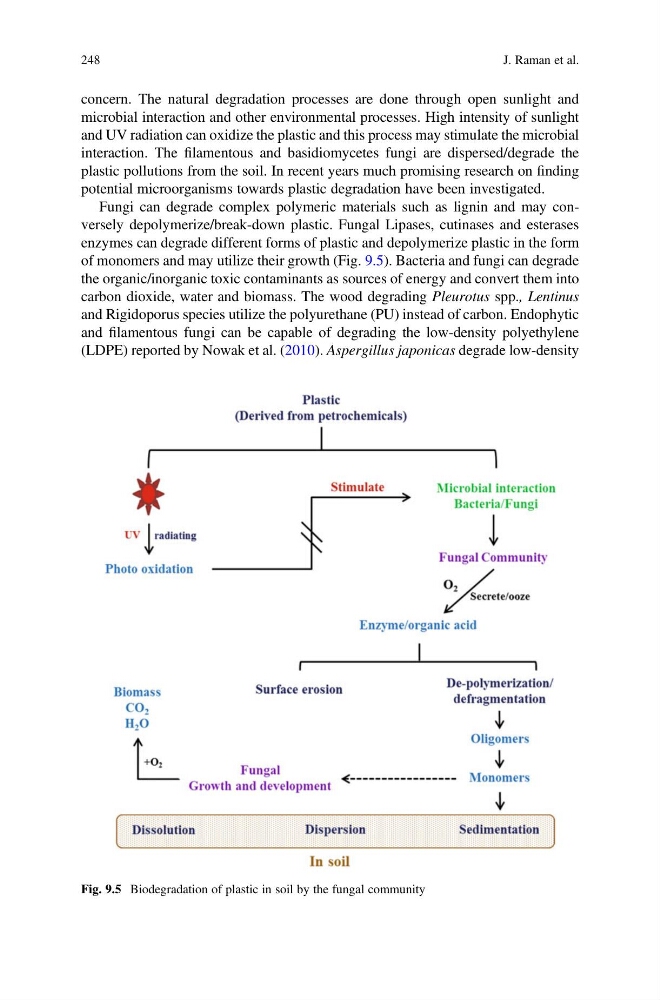
microbial interaction and other environmental processes. High intensity of sunlight
and UV radiation can oxidize the plastic and this process may stimulate the microbial
interaction. The filamentous and basidiomycetes fungi are dispersed/degrade the
plastic pollutions from the soil. In recent years much promising research on finding
potential microorganisms towards plastic degradation have been investigated.
Fungi can degrade complex polymeric materials such as lignin and may conversely depolymerize/break-down plastic. Fungal Lipases, cutinases and esterases
enzymes can degrade different forms of plastic and depolymerize plastic in the form
of monomers and may utilize their growth (Fig. 9.5). Bacteria and fungi can degrade
the organic/inorganic toxic contaminants as sources of energy and convert them into
carbon dioxide, water and biomass. The wood degrading Pleurotus spp., Lentinus
and Rigidoporus species utilize the polyurethane (PU) instead of carbon. Endophytic
and filamentous fungi can be capable of degrading the low-density polyethylene
(LDPE) reported by Nowak et al. (2010). Aspergillus japonicas degrade low-density
Fig. 9.5 Biodegradation of plastic in soil by the fungal community
248
J. Raman et al.
microbial interaction and other environmental processes. High intensity of sunlight
and UV radiation can oxidize the plastic and this process may stimulate the microbial
interaction. The filamentous and basidiomycetes fungi are dispersed/degrade the
plastic pollutions from the soil. In recent years much promising research on finding
potential microorganisms towards plastic degradation have been investigated.
Fungi can degrade complex polymeric materials such as lignin and may conversely depolymerize/break-down plastic. Fungal Lipases, cutinases and esterases
enzymes can degrade different forms of plastic and depolymerize plastic in the form
of monomers and may utilize their growth (Fig. 9.5). Bacteria and fungi can degrade
the organic/inorganic toxic contaminants as sources of energy and convert them into
carbon dioxide, water and biomass. The wood degrading Pleurotus spp., Lentinus
and Rigidoporus species utilize the polyurethane (PU) instead of carbon. Endophytic
and filamentous fungi can be capable of degrading the low-density polyethylene
(LDPE) reported by Nowak et al. (2010). Aspergillus japonicas degrade low-density
Fig. 9.5 Biodegradation of plastic in soil by the fungal community
248
J. Raman et al.