

6.8.1 Carbon Based Composite Materials
Carbon based nanocomposite materials have been described as an effective adsorbent to remove different organic chemicals as well as heavy metals from water (Pan
and Xing 2008; Li et al. 2003; Lu and Liu 2006). Roy et al. (2013a), reported that
34.22% of As(III) contamination was removed from the initial concentration of
542μg/L by utilizing 1 g/L concentration of carbon composite material. Although,
the carbon-based composite materials able to reduce the arsenic concentration below
the EPA level, but it works only in low initial concentration of arsenic in water.
Additionally, Carbon-based material can be functionalized to improve their
removal efficacy towards heavy metals present in water. Velickovic et al. (2013)
prepared the functionalized carbon-based materials with polyethylene glycol (PEG)
to remove arsenate and other contaminated metal ions from drinking water. However, it was determined that the removal efficacy of metal ions on PEG-Carbon based
material is mainly depends on the solution pH. In addition, with 10 mg/L of initial
centralization at pH 4, the most extreme adsorption limit of arsenate on this
functionalized carbon material was shown as 13.0 mg/g.
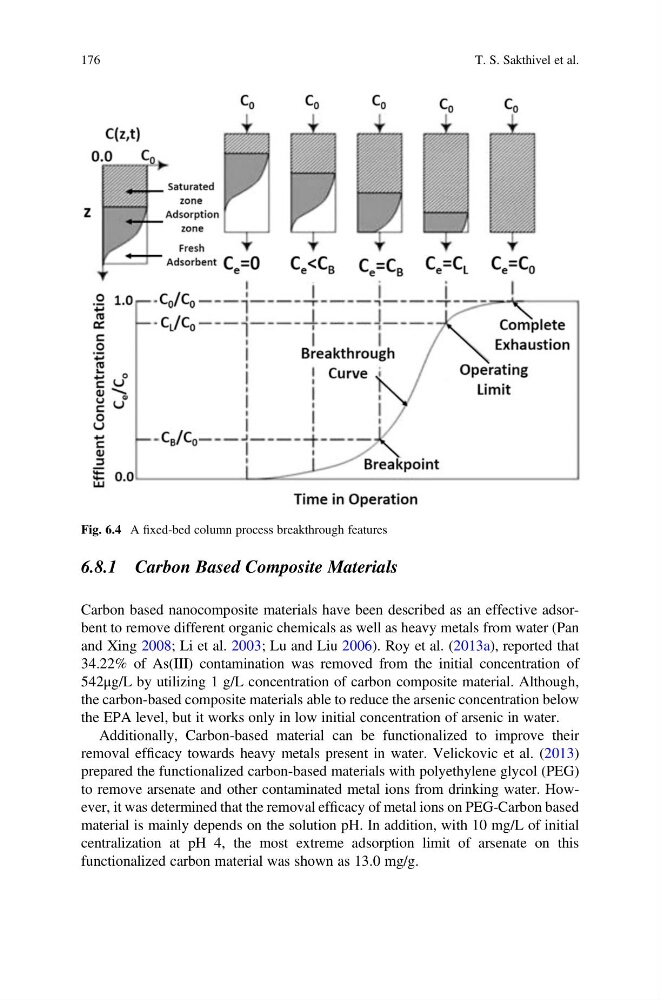
Fig. 6.4 A fixed-bed column process breakthrough features
176
T. S. Sakthivel et al.
Carbon based nanocomposite materials have been described as an effective adsorbent to remove different organic chemicals as well as heavy metals from water (Pan
and Xing 2008; Li et al. 2003; Lu and Liu 2006). Roy et al. (2013a), reported that
34.22% of As(III) contamination was removed from the initial concentration of
542μg/L by utilizing 1 g/L concentration of carbon composite material. Although,
the carbon-based composite materials able to reduce the arsenic concentration below
the EPA level, but it works only in low initial concentration of arsenic in water.
Additionally, Carbon-based material can be functionalized to improve their
removal efficacy towards heavy metals present in water. Velickovic et al. (2013)
prepared the functionalized carbon-based materials with polyethylene glycol (PEG)
to remove arsenate and other contaminated metal ions from drinking water. However, it was determined that the removal efficacy of metal ions on PEG-Carbon based
material is mainly depends on the solution pH. In addition, with 10 mg/L of initial
centralization at pH 4, the most extreme adsorption limit of arsenate on this
functionalized carbon material was shown as 13.0 mg/g.
Fig. 6.4 A fixed-bed column process breakthrough features
176
T. S. Sakthivel et al.