

6.5 Adsorption Mechanism
Various investigations are described in the literature on the adsorption of metal ions
by utilizing various adsorbents. The component of adsorption differs as indicated by
the metal species and kind of adsorbent utilized up until this point. Late examinations uncover that the instruments in procedures of metal ion adsorption are of six
sorts. The component of adsorption is abbreviated as pursues (Chowdhury et al.
2013; Kwok 2009; Wang et al. 2010):
a) Transport over the cell membrane: This concept is related with cell digestion by
living adsorbent. The procedure is normally intervened by a similar system as
utilized by living organs in the digestion of basic particles, for example,
magnesium, potassium, and sodium. However, adsorption might be associated
by the presence of heavy metal ions of a similar charge and ionic radius which
ought to be considered cautiously.
b) Complexion: The metal ion adsorption from contaminated solution may happen
however complex development on the cell surface after the cooperation between
the metal and active sites. Metal ions can tie with a monovalent ligand or
through chelation with polyvalent ligands. The cell surface complexion is on
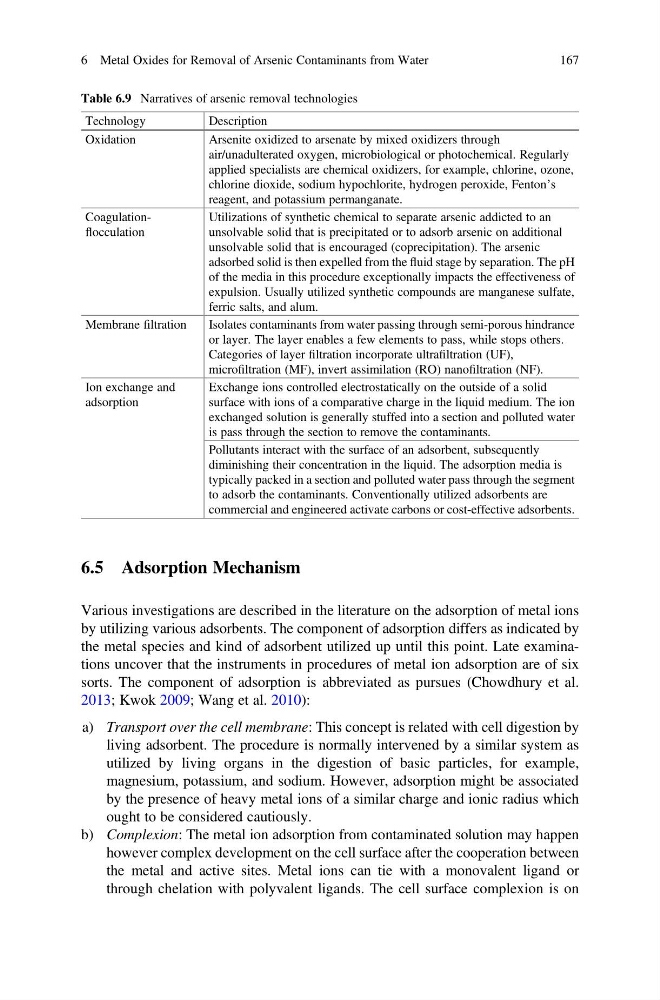
Table 6.9 Narratives of arsenic removal technologies
Technology
Description
Oxidation
Arsenite oxidized to arsenate by mixed oxidizers through
air/unadulterated oxygen, microbiological or photochemical. Regularly
applied specialists are chemical oxidizers, for example, chlorine, ozone,
chlorine dioxide, sodium hypochlorite, hydrogen peroxide, Fenton’s
reagent, and potassium permanganate.
Coagulationflocculation
Utilizations of synthetic chemical to separate arsenic addicted to an
unsolvable solid that is precipitated or to adsorb arsenic on additional
unsolvable solid that is encouraged (coprecipitation). The arsenic
adsorbed solid is then expelled from the fluid stage by separation. The pH
of the media in this procedure exceptionally impacts the effectiveness of
expulsion. Usually utilized synthetic compounds are manganese sulfate,
ferric salts, and alum.
Membrane filtration
Isolates contaminants from water passing through semi-porous hindrance
or layer. The layer enables a few elements to pass, while stops others.
Categories of layer filtration incorporate ultrafiltration (UF),
microfiltration (MF), invert assimilation (RO) nanofiltration (NF).
Ion exchange and
adsorption
Exchange ions controlled electrostatically on the outside of a solid
surface with ions of a comparative charge in the liquid medium. The ion
exchanged solution is generally stuffed into a section and polluted water
is pass through the section to remove the contaminants.
Pollutants interact with the surface of an adsorbent, subsequently
diminishing their concentration in the liquid. The adsorption media is
typically packed in a section and polluted water pass through the segment
to adsorb the contaminants. Conventionally utilized adsorbents are
commercial and engineered activate carbons or cost-effective adsorbents.
6 Metal Oxides for Removal of Arsenic Contaminants from Water
167
Various investigations are described in the literature on the adsorption of metal ions
by utilizing various adsorbents. The component of adsorption differs as indicated by
the metal species and kind of adsorbent utilized up until this point. Late examinations uncover that the instruments in procedures of metal ion adsorption are of six
sorts. The component of adsorption is abbreviated as pursues (Chowdhury et al.
2013; Kwok 2009; Wang et al. 2010):
a) Transport over the cell membrane: This concept is related with cell digestion by
living adsorbent. The procedure is normally intervened by a similar system as
utilized by living organs in the digestion of basic particles, for example,
magnesium, potassium, and sodium. However, adsorption might be associated
by the presence of heavy metal ions of a similar charge and ionic radius which
ought to be considered cautiously.
b) Complexion: The metal ion adsorption from contaminated solution may happen
however complex development on the cell surface after the cooperation between
the metal and active sites. Metal ions can tie with a monovalent ligand or
through chelation with polyvalent ligands. The cell surface complexion is on
Table 6.9 Narratives of arsenic removal technologies
Technology
Description
Oxidation
Arsenite oxidized to arsenate by mixed oxidizers through
air/unadulterated oxygen, microbiological or photochemical. Regularly
applied specialists are chemical oxidizers, for example, chlorine, ozone,
chlorine dioxide, sodium hypochlorite, hydrogen peroxide, Fenton’s
reagent, and potassium permanganate.
Coagulationflocculation
Utilizations of synthetic chemical to separate arsenic addicted to an
unsolvable solid that is precipitated or to adsorb arsenic on additional
unsolvable solid that is encouraged (coprecipitation). The arsenic
adsorbed solid is then expelled from the fluid stage by separation. The pH
of the media in this procedure exceptionally impacts the effectiveness of
expulsion. Usually utilized synthetic compounds are manganese sulfate,
ferric salts, and alum.
Membrane filtration
Isolates contaminants from water passing through semi-porous hindrance
or layer. The layer enables a few elements to pass, while stops others.
Categories of layer filtration incorporate ultrafiltration (UF),
microfiltration (MF), invert assimilation (RO) nanofiltration (NF).
Ion exchange and
adsorption
Exchange ions controlled electrostatically on the outside of a solid
surface with ions of a comparative charge in the liquid medium. The ion
exchanged solution is generally stuffed into a section and polluted water
is pass through the section to remove the contaminants.
Pollutants interact with the surface of an adsorbent, subsequently
diminishing their concentration in the liquid. The adsorption media is
typically packed in a section and polluted water pass through the segment
to adsorb the contaminants. Conventionally utilized adsorbents are
commercial and engineered activate carbons or cost-effective adsorbents.
6 Metal Oxides for Removal of Arsenic Contaminants from Water
167