

2.3.1 Animal Dung
Animal dung holds a significant amount of nitrogen and phosphorus. The high
concentration of these elements disturbs the nutrient cycle and degrades the environment. It comprises some other harmful residues like heavy metals, hormones,
antibiotics, and microbes, which not only pollute the environment but also become
the sources of hazardous human diseases. This is one of the leading causes of air,
water, and soil contamination. Therefore, the conversion of livestock waste to
useable energy form, i.e. biogas is the most environmentally friendly and sustainable
means of its utilization (Abdeshahian et al. 2016). In Asian countries, the most
common sources of animal dung are poultry, cattle, sheep, goats, horses, camels, and
buffaloes, and their number is also growing day by day. The amount of manure, an
animal excretes, is directly linked to its age, weight, and feeding behavior. Total
waste can be estimated by multiplying waste excreted (by an animal in a year) with a
total number of animals. The poultry sector is the chief sector in all the Asian
countries like India, Pakistan, Bangladesh, Nepal, and Sri Lanka with 656, 530,
242, 24, and 15 million birds, respectively, produced per annum. The dung produced
per animal in the poultry sector is 0.05 tons annually. On the other hand, manure
produced by a buffalo and a cow is 6.1 and 6.0 tons per year, respectively. Their
headcount is 30 million buffaloes and 31.8 million cattle in Pakistan, whereas 98.6
million buffaloes and 174 million cattle in India. Therefore, the poultry birds may be
high but waste excretion is most elevated in the case of buffaloes and cows that are
noteworthy in biogas generation (Raheem et al. 2016). Poultry waste contains dry
organic matter, feathers, head, feet, offal, and blood that are carbohydrates, proteins,
and lipids. Manure is composed of 35% dry material, 24% protein, and 18% fats. As
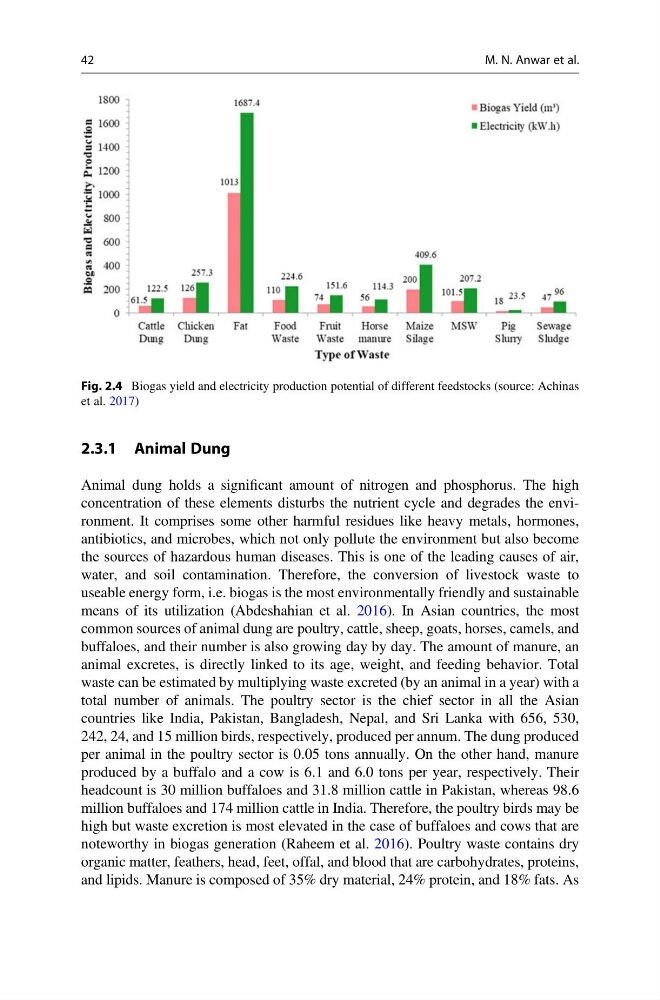
Fig. 2.4 Biogas yield and electricity production potential of different feedstocks (source: Achinas
et al. 2017)
42
M. N. Anwar et al.
Animal dung holds a significant amount of nitrogen and phosphorus. The high
concentration of these elements disturbs the nutrient cycle and degrades the environment. It comprises some other harmful residues like heavy metals, hormones,
antibiotics, and microbes, which not only pollute the environment but also become
the sources of hazardous human diseases. This is one of the leading causes of air,
water, and soil contamination. Therefore, the conversion of livestock waste to
useable energy form, i.e. biogas is the most environmentally friendly and sustainable
means of its utilization (Abdeshahian et al. 2016). In Asian countries, the most
common sources of animal dung are poultry, cattle, sheep, goats, horses, camels, and
buffaloes, and their number is also growing day by day. The amount of manure, an
animal excretes, is directly linked to its age, weight, and feeding behavior. Total
waste can be estimated by multiplying waste excreted (by an animal in a year) with a
total number of animals. The poultry sector is the chief sector in all the Asian
countries like India, Pakistan, Bangladesh, Nepal, and Sri Lanka with 656, 530,
242, 24, and 15 million birds, respectively, produced per annum. The dung produced
per animal in the poultry sector is 0.05 tons annually. On the other hand, manure
produced by a buffalo and a cow is 6.1 and 6.0 tons per year, respectively. Their
headcount is 30 million buffaloes and 31.8 million cattle in Pakistan, whereas 98.6
million buffaloes and 174 million cattle in India. Therefore, the poultry birds may be
high but waste excretion is most elevated in the case of buffaloes and cows that are
noteworthy in biogas generation (Raheem et al. 2016). Poultry waste contains dry
organic matter, feathers, head, feet, offal, and blood that are carbohydrates, proteins,
and lipids. Manure is composed of 35% dry material, 24% protein, and 18% fats. As
Fig. 2.4 Biogas yield and electricity production potential of different feedstocks (source: Achinas
et al. 2017)
42
M. N. Anwar et al.