

13.5 Role of Different Microbes in Degradation of
Pharmaceuticals
Persistence of pharmaceuticals in the environment depends on diverse factors such
as their physicochemical properties, environmental factors like pH, temperature,
light and the most significant is existence and metabolic or co-metabolic activities
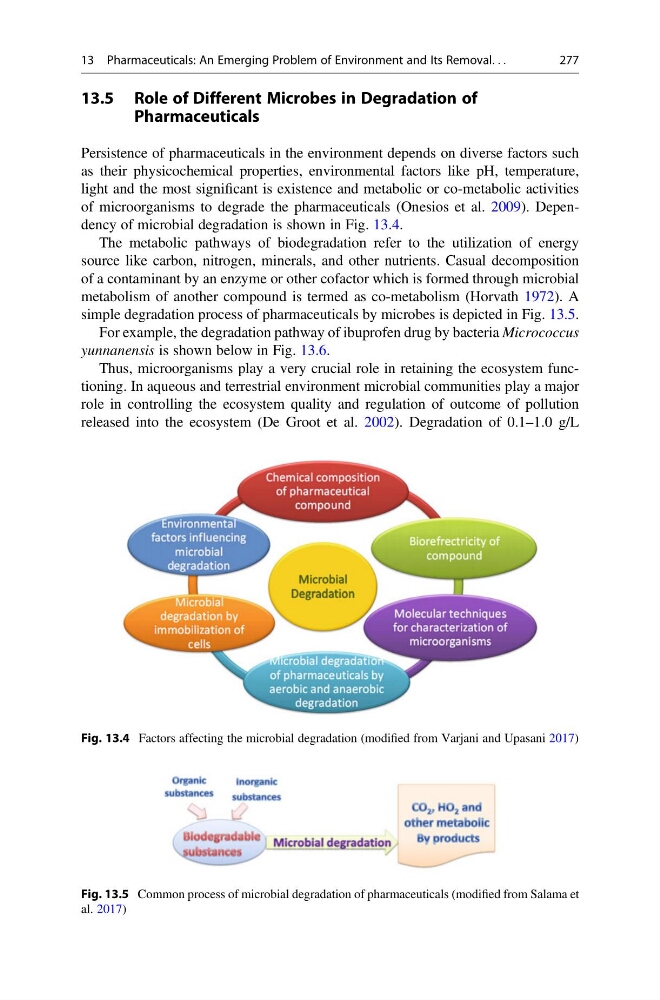
of microorganisms to degrade the pharmaceuticals (Onesios et al. 2009). Dependency of microbial degradation is shown in Fig. 13.4.
The metabolic pathways of biodegradation refer to the utilization of energy
source like carbon, nitrogen, minerals, and other nutrients. Casual decomposition
of a contaminant by an enzyme or other cofactor which is formed through microbial
metabolism of another compound is termed as co-metabolism (Horvath 1972). A
simple degradation process of pharmaceuticals by microbes is depicted in Fig. 13.5.
For example, the degradation pathway of ibuprofen drug by bacteria Micrococcus
yunnanensis is shown below in Fig. 13.6.
Thus, microorganisms play a very crucial role in retaining the ecosystem functioning. In aqueous and terrestrial environment microbial communities play a major
role in controlling the ecosystem quality and regulation of outcome of pollution
released into the ecosystem (De Groot et al. 2002). Degradation of 0.1–1.0 g/L
Fig. 13.4 Factors affecting the microbial degradation (modified from Varjani and Upasani 2017)
Fig. 13.5 Common process of microbial degradation of pharmaceuticals (modified from Salama et
al. 2017)
13 Pharmaceuticals: An Emerging Problem of Environment and Its Removal. . .
277
Pharmaceuticals
Persistence of pharmaceuticals in the environment depends on diverse factors such
as their physicochemical properties, environmental factors like pH, temperature,
light and the most significant is existence and metabolic or co-metabolic activities
of microorganisms to degrade the pharmaceuticals (Onesios et al. 2009). Dependency of microbial degradation is shown in Fig. 13.4.
The metabolic pathways of biodegradation refer to the utilization of energy
source like carbon, nitrogen, minerals, and other nutrients. Casual decomposition
of a contaminant by an enzyme or other cofactor which is formed through microbial
metabolism of another compound is termed as co-metabolism (Horvath 1972). A
simple degradation process of pharmaceuticals by microbes is depicted in Fig. 13.5.
For example, the degradation pathway of ibuprofen drug by bacteria Micrococcus
yunnanensis is shown below in Fig. 13.6.
Thus, microorganisms play a very crucial role in retaining the ecosystem functioning. In aqueous and terrestrial environment microbial communities play a major
role in controlling the ecosystem quality and regulation of outcome of pollution
released into the ecosystem (De Groot et al. 2002). Degradation of 0.1–1.0 g/L
Fig. 13.4 Factors affecting the microbial degradation (modified from Varjani and Upasani 2017)
Fig. 13.5 Common process of microbial degradation of pharmaceuticals (modified from Salama et
al. 2017)
13 Pharmaceuticals: An Emerging Problem of Environment and Its Removal. . .
277