

Liedberg et al. 1983, and the complete phenomena of excitation of surface plasmon
were explained by Otto (1968). Surface plasmon resonance biosensor (SPR), a
modern, cutting edge sensor technology, can perform rapid detection of pathogen
(Fig. 9.3). SPR is the optical sensor that provides sensitive, label-free, and real time
(few seconds or minutes) monitoring of reaction and has been proven to be one of the
most powerful technologies to determine specificity, affinity, and kinetic parameter
during the binding of macromolecules in many bond types including protein–
protein, DNA–protein, lipid–protein, polysaccharides–protein, and virus protein,
among others. Identification of biomolecules on SPR was made possible by
immobilizing a capturing agent, such as antibodies, enzyme, peptide, and DNA on
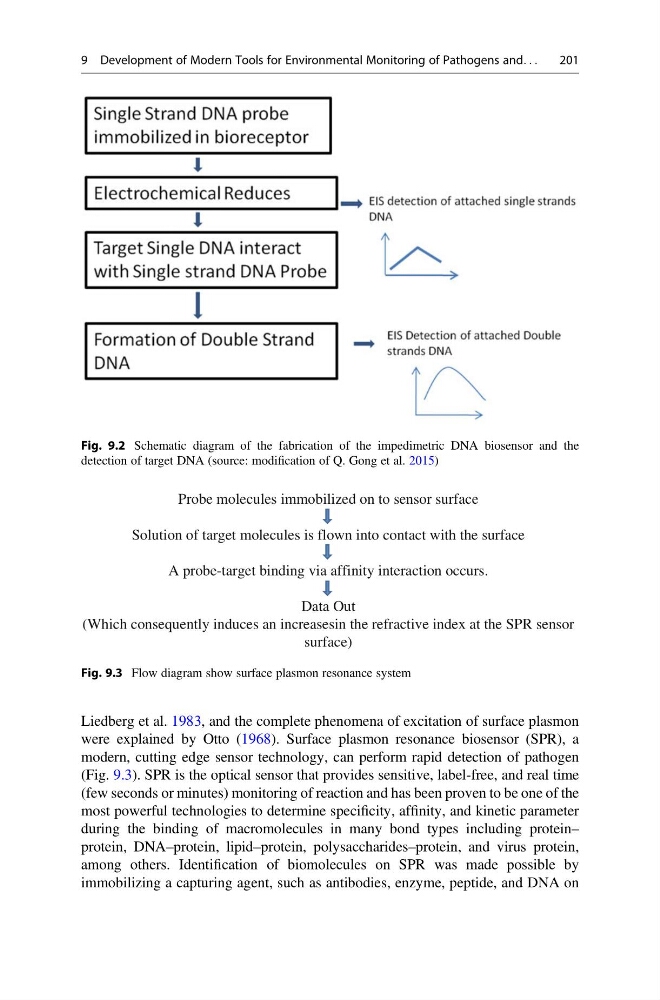
Fig. 9.2 Schematic diagram of the fabrication of the impedimetric DNA biosensor and the
detection of target DNA (source: modification of Q. Gong et al. 2015)
Probe molecules immobilized on to sensor surface
Solution of target molecules is flown into contact with the surface
A probe-target binding via affinity interaction occurs.
Data Out
(Which consequently induces an increasesin the refractive index at the SPR sensor
surface)
Fig. 9.3 Flow diagram show surface plasmon resonance system
9 Development of Modern Tools for Environmental Monitoring of Pathogens and. . .
201
were explained by Otto (1968). Surface plasmon resonance biosensor (SPR), a
modern, cutting edge sensor technology, can perform rapid detection of pathogen
(Fig. 9.3). SPR is the optical sensor that provides sensitive, label-free, and real time
(few seconds or minutes) monitoring of reaction and has been proven to be one of the
most powerful technologies to determine specificity, affinity, and kinetic parameter
during the binding of macromolecules in many bond types including protein–
protein, DNA–protein, lipid–protein, polysaccharides–protein, and virus protein,
among others. Identification of biomolecules on SPR was made possible by
immobilizing a capturing agent, such as antibodies, enzyme, peptide, and DNA on
Fig. 9.2 Schematic diagram of the fabrication of the impedimetric DNA biosensor and the
detection of target DNA (source: modification of Q. Gong et al. 2015)
Probe molecules immobilized on to sensor surface
Solution of target molecules is flown into contact with the surface
A probe-target binding via affinity interaction occurs.
Data Out
(Which consequently induces an increasesin the refractive index at the SPR sensor
surface)
Fig. 9.3 Flow diagram show surface plasmon resonance system
9 Development of Modern Tools for Environmental Monitoring of Pathogens and. . .
201