

8.4.1 In Situ Bioremediation
8.4.1.1 Natural Attenuation
Monitored Natural Attenuation—It is considered as the most natural process as there
is no human intervention, and the process solely relies on the pollutants and the
microbial processes to breakdown the same. This intrinsic bioremediation model still
needs to be monitored and risk management to be done accordingly.
8.4.1.2 Enhanced Attenuation
Bioventing
Air is allowed to pass through the waste, increasing the oxygen, leading to neutralization of the oxygen sensitive waste. Soil vapor extraction maximizes the vapor
extraction, where the air flow is comparatively higher than bioventing.
Biosparging
This process is similar to bioventing, the difference lies in the fact that air is injected
at the top layer, thereby pushing the volatile compounds movement to the upper zone
to increase the rate of biodegradation.
Bioslurping
This technique has proved to be a combination of vacuum pumping, bioventing, and
even soil vapor extraction process. This process is used in case of soil and water
biodegradation for the treatment of volatile and semi-volatile waste.
Bioleaching
This could be defined as the process of extracting out the heavy metal and other kind
of contamination with the help of living beings.
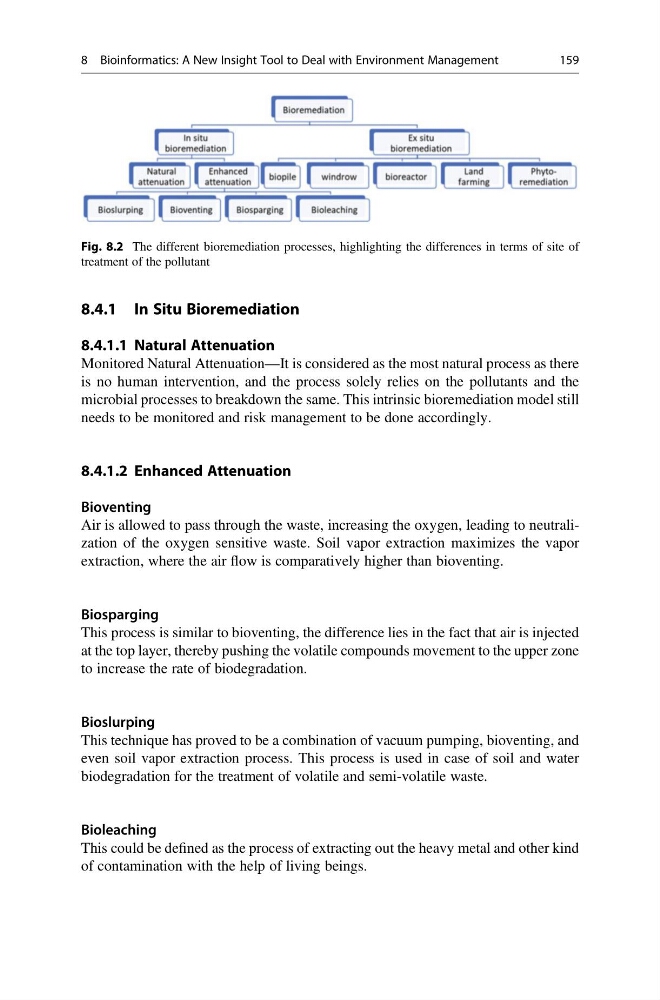
Fig. 8.2 The different bioremediation processes, highlighting the differences in terms of site of
treatment of the pollutant
8 Bioinformatics: A New Insight Tool to Deal with Environment Management
159
8.4.1.1 Natural Attenuation
Monitored Natural Attenuation—It is considered as the most natural process as there
is no human intervention, and the process solely relies on the pollutants and the
microbial processes to breakdown the same. This intrinsic bioremediation model still
needs to be monitored and risk management to be done accordingly.
8.4.1.2 Enhanced Attenuation
Bioventing
Air is allowed to pass through the waste, increasing the oxygen, leading to neutralization of the oxygen sensitive waste. Soil vapor extraction maximizes the vapor
extraction, where the air flow is comparatively higher than bioventing.
Biosparging
This process is similar to bioventing, the difference lies in the fact that air is injected
at the top layer, thereby pushing the volatile compounds movement to the upper zone
to increase the rate of biodegradation.
Bioslurping
This technique has proved to be a combination of vacuum pumping, bioventing, and
even soil vapor extraction process. This process is used in case of soil and water
biodegradation for the treatment of volatile and semi-volatile waste.
Bioleaching
This could be defined as the process of extracting out the heavy metal and other kind
of contamination with the help of living beings.
Fig. 8.2 The different bioremediation processes, highlighting the differences in terms of site of
treatment of the pollutant
8 Bioinformatics: A New Insight Tool to Deal with Environment Management
159