

active) and Type 3 (T3) contains two copper atoms and together they form trinuclear
cluster where oxygen reduction occurs (Bugg et al. 2011b; Munk et al. 2015; Feng et
al. 2016). Laccase from fungus has been widely studied and applied but with the
advancement in genomics various laccases have been discovered in bacteria
(Santhanam et al. 2011; Feng et al. 2016). Streptomyces (S. coelicolor, S.
violaceusniger, S. ipomoea CECT 3341, S. ipomoea CECT 3341, S. griseus) has
been the most studied bacterial genus for lignin degradation. Various other bacteria
such as Pandoraea sp. ISTKB, Bacillus tequilensis SN4, Pantoea ananatis Sd-1,
Bacillus pumilus (CotA), Thermus thermophilus HB27, etc., have also been studied
(de Gonzalo et al. 2016; Kumar et al. 2018).
Laccase-mediated oxidation of phenolic β-O-4 (most abundant linkage in lignin)
and β-1 has been demonstrated on lignin model dimers. Laccase can perform
degradation of phenolic as well as nonphenolic substrate in the presence of
mediators. Mediators are small molecules that act as an electron carrier, and upon
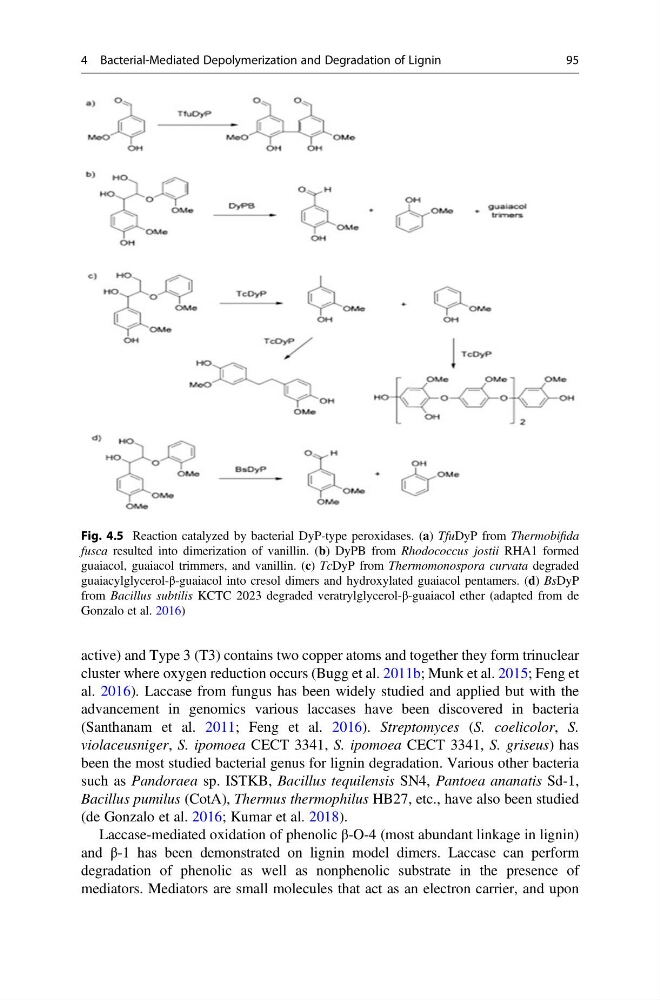
Fig. 4.5 Reaction catalyzed by bacterial DyP-type peroxidases. (a) TfuDyP from Thermobifida
fusca resulted into dimerization of vanillin. (b) DyPB from Rhodococcus jostii RHA1 formed
guaiacol, guaiacol trimmers, and vanillin. (c) TcDyP from Thermomonospora curvata degraded
guaiacylglycerol-β-guaiacol into cresol dimers and hydroxylated guaiacol pentamers. (d) BsDyP
from Bacillus subtilis KCTC 2023 degraded veratrylglycerol-β-guaiacol ether (adapted from de
Gonzalo et al. 2016)
4 Bacterial-Mediated Depolymerization and Degradation of Lignin
95
cluster where oxygen reduction occurs (Bugg et al. 2011b; Munk et al. 2015; Feng et
al. 2016). Laccase from fungus has been widely studied and applied but with the
advancement in genomics various laccases have been discovered in bacteria
(Santhanam et al. 2011; Feng et al. 2016). Streptomyces (S. coelicolor, S.
violaceusniger, S. ipomoea CECT 3341, S. ipomoea CECT 3341, S. griseus) has
been the most studied bacterial genus for lignin degradation. Various other bacteria
such as Pandoraea sp. ISTKB, Bacillus tequilensis SN4, Pantoea ananatis Sd-1,
Bacillus pumilus (CotA), Thermus thermophilus HB27, etc., have also been studied
(de Gonzalo et al. 2016; Kumar et al. 2018).
Laccase-mediated oxidation of phenolic β-O-4 (most abundant linkage in lignin)
and β-1 has been demonstrated on lignin model dimers. Laccase can perform
degradation of phenolic as well as nonphenolic substrate in the presence of
mediators. Mediators are small molecules that act as an electron carrier, and upon
Fig. 4.5 Reaction catalyzed by bacterial DyP-type peroxidases. (a) TfuDyP from Thermobifida
fusca resulted into dimerization of vanillin. (b) DyPB from Rhodococcus jostii RHA1 formed
guaiacol, guaiacol trimmers, and vanillin. (c) TcDyP from Thermomonospora curvata degraded
guaiacylglycerol-β-guaiacol into cresol dimers and hydroxylated guaiacol pentamers. (d) BsDyP
from Bacillus subtilis KCTC 2023 degraded veratrylglycerol-β-guaiacol ether (adapted from de
Gonzalo et al. 2016)
4 Bacterial-Mediated Depolymerization and Degradation of Lignin
95