

316
S. Mannakkara
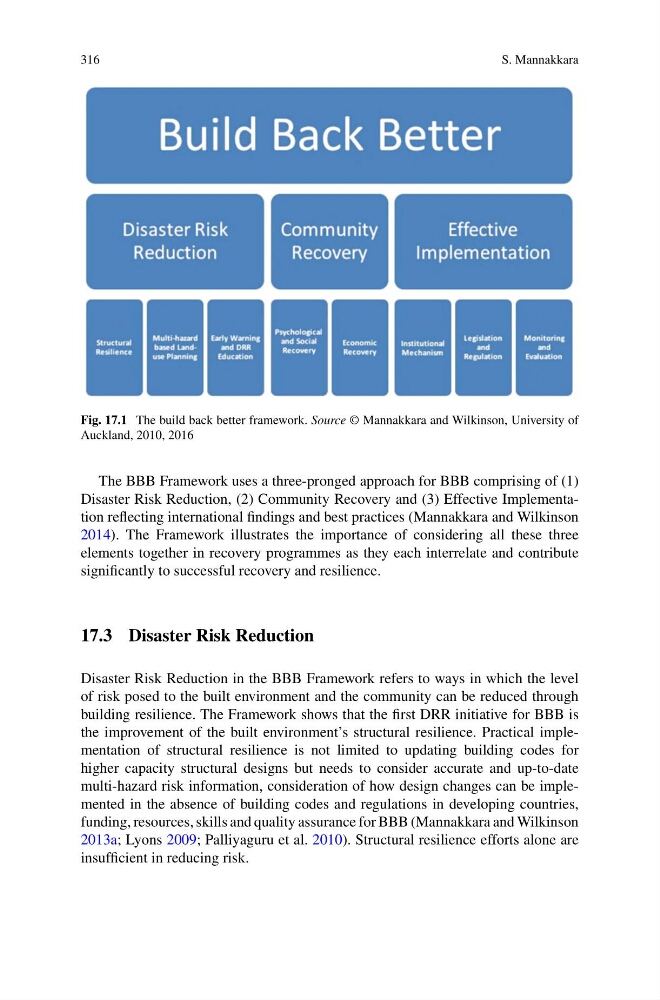
Fig. 17.1 The build back better framework. Source © Mannakkara and Wilkinson, University of
Auckland, 2010, 2016
The BBB Framework uses a three-pronged approach for BBB comprising of (1)
Disaster Risk Reduction, (2) Community Recovery and (3) Effective Implementation reflecting international findings and best practices (Mannakkara and Wilkinson
2014). The Framework illustrates the importance of considering all these three
elements together in recovery programmes as they each interrelate and contribute
significantly to successful recovery and resilience.
17.3 Disaster Risk Reduction
Disaster Risk Reduction in the BBB Framework refers to ways in which the level
of risk posed to the built environment and the community can be reduced through
building resilience. The Framework shows that the first DRR initiative for BBB is
the improvement of the built environment’s structural resilience. Practical implementation of structural resilience is not limited to updating building codes for
higher capacity structural designs but needs to consider accurate and up-to-date
multi-hazard risk information, consideration of how design changes can be implemented in the absence of building codes and regulations in developing countries,
funding, resources, skills and quality assurance for BBB (Mannakkara and Wilkinson
2013a; Lyons 2009; Palliyaguru et al. 2010). Structural resilience efforts alone are
insufficient in reducing risk.
S. Mannakkara
Fig. 17.1 The build back better framework. Source © Mannakkara and Wilkinson, University of
Auckland, 2010, 2016
The BBB Framework uses a three-pronged approach for BBB comprising of (1)
Disaster Risk Reduction, (2) Community Recovery and (3) Effective Implementation reflecting international findings and best practices (Mannakkara and Wilkinson
2014). The Framework illustrates the importance of considering all these three
elements together in recovery programmes as they each interrelate and contribute
significantly to successful recovery and resilience.
17.3 Disaster Risk Reduction
Disaster Risk Reduction in the BBB Framework refers to ways in which the level
of risk posed to the built environment and the community can be reduced through
building resilience. The Framework shows that the first DRR initiative for BBB is
the improvement of the built environment’s structural resilience. Practical implementation of structural resilience is not limited to updating building codes for
higher capacity structural designs but needs to consider accurate and up-to-date
multi-hazard risk information, consideration of how design changes can be implemented in the absence of building codes and regulations in developing countries,
funding, resources, skills and quality assurance for BBB (Mannakkara and Wilkinson
2013a; Lyons 2009; Palliyaguru et al. 2010). Structural resilience efforts alone are
insufficient in reducing risk.