

14 Leveraging Youth Engagement in Disaster Risk Reduction Through Science …
261
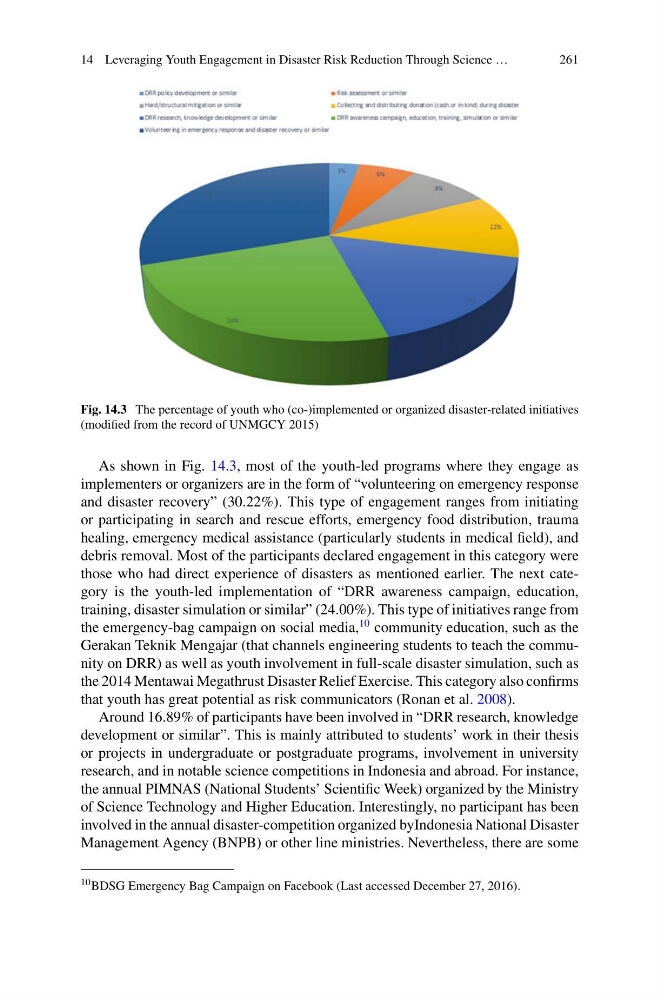
Fig. 14.3 The percentage of youth who (co-)implemented or organized disaster-related initiatives
(modified from the record of UNMGCY 2015)
As shown in Fig. 14.3, most of the youth-led programs where they engage as
implementers or organizers are in the form of “volunteering on emergency response
and disaster recovery” (30.22%). This type of engagement ranges from initiating
or participating in search and rescue efforts, emergency food distribution, trauma
healing, emergency medical assistance (particularly students in medical field), and
debris removal. Most of the participants declared engagement in this category were
those who had direct experience of disasters as mentioned earlier. The next category is the youth-led implementation of “DRR awareness campaign, education,
training, disaster simulation or similar” (24.00%). This type of initiatives range from
the emergency-bag campaign on social media,
10 community education, such as the
Gerakan Teknik Mengajar (that channels engineering students to teach the community on DRR) as well as youth involvement in full-scale disaster simulation, such as
the 2014 Mentawai Megathrust Disaster Relief Exercise. This category also confirms
that youth has great potential as risk communicators (Ronan et al. 2008).
Around 16.89% of participants have been involved in “DRR research, knowledge
development or similar”. This is mainly attributed to students’ work in their thesis
or projects in undergraduate or postgraduate programs, involvement in university
research, and in notable science competitions in Indonesia and abroad. For instance,
the annual PIMNAS (National Students’ Scientific Week) organized by the Ministry
of Science Technology and Higher Education. Interestingly, no participant has been
involved in the annual disaster-competition organized byIndonesia National Disaster
Management Agency (BNPB) or other line ministries. Nevertheless, there are some
10 BDSG Emergency Bag Campaign on Facebook (Last accessed December 27, 2016).
261
Fig. 14.3 The percentage of youth who (co-)implemented or organized disaster-related initiatives
(modified from the record of UNMGCY 2015)
As shown in Fig. 14.3, most of the youth-led programs where they engage as
implementers or organizers are in the form of “volunteering on emergency response
and disaster recovery” (30.22%). This type of engagement ranges from initiating
or participating in search and rescue efforts, emergency food distribution, trauma
healing, emergency medical assistance (particularly students in medical field), and
debris removal. Most of the participants declared engagement in this category were
those who had direct experience of disasters as mentioned earlier. The next category is the youth-led implementation of “DRR awareness campaign, education,
training, disaster simulation or similar” (24.00%). This type of initiatives range from
the emergency-bag campaign on social media,
10 community education, such as the
Gerakan Teknik Mengajar (that channels engineering students to teach the community on DRR) as well as youth involvement in full-scale disaster simulation, such as
the 2014 Mentawai Megathrust Disaster Relief Exercise. This category also confirms
that youth has great potential as risk communicators (Ronan et al. 2008).
Around 16.89% of participants have been involved in “DRR research, knowledge
development or similar”. This is mainly attributed to students’ work in their thesis
or projects in undergraduate or postgraduate programs, involvement in university
research, and in notable science competitions in Indonesia and abroad. For instance,
the annual PIMNAS (National Students’ Scientific Week) organized by the Ministry
of Science Technology and Higher Education. Interestingly, no participant has been
involved in the annual disaster-competition organized byIndonesia National Disaster
Management Agency (BNPB) or other line ministries. Nevertheless, there are some
10 BDSG Emergency Bag Campaign on Facebook (Last accessed December 27, 2016).