

The main distinguishing types of winds in Libya:
• Cold wind: This wind blows during the winter season
from the north and northwest, and it is loaded with rain
and increases the amount of relative humidity.
• Southern wind: This is hot and dry continental winds
(desert winds) locally known as Qibli wind. It contributes
to raising the temperature and low relative humidity, and
its blows start from the first of March until the end of
October in an irregular pattern. This wind causes great
damage to the crops and the environment in general.
3.2.2 Biota (Vegetation Cover)
Biota or also called organisms refers to soil fauna such as
earthworms and the natural vegetation cover, in which human beings have no role in its growth or cultivation.
Vegetation cover is also considered one of the important soil
formation factors, and it is the responsible source for organic
matter in the soil. It also plays a significant role in the
physical and chemical weathering processes. Moreover,
vegetation cover has an indirect role in weather modification
(also known as weather control).In particular, the nature of
vegetation affects interception and evapotranspiration processes. Likewise, the distribution of vegetation modifies the
balance between fluxes of moisture originating from the soil
and those derived through canopy processes. The vegetation
cover also varies in terms of its effect on soils that formed in
the place, due to the difference in the amount, type, and
degree of decomposition of organic matter (see Chap. 6,
Sect. 6.3 for further information about the distribution of
vegetation types in Libya).
In Libya, the natural vegetation cover is divided into three
main parts, grass or herbaceous, shrubs, and trees (Fig. 3.6).
Thus, it can be said that the amount of organic matter in the
Libyan soils mainly depends on the type of the vegetation
cover. For example, soils formed over the natural grass and
herbs contain a greater amount of organic matter uniformly
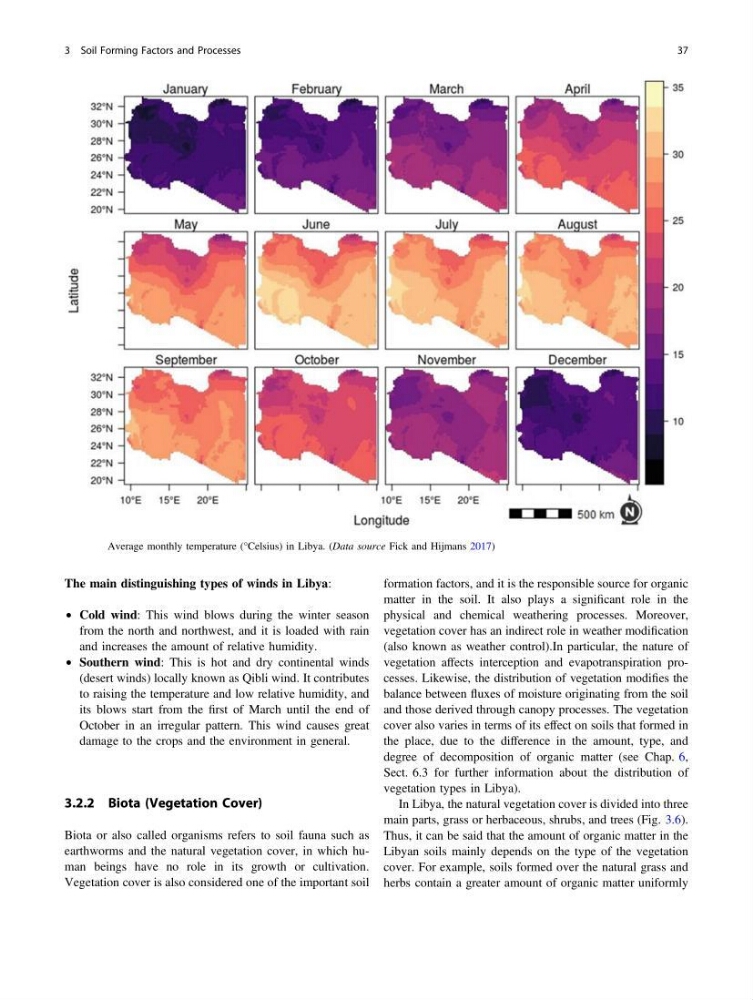
Fig. 3.4 Average monthly temperature (°Celsius) in Libya. (Data source Fick and Hijmans 2017)
3 Soil Forming Factors and Processes
37
• Cold wind: This wind blows during the winter season
from the north and northwest, and it is loaded with rain
and increases the amount of relative humidity.
• Southern wind: This is hot and dry continental winds
(desert winds) locally known as Qibli wind. It contributes
to raising the temperature and low relative humidity, and
its blows start from the first of March until the end of
October in an irregular pattern. This wind causes great
damage to the crops and the environment in general.
3.2.2 Biota (Vegetation Cover)
Biota or also called organisms refers to soil fauna such as
earthworms and the natural vegetation cover, in which human beings have no role in its growth or cultivation.
Vegetation cover is also considered one of the important soil
formation factors, and it is the responsible source for organic
matter in the soil. It also plays a significant role in the
physical and chemical weathering processes. Moreover,
vegetation cover has an indirect role in weather modification
(also known as weather control).In particular, the nature of
vegetation affects interception and evapotranspiration processes. Likewise, the distribution of vegetation modifies the
balance between fluxes of moisture originating from the soil
and those derived through canopy processes. The vegetation
cover also varies in terms of its effect on soils that formed in
the place, due to the difference in the amount, type, and
degree of decomposition of organic matter (see Chap. 6,
Sect. 6.3 for further information about the distribution of
vegetation types in Libya).
In Libya, the natural vegetation cover is divided into three
main parts, grass or herbaceous, shrubs, and trees (Fig. 3.6).
Thus, it can be said that the amount of organic matter in the
Libyan soils mainly depends on the type of the vegetation
cover. For example, soils formed over the natural grass and
herbs contain a greater amount of organic matter uniformly
Fig. 3.4 Average monthly temperature (°Celsius) in Libya. (Data source Fick and Hijmans 2017)
3 Soil Forming Factors and Processes
37