

Additionally, seasonal winds from the southeast and the
northwest in the summer and winter, respectively, cause
heavy rainfall on Japan’s Pacific side in the summer and
heavy snowfall on the Sea of Japan coast in the winter.
Moreover, there are rainy seasons in June to July and in
September, when typhoons move up the Japanese archipelago causing strong winds and severe rain storms.
The Japanese archipelago experiences a varied climate,
with the northern areas under a subarctic climatic zone and
the southern areas in a subtropical climatic zone. Soil temperature regimes are frigid (<8 °C) in eastern and northern
Hokkaido and mesic (8–15 °C) in western and southern
Hokkaido and northern Honshu. In central and western
Honshu, the soil temperature regime in highlands and
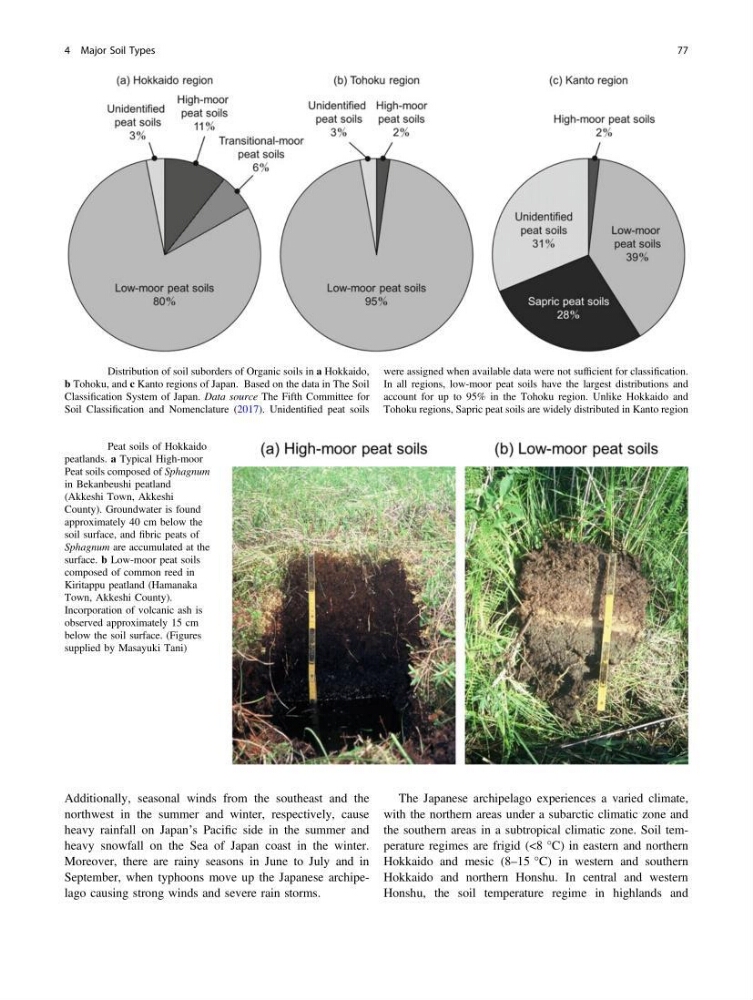
Fig. 4.6 Distribution of soil suborders of Organic soils in a Hokkaido,
b Tohoku, and c Kanto regions of Japan. Based on the data in The Soil
Classification System of Japan. Data source The Fifth Committee for
Soil Classification and Nomenclature (2017). Unidentified peat soils
were assigned when available data were not sufficient for classification.
In all regions, low-moor peat soils have the largest distributions and
account for up to 95% in the Tohoku region. Unlike Hokkaido and
Tohoku regions, Sapric peat soils are widely distributed in Kanto region
Fig. 4.7 Peat soils of Hokkaido
peatlands. a Typical High-moor
Peat soils composed of Sphagnum
in Bekanbeushi peatland
(Akkeshi Town, Akkeshi
County). Groundwater is found
approximately 40 cm below the
soil surface, and fibric peats of
Sphagnum are accumulated at the
surface. b Low-moor peat soils
composed of common reed in
Kiritappu peatland (Hamanaka
Town, Akkeshi County).
Incorporation of volcanic ash is
observed approximately 15 cm
below the soil surface. (Figures
supplied by Masayuki Tani)
4 Major Soil Types
77
northwest in the summer and winter, respectively, cause
heavy rainfall on Japan’s Pacific side in the summer and
heavy snowfall on the Sea of Japan coast in the winter.
Moreover, there are rainy seasons in June to July and in
September, when typhoons move up the Japanese archipelago causing strong winds and severe rain storms.
The Japanese archipelago experiences a varied climate,
with the northern areas under a subarctic climatic zone and
the southern areas in a subtropical climatic zone. Soil temperature regimes are frigid (<8 °C) in eastern and northern
Hokkaido and mesic (8–15 °C) in western and southern
Hokkaido and northern Honshu. In central and western
Honshu, the soil temperature regime in highlands and
Fig. 4.6 Distribution of soil suborders of Organic soils in a Hokkaido,
b Tohoku, and c Kanto regions of Japan. Based on the data in The Soil
Classification System of Japan. Data source The Fifth Committee for
Soil Classification and Nomenclature (2017). Unidentified peat soils
were assigned when available data were not sufficient for classification.
In all regions, low-moor peat soils have the largest distributions and
account for up to 95% in the Tohoku region. Unlike Hokkaido and
Tohoku regions, Sapric peat soils are widely distributed in Kanto region
Fig. 4.7 Peat soils of Hokkaido
peatlands. a Typical High-moor
Peat soils composed of Sphagnum
in Bekanbeushi peatland
(Akkeshi Town, Akkeshi
County). Groundwater is found
approximately 40 cm below the
soil surface, and fibric peats of
Sphagnum are accumulated at the
surface. b Low-moor peat soils
composed of common reed in
Kiritappu peatland (Hamanaka
Town, Akkeshi County).
Incorporation of volcanic ash is
observed approximately 15 cm
below the soil surface. (Figures
supplied by Masayuki Tani)
4 Major Soil Types
77