

geomorphological processes. Among the plains facing the
coast, in areas where wind action is strong, sand is supplied
from the coast, forming sand dunes. In lowland areas, sediments from rivers and beaches directly become soil parent
material on the surface.
Terraces (uplands) occur above river and sea levels; their
upper surface is flat, and some or all of them are surrounded
by cliffs and steep slopes. The flat surface of a terrace is
called the terrace surface, and the surrounding cliffs and
steep slopes are called terrace cliffs. The terrace of the
Japanese Islands is a landform which formed during the
Middle Pleistocene to the Late Pleistocene (about
770,000 years ago to 10,000 years ago) and is divided into
fluvial terrace and maritime terrace by major geomorphological processes.
Following the formation of a terrace, its surface is dissected by various erosional processes, the area of the terrace
surface decreases, and it turns into a hill mainly composed of
sloped features such as ridges and valleys. In Japan’s terraces and hills, exposed sediments in rivers and beaches are
usually covered with eolian sediments such as air-fall
pyroclastics (tephras) and various eolian dusts, which
rarely become soil parent materials directly on the land
surface.
Additionally, the alluvial fans formed by the sand and
gravel that are eroded and transported from volcanoes usually contain various sediments from debris flows, pyroclastic
flows, lava flows and so forth, and so are called “alluvial
fans at the foot of volcanoes” to distinguish them from the
alluvial fans formed by river streams.
(3) Formation of fluvial terraces
The lowlands formed by river sedimentation (alluviation) are
called “fluvial lowlands” or “alluvial lowlands”. In the
Japanese Islands, where the mountains and plains are adjacent, the erosion process is dominant in mountainous areas,
so river valleys are narrow and rivers form erosional valleys.
On the other hand, when the volume of the transported
sediment becomes large, sedimentary valleys with wide
valley bottoms are formed. River channels become easy to
move in mountain basins and at the foot of mountains, and
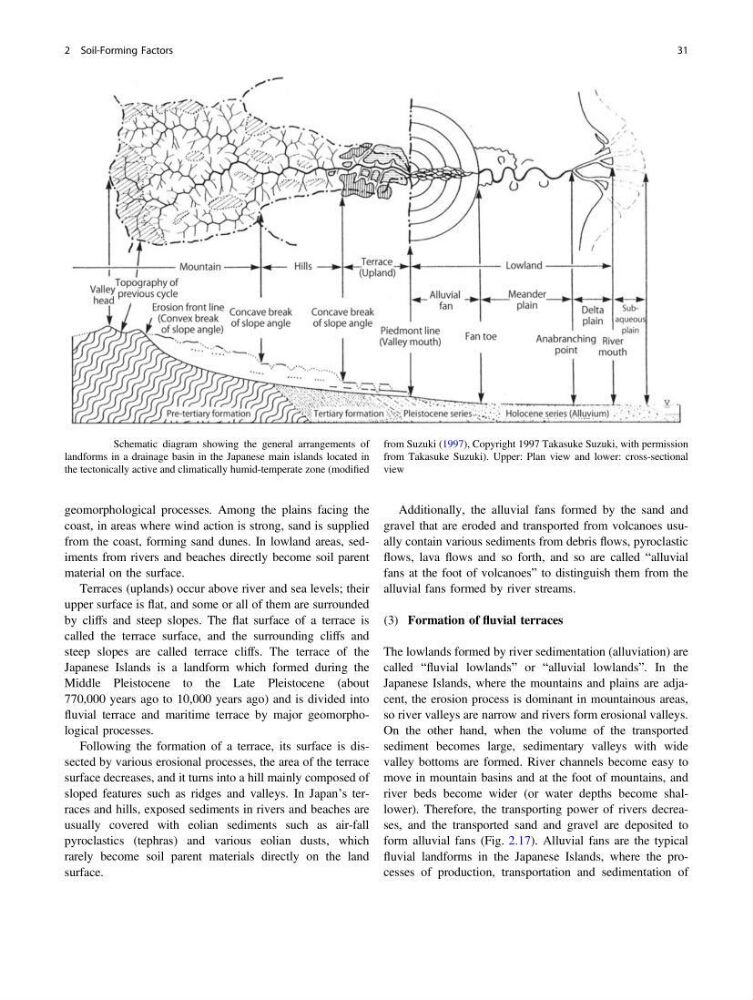
river beds become wider (or water depths become shallower). Therefore, the transporting power of rivers decreases, and the transported sand and gravel are deposited to
form alluvial fans (Fig. 2.17). Alluvial fans are the typical
fluvial landforms in the Japanese Islands, where the processes of production, transportation and sedimentation of
Fig. 2.17 Schematic diagram showing the general arrangements of
landforms in a drainage basin in the Japanese main islands located in
the tectonically active and climatically humid-temperate zone (modified
from Suzuki (1997), Copyright 1997 Takasuke Suzuki, with permission
from Takasuke Suzuki). Upper: Plan view and lower: cross-sectional
view
2 Soil-Forming Factors
31
coast, in areas where wind action is strong, sand is supplied
from the coast, forming sand dunes. In lowland areas, sediments from rivers and beaches directly become soil parent
material on the surface.
Terraces (uplands) occur above river and sea levels; their
upper surface is flat, and some or all of them are surrounded
by cliffs and steep slopes. The flat surface of a terrace is
called the terrace surface, and the surrounding cliffs and
steep slopes are called terrace cliffs. The terrace of the
Japanese Islands is a landform which formed during the
Middle Pleistocene to the Late Pleistocene (about
770,000 years ago to 10,000 years ago) and is divided into
fluvial terrace and maritime terrace by major geomorphological processes.
Following the formation of a terrace, its surface is dissected by various erosional processes, the area of the terrace
surface decreases, and it turns into a hill mainly composed of
sloped features such as ridges and valleys. In Japan’s terraces and hills, exposed sediments in rivers and beaches are
usually covered with eolian sediments such as air-fall
pyroclastics (tephras) and various eolian dusts, which
rarely become soil parent materials directly on the land
surface.
Additionally, the alluvial fans formed by the sand and
gravel that are eroded and transported from volcanoes usually contain various sediments from debris flows, pyroclastic
flows, lava flows and so forth, and so are called “alluvial
fans at the foot of volcanoes” to distinguish them from the
alluvial fans formed by river streams.
(3) Formation of fluvial terraces
The lowlands formed by river sedimentation (alluviation) are
called “fluvial lowlands” or “alluvial lowlands”. In the
Japanese Islands, where the mountains and plains are adjacent, the erosion process is dominant in mountainous areas,
so river valleys are narrow and rivers form erosional valleys.
On the other hand, when the volume of the transported
sediment becomes large, sedimentary valleys with wide
valley bottoms are formed. River channels become easy to
move in mountain basins and at the foot of mountains, and
river beds become wider (or water depths become shallower). Therefore, the transporting power of rivers decreases, and the transported sand and gravel are deposited to
form alluvial fans (Fig. 2.17). Alluvial fans are the typical
fluvial landforms in the Japanese Islands, where the processes of production, transportation and sedimentation of
Fig. 2.17 Schematic diagram showing the general arrangements of
landforms in a drainage basin in the Japanese main islands located in
the tectonically active and climatically humid-temperate zone (modified
from Suzuki (1997), Copyright 1997 Takasuke Suzuki, with permission
from Takasuke Suzuki). Upper: Plan view and lower: cross-sectional
view
2 Soil-Forming Factors
31