

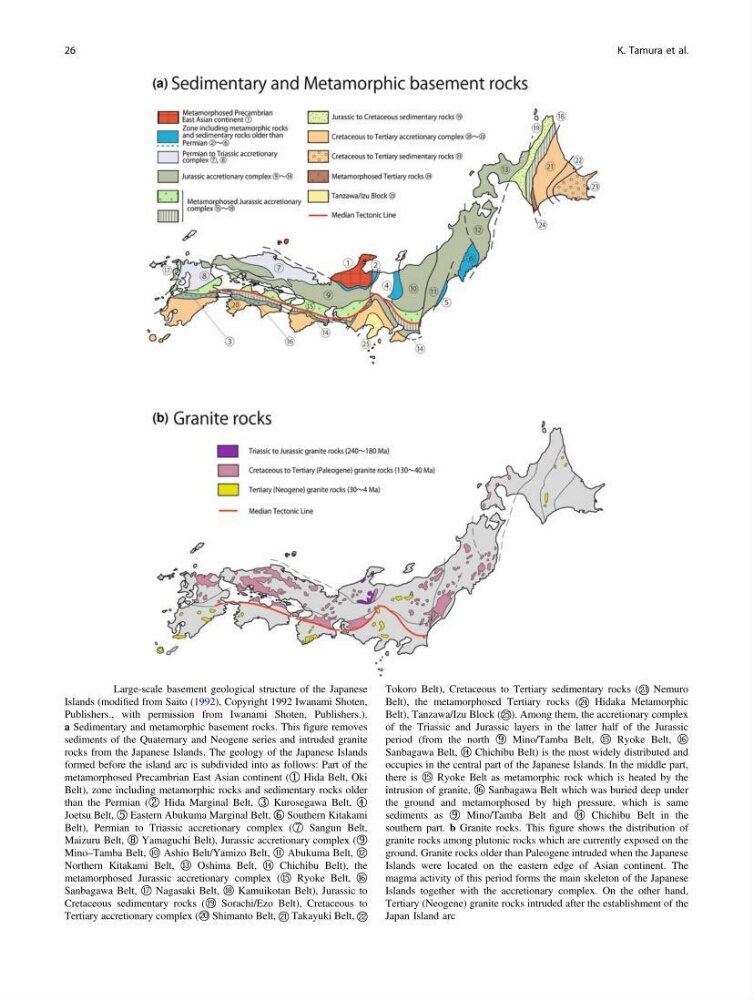
Fig. 2.14 Large-scale basement geological structure of the Japanese
Islands (modified from Saito (1992), Copyright 1992 Iwanami Shoten,
Publishers., with permission from Iwanami Shoten, Publishers.).
a Sedimentary and metamorphic basement rocks. This figure removes
sediments of the Quaternary and Neogene series and intruded granite
rocks from the Japanese Islands. The geology of the Japanese Islands
formed before the island arc is subdivided into as follows: Part of the
metamorphosed Precambrian East Asian continent (① Hida Belt, Oki
Belt), zone including metamorphic rocks and sedimentary rocks older
than the Permian (② Hida Marginal Belt, ③ Kurosegawa Belt, ④
Joetsu Belt, ⑤ Eastern Abukuma Marginal Belt, ⑥ Southern Kitakami
Belt), Permian to Triassic accretionary complex (⑦ Sangun Belt,
Maizuru Belt, ⑧ Yamaguchi Belt), Jurassic accretionary complex (⑨
Mino–Tamba Belt, ⑩ Ashio Belt/Yamizo Belt, ⑪ Abukuma Belt, ⑫
Northern Kitakami Belt, ⑬ Oshima Belt, ⑭ Chichibu Belt), the
metamorphosed Jurassic accretionary complex (⑮ Ryoke Belt, ⑯
Sanbagawa Belt, ⑰ Nagasaki Belt, ⑱ Kamuikotan Belt), Jurassic to
Cretaceous sedimentary rocks (⑲ Sorachi/Ezo Belt), Cretaceous to
Tertiary accretionary complex (⑳ Shimanto Belt, Takayuki Belt,
Tokoro Belt), Cretaceous to Tertiary sedimentary rocks ( Nemuro
Belt), the metamorphosed Tertiary rocks ( Hidaka Metamorphic
Belt), Tanzawa/Izu Block ( ). Among them, the accretionary complex
of the Triassic and Jurassic layers in the latter half of the Jurassic
period (from the north ⑨ Mino/Tamba Belt, ⑮ Ryoke Belt, ⑯
Sanbagawa Belt, ⑭ Chichibu Belt) is the most widely distributed and
occupies in the central part of the Japanese Islands. In the middle part,
there is ⑮ Ryoke Belt as metamorphic rock which is heated by the
intrusion of granite, ⑯ Sanbagawa Belt which was buried deep under
the ground and metamorphosed by high pressure, which is same
sediments as ⑨ Mino/Tamba Belt and ⑭ Chichibu Belt in the
southern part. b Granite rocks. This figure shows the distribution of
granite rocks among plutonic rocks which are currently exposed on the
ground. Granite rocks older than Paleogene intruded when the Japanese
Islands were located on the eastern edge of Asian continent. The
magma activity of this period forms the main skeleton of the Japanese
Islands together with the accretionary complex. On the other hand,
Tertiary (Neogene) granite rocks intruded after the establishment of the
Japan Island arc
26
K. Tamura et al.
Islands (modified from Saito (1992), Copyright 1992 Iwanami Shoten,
Publishers., with permission from Iwanami Shoten, Publishers.).
a Sedimentary and metamorphic basement rocks. This figure removes
sediments of the Quaternary and Neogene series and intruded granite
rocks from the Japanese Islands. The geology of the Japanese Islands
formed before the island arc is subdivided into as follows: Part of the
metamorphosed Precambrian East Asian continent (① Hida Belt, Oki
Belt), zone including metamorphic rocks and sedimentary rocks older
than the Permian (② Hida Marginal Belt, ③ Kurosegawa Belt, ④
Joetsu Belt, ⑤ Eastern Abukuma Marginal Belt, ⑥ Southern Kitakami
Belt), Permian to Triassic accretionary complex (⑦ Sangun Belt,
Maizuru Belt, ⑧ Yamaguchi Belt), Jurassic accretionary complex (⑨
Mino–Tamba Belt, ⑩ Ashio Belt/Yamizo Belt, ⑪ Abukuma Belt, ⑫
Northern Kitakami Belt, ⑬ Oshima Belt, ⑭ Chichibu Belt), the
metamorphosed Jurassic accretionary complex (⑮ Ryoke Belt, ⑯
Sanbagawa Belt, ⑰ Nagasaki Belt, ⑱ Kamuikotan Belt), Jurassic to
Cretaceous sedimentary rocks (⑲ Sorachi/Ezo Belt), Cretaceous to
Tertiary accretionary complex (⑳ Shimanto Belt, Takayuki Belt,
Tokoro Belt), Cretaceous to Tertiary sedimentary rocks ( Nemuro
Belt), the metamorphosed Tertiary rocks ( Hidaka Metamorphic
Belt), Tanzawa/Izu Block ( ). Among them, the accretionary complex
of the Triassic and Jurassic layers in the latter half of the Jurassic
period (from the north ⑨ Mino/Tamba Belt, ⑮ Ryoke Belt, ⑯
Sanbagawa Belt, ⑭ Chichibu Belt) is the most widely distributed and
occupies in the central part of the Japanese Islands. In the middle part,
there is ⑮ Ryoke Belt as metamorphic rock which is heated by the
intrusion of granite, ⑯ Sanbagawa Belt which was buried deep under
the ground and metamorphosed by high pressure, which is same
sediments as ⑨ Mino/Tamba Belt and ⑭ Chichibu Belt in the
southern part. b Granite rocks. This figure shows the distribution of
granite rocks among plutonic rocks which are currently exposed on the
ground. Granite rocks older than Paleogene intruded when the Japanese
Islands were located on the eastern edge of Asian continent. The
magma activity of this period forms the main skeleton of the Japanese
Islands together with the accretionary complex. On the other hand,
Tertiary (Neogene) granite rocks intruded after the establishment of the
Japan Island arc
26
K. Tamura et al.