

ocean current further strengthened, and the evergreen forests
in the western part of the Chubu region, and the beech and
Quercus (oak) forests in Northern Japan, became prominent.
Through the oxygen isotope analysis of fine quartz in the
soil, the past wind system and the transition of monsoon
activity are debated. During the last glacial maximum (MIS
2), many fine particles originating from Precambrian rocks in
the northern part of the Asian continent were transported to
the area north of the Seto Inland Sea in Japan; however, in
regions to the south of the Seto Inland Sea, particles derived
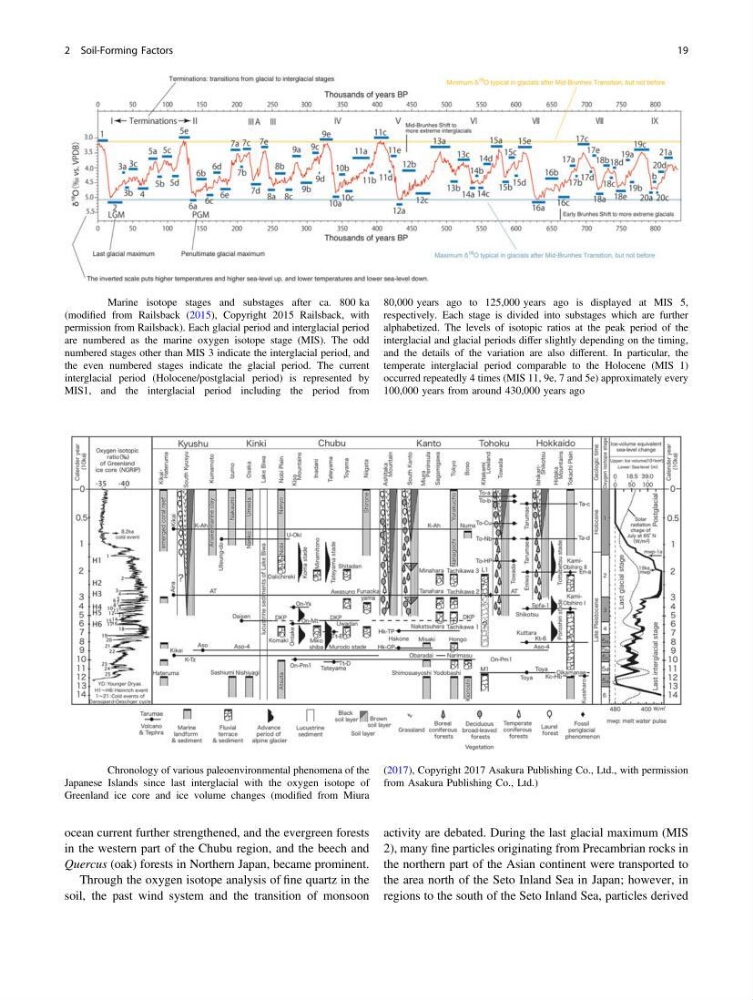
Fig. 2.7 Marine isotope stages and substages after ca. 800 ka
(modified from Railsback (2015), Copyright 2015 Railsback, with
permission from Railsback). Each glacial period and interglacial period
are numbered as the marine oxygen isotope stage (MIS). The odd
numbered stages other than MIS 3 indicate the interglacial period, and
the even numbered stages indicate the glacial period. The current
interglacial period (Holocene/postglacial period) is represented by
MIS1, and the interglacial period including the period from
80,000 years ago to 125,000 years ago is displayed at MIS 5,
respectively. Each stage is divided into substages which are further
alphabetized. The levels of isotopic ratios at the peak period of the
interglacial and glacial periods differ slightly depending on the timing,
and the details of the variation are also different. In particular, the
temperate interglacial period comparable to the Holocene (MIS 1)
occurred repeatedly 4 times (MIS 11, 9e, 7 and 5e) approximately every
100,000 years from around 430,000 years ago
Fig. 2.8 Chronology of various paleoenvironmental phenomena of the
Japanese Islands since last interglacial with the oxygen isotope of
Greenland ice core and ice volume changes (modified from Miura
(2017), Copyright 2017 Asakura Publishing Co., Ltd., with permission
from Asakura Publishing Co., Ltd.)
2 Soil-Forming Factors
19
in the western part of the Chubu region, and the beech and
Quercus (oak) forests in Northern Japan, became prominent.
Through the oxygen isotope analysis of fine quartz in the
soil, the past wind system and the transition of monsoon
activity are debated. During the last glacial maximum (MIS
2), many fine particles originating from Precambrian rocks in
the northern part of the Asian continent were transported to
the area north of the Seto Inland Sea in Japan; however, in
regions to the south of the Seto Inland Sea, particles derived
Fig. 2.7 Marine isotope stages and substages after ca. 800 ka
(modified from Railsback (2015), Copyright 2015 Railsback, with
permission from Railsback). Each glacial period and interglacial period
are numbered as the marine oxygen isotope stage (MIS). The odd
numbered stages other than MIS 3 indicate the interglacial period, and
the even numbered stages indicate the glacial period. The current
interglacial period (Holocene/postglacial period) is represented by
MIS1, and the interglacial period including the period from
80,000 years ago to 125,000 years ago is displayed at MIS 5,
respectively. Each stage is divided into substages which are further
alphabetized. The levels of isotopic ratios at the peak period of the
interglacial and glacial periods differ slightly depending on the timing,
and the details of the variation are also different. In particular, the
temperate interglacial period comparable to the Holocene (MIS 1)
occurred repeatedly 4 times (MIS 11, 9e, 7 and 5e) approximately every
100,000 years from around 430,000 years ago
Fig. 2.8 Chronology of various paleoenvironmental phenomena of the
Japanese Islands since last interglacial with the oxygen isotope of
Greenland ice core and ice volume changes (modified from Miura
(2017), Copyright 2017 Asakura Publishing Co., Ltd., with permission
from Asakura Publishing Co., Ltd.)
2 Soil-Forming Factors
19